
Airtel Africa Opens New Buyback Tranche Ahead of Nov 13 Dividend Record
The company will buy back up to 12,033,748 shares by Dec 22 while a 3.1c interim dividend heads for the Nov 13 record date, with the naira rate fixed at N1,347.44.
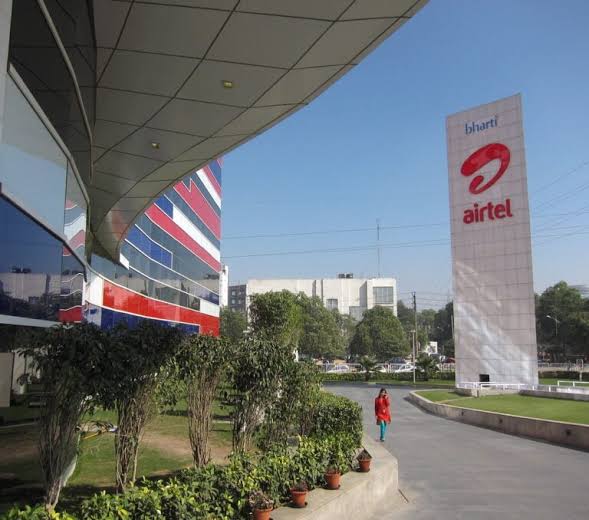
Airtel Africa has kicked off a new tranche of its buyback programme — repurchasing up to 12,033,748 shares, or 0.33 per cent of its issued capital — less than two months before its richer dictate: a 3.1 US cents interim dividend per share, up 9.2 per cent year-on-year, falls for payment on Dec 11 to shareholders on the register at the close of business on Friday, Nov 13.
The new tranche, announced in London and Lagos, follows the completion of the first buyback tranche on Sept 28, when 24,515,062 shares were cancelled and the equivalent of $108.7 million was returned through Barclays as executing broker. Citigroup now handles the current leg as riskless principal until no later than Dec 22, 2026, with every repurchased share to be cancelled. Together the two operations draw down the original repurchase authority announced on May 22, 2026.
Capital returns for a group mid-transform
The buyback schedule is a boardroom statement about balance-sheet capability: the first tranche used just 0.67 per cent of the 1 per cent shareholder authority approved, which makes room for further returns against an H1 scorecard where the company's leverage fell from 2.1x to 1.6x on Sep 30. The interim dividend itself has been marked up year-on-year, and the FX rate locked for the Nigerians' payment window was fixed at N1,347.44 per dollar on Oct 30 for NGX holders, who can elect to take their payout either in naira or in US dollars.
For the Nigerian shareholders, the deadline calendar is tight and demanding. Qualification and last cum-dividend day on the NGX fall on Nov 12, with currency election for the naira or dollar route closing on Nov 23. During this same window, the USD settlement line (set to 0.7464 GBP) gives London shareholders the same certainty the African investors pick up on the exchange. Traders on both exchanges will see the timing effects of the election and cum-dividend roll — the bought-in volume this creates has historically distorted localized supply in the final days before the record date.
What the dividend maths shows about Airtel's model
Below the headline, the dividend is telling about the structure of the business. Nairametrics estimates the richest of Airtel's outside shareholders: Sunil Mittal, whose 36 per cent holding through the Bharti group implies gains on the order of $89 million in the December payment — but the real structural move is elsewhere. Airtel's cash flows are now strong enough, and its leverage trajectory soft enough, for the board to enact a dual programme of share retirement and dividend escalation simultaneously — the rarest thing in a portfolio company where network buildout absorbs $657 million in H1 capital spending alone (more than double the year-earlier run rate) to add about 4,200 mobile sites.
Sites aside, the H1 structural moves that dominate and reframed Airtel's 2026: its Airtel Money arm was listed separately on the London Stock Exchange on Oct 14 at £1.96 per share, selling 270 million shares (10 per cent of the money business) with the group retaining 77.85 per cent — monetising the fintech layer without diluting the parent group's core fintech-facing growth story. In parallel, the Group acquired a 100MHz concession in Kenya for $65 million over 25 years, beefing up data capacity in a market where its business lines struggled against the Safaricom incumbent through the last cycle.
The institutional investor angle: deferral or pickup
Between the buyback schedule and the dividend record date, the coming week gives institutional investors the choice process the board has been structuring: take the cash, or let the group buy in your stock and reduce the share count. With the ex-dividend period opening career dividend gate on Nov 12 and the record date coming Nov 13, fund managers that sit on Airtel's share register in Nairobi, Lagos and London will be measuring the value of the liquidity option against the 3.1-cents-a-share payout — with the buyback transactions executed by Citi operating right through this window as a mechanical bid for the stock every time the discount to fair value widens.
The Airtel Money listing within the same period amplifies the institutional interest: fund students and indexes can now separately access the fintech entity without requiring the parent to bring the payout ratio up into high single digits. The dual-track structure gives investors flexibility to allocate across the two: a telecom-network exposure through the parent group, and a payments-and-money platform via the listed money subsidiary that Airtel retains a majority in.
What it tells African capital markets
Executed correctly, Airtel's programme is a practice run for African multinationals sitting on balance-sheet headroom. It has monetised a fintech arm, purchased spectrum, doubled network capex, deleveraged from 2.1x to 1.6x, run a first buyback tranche to completion, launched a second, and marked up its first dividend raise — all in a single year of elevated global market volatility and elevated African sovereign risk premium. The lesson for peers in Nigeria, Kenya and South Africa is that dividend strategy and buyback options are now available for African businesses that prove the financial audit trail that permits them.
From the investor side, the record-date window that opens this week is also the cleanest discount window to follow for Airtel valuation benchmarks. With each tranche's volume executed by the broker in riskless principal mode, the buyback becomes a market-shaping bid floor near value as Airtel sits near a capex-plus-deleveraging inflection in its financial lifecycle that many of Africa's investors have otherwise never been able to price at prior-stage company valuations.
Up next
Nvidia Board Opens Independent Probe Into Huang Over Intelligence Allegations
Directors will examine reports that CEO Jensen Huang was targeted by a foreign intelligence effort, with Congress demanding a closed-door briefing on Nov 18.
More in Corporate
See all
Seplat declares interim dividend of US5 cents plus special of US14 cents per share for November payment
Seplat Energy has declared an interim dividend of five US cents per share together with a special dividend of 14 US cents, with a qualification date of 12 November 2026 and register closure on 13 November, ahead of payment on about 27 November.
Unilever Nigeria posts N184 billion Q3 revenue and N26.4 billion profit
Unilever sustained profitable growth despite consumer pressure, declaring an interim dividend as pricing and cost controls protected margins.

Nigeria’s Cement Giants Rake in N5.8 Trillion as Dangote Cement Swings to Net Cash
Dangote Cement, Lafarge Africa and BUA Cement posted combined nine-month revenue of N5.8 trillion, up 21 per cent, with Dangote Cement profit up 31.2 per cent to N974.8 billion.
About the author
Ngozi Eze
Companies Reporter
Ngozi Eze writes for BusinessPress.


