
Nvidia Board Opens Independent Probe Into Huang Over Intelligence Allegations
Directors will examine reports that CEO Jensen Huang was targeted by a foreign intelligence effort, with Congress demanding a closed-door briefing on Nov 18.
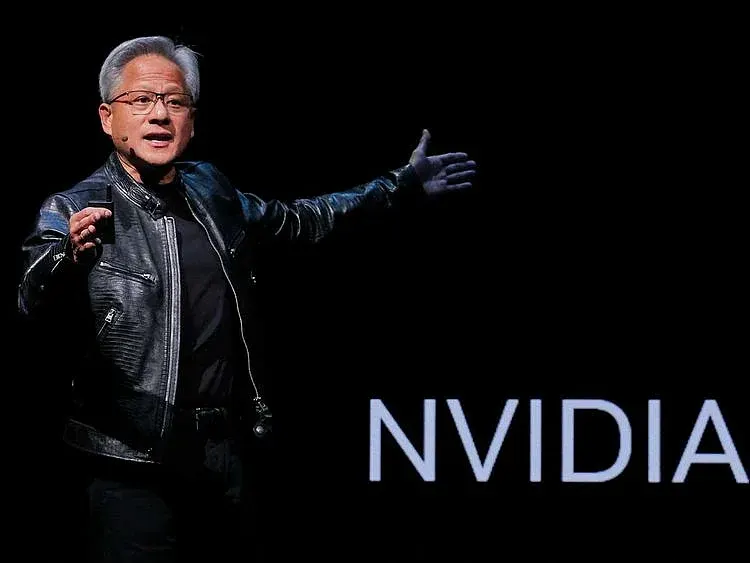
Nvidia's board has opened an independent investigation into founder and chief executive Jensen Huang after reports linked the world's most consequential AI company to a foreign intelligence operation targeting its leader — an extraordinary step for the chipmaker whose products power the global AI buildout and whose shares anchor $3 trillion of market value through the yoke of the ongoing technology volatility.
"While the Board has no reason to believe that either national security or NVIDIA secrets were compromised, the Board's inquiry will examine all available information," the board said in a statement released Sunday. The inquiry will be conducted by a committee of independent directors assisted by outside independent counsel. The company added that "Today's news will not slow NVIDIA. [Jensen Huang] is committed to continuing to lead NVIDIA as CEO without interruption" — a deliberate effort to decouple the governance question from the operational one.
How the story unfolded
The underlying intelligence story breathing life into the inquiry was published by the New York Times on Friday and expanded through the weekend, detailing how Alice Huang, an executive at the Singapore-based semiconductor distribution firm Megaspeed — a target of US scrutiny over alleged help for Chinese buyers circumventing AI-chip export bans — was allegedly recruited by China's Ministry of State Security to build a personal relationship with Huang and gather information on him. A US intelligence memo on the matter circulated in the spring of 2026, according to the paper, with oversight involving Secretary of State Marco Rubio.
Nvidia's founder responded with a memo to the company staff that Axios first published on Sunday: "I was unfaithful to my wife... There is no excuse for what I did" — a rare admission of personal conduct — followed by a commitment to cooperation: "I support the investigation and will cooperate fully... I love our country and our company." Nvidia's market response, at least in the duration through the Friday session, was measured; the stock rose 2.8 per cent on Nov 6 in a broader sector relief rally, and Asian peers rallied hard in the Monday early session.
The congressional pressure outside the boardroom
The board inquiry is not the only review that now matters. Three House Republican committee chairs — John Moolenaar of the China-focused panel, Brian Mast of Foreign Affairs, and Rick Crawford on Intelligence — sent a letter on Nov 5 demanding a closed-door briefing on Nov 18, a day after Nvidia's quarterly earnings report, citing "significant national security concerns" over what they characterised as the implications of the allegations for semiconductor export controls. Sen. Chris Coons, a Democrat on the Foreign Relations panel, said Saturday that "Congress will investigate and get answers."
The wider Washington context accelerates the scrutiny. Sen. John Cornyn flagged a separate NYT report that the Commerce Department had cleared a Chinese firm, New Matrix, to assemble Nvidia chips in Beijing — a decision that undercuts official assurances that chip-relevant activity is confined to approved partners. And Bloomberg reported this week that House Democrats, having taken control of the chamber in the midterm elections, are preparing legislation targeting the AI-chip export regime, with Nvidia's supply chain an explicit focus.
Why the governance signal matters more than the allegation
The structural significance lies in the board's decision to act with outside counsel on the allegation itself — which, as stated, concerns Huang's personal conduct and personal relationships as well as the security of the export-control environment surrounding his company's most valuable product category. For the AI supply chain, the episode instantiates a new form of exposure: the leading-edge technology vendor is now a target of both foreign intelligence operations and domestic political inquiry simultaneously, and the burden of proof on governance is elevated because no technical safeguards fire when trust has driven the operational model.
Notably, the board statement is careful to keep the operational trajectory untouched — Huang remains CEO and the company says the news "will not slow NVIDIA" — which tells you precisely the balance the board is trying to strike: full inquiry without management distraction. The Nov 18 briefing now falls a day after Nvidia's third-quarter earnings, which were expected to be the week's most material port-cost event for the global semiconductor trade: those results now arrive wrapped around a public congressional briefing and a board announcement simultaneously.
The read-through for tech supply chains and African tech
For global technology, the chain of consequence runs through geopolitics: export-control enforcement on AI chips is already a sensitive zone, and any sharpened regime will hit the Fin-tech, data-centre and cloud expansion projects that have been questing for capacity across the globe, including in Africa, where sovereign AI initiatives — Ghana's, Nigeria's, and Kenya's — are still sizing demand for anchor compute capacity while government programmes target data residency and local AI development.
The market reaction, for now, narrows the exposure. Taiwan's TSMC — a supplier on the AI-development chain — rallied nearly 6 per cent in early Monday trading on the broader Asia rebound. But for the exchange and for other AI-exposed plays, the probe is a cautious-reading headline: it raises the price of compliance and more cautiously signals that foreign capital and foreign politics are again shaping the investment environment for the American AI flagship, with every vendor in the tier of the supply chain standing to pay.
What happens through Nov 18 — the earnings call and the congressional briefing arriving together — will decide whether the AI investor's season reads as a governance headache for one company or a structural repricing for the chip-building interface and the international relationships of the whole AI-buildout competition architectonic.
Up next
Binance Hackers Move $124m Into Bitcoin Through THORChain
Elliptic tracks the $6.43bn breach’s laundering across 20,000 wallets and 16 blockchains as Binance restores withdrawals token by token into next week.
More in Technology
See all
Axon Falls 18% After Betting $1.2bn on Skydio
Axon tumbles 18.2% on weak quarterly results compounded by a $1.2bn investment in drone autonomy firm Skydio, resetting the public-safety tech debate.

Cloudflare Surges 20% After Raising Sales Outlook
Cloudflare jumps 20% after Q3 revenue and adjusted earnings beat expectations and it raised its sales outlook, upending the AI-capex panic narrative.

IREN Jumps 20% on Fresh AI Data-centre Contracts
Data-centre developer IREN surges 20% after results beat estimates and it discloses two new contracts signed since quarter-end, defying AI-spend slowdown fears.
About the author
Kelechi Nwachukwu
Business Reporter
Kelechi Nwachukwu writes for BusinessPress.


