
Pipeline Outages Deferred 42.55 Million Barrels and $2.97bn of Output in 2025, NUPRC Data Show
The upstream regulator’s figures turn Nigeria’s chronic evacuation losses into a hard number — weeks of national production that never reached a buyer or the federation account.
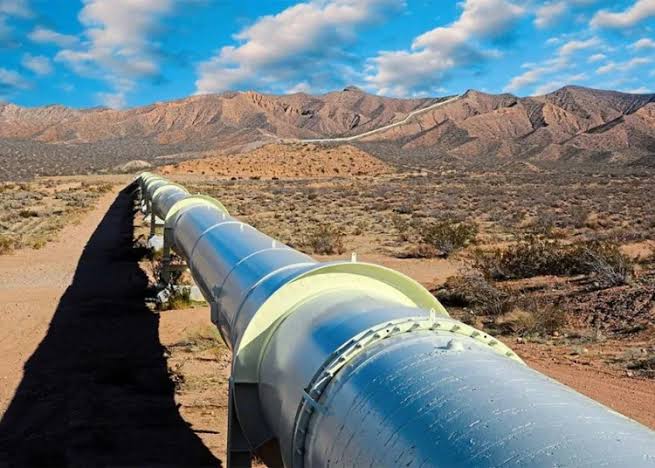
Nigeria's upstream regulator has disclosed that pipeline outages deferred an estimated 42.55 million barrels of crude oil and condensate production in 2025, a loss valued at approximately $2.97 billion, according to NUPRC data reported by Punch — a figure that quantifies, in a single number, why the country's oil recovery keeps underdelivering against its budget assumptions.
The deferred volume equals a meaningful share of Nigeria's annual output capacity. Set against reported production of roughly 1.678 million barrels per day in August 2026, the deferred barrels represent weeks of entire national production — revenue that flowed to no treasury, funded no budget and covered no import bill.
Where the barrels go
Pipeline outages are the upstream's most predictable surprise: sabotage and theft on trunk lines, wellhead shut-ins for repairs, third-party interference and the maintenance backlogs that accumulate when infrastructure ages faster than it is renewed. The Nigerian Upstream Petroleum Regulatory Commission's own accounting, cited in the Punch report, puts the 2025 deferred production at 42.55 million barrels — and the $2.97 billion valuation shows how the loss cascades: at realized prices, every week of avoidable outage removes hundreds of millions of dollars from the export ledger.
The costs do not stop at the wellhead. Deferred barrels reduce the feedstock available to domestic refineries, weaken the gross external reserves the Central Bank relies on to defend the naira, and shrink the royalty and tax flows that fund the federation account. The fiscal data make the point indirectly: Nigeria Customs reported N1.42 trillion in revenue recently, but oil remains the swing factor in every budget.
The security-investment loop
The disclosure lands in a year when the operational story has genuinely improved. Production has recovered from the sub-1.4-million-barrel troughs of the early reform period toward the 1.6-1.8 million range, on the back of surveillance contracts, pipeline protection deals and the return of some shut-in assets. But the 2025 deferral numbers show the floor that remains: every barrel recovered through security spending is a barrel the next outage can reclaim.
The loop is economic as much as military. Operators weigh the cost of protecting a pipeline against the value of the barrels it carries; when outages defer $2.97 billion of production, the case for reinvestment strengthens — but so does the temptation to redirect capital toward assets with shorter, safer evacuation routes, which concentrates production and leaves older infrastructure degrading.
What it means for the 2027 budget arithmetic
The federal budget assumes production levels and an oil price; the NUPRC's deferral data is the reality check between the two. At recent Brent prices — which settled at $98.32 on Friday after a week of geopolitical whipsaw — a deferral of 42.55 million barrels would have carried even greater naira value into the federation account. Budget planners who build on optimistic uptime without a deferral haircut will keep meeting the gap that Nigeria's oil output has met for two decades.
For the non-oil economy, the number cuts both ways. Every dollar of deferred production strengthens the argument for the diversification the president touted at the Lagos Trade Fair — non-oil exports above $6.1 billion, capital importation near $21 billion — because the oil line item is, on this evidence, always negotiable.
The metric to watch
The deferral figure also reframes the production numbers investors quote. A 1.6-1.8 million barrel headline capacity means little if evacuation reliability subtracts tens of millions of barrels a year; the honest operating metric is net uptime, and the NUPRC's annual deferral disclosure is now the cleanest public measure of it. Comparative tracking across 2026 and 2027 will show whether the trend line bends.
The regulator's transparency is itself progress: quantifying deferrals by value turns a vague "security challenge" into a number that boards, budget offices and investors can act on. If the 2026 figure comes in materially lower, the surveillance investments are working and the production recovery is real. If it does not, the $2.97 billion question will keep resurfacing in every fiscal plan that leans on Nigerian crude.
Up next
Wall Street’s Worst Week Since April: Retail Traders Sold More Than Any Day of the Pandemic
An 1,800-point Dow plunge erased the post-midterm rally, the Nasdaq confirmed a correction and the Magnificent Seven shed $1 trillion in a day as the AI trade met a hostile Congress.
More in Business
See all
Nigeria Startups Raise 635m As Access Drive Begins
Nigerian startups raised 635 million dollars in nine months as Magna Collective organised an investor connection drive pairing 26 founders with 16 funds.
FT: Africa's Fastest-Growing Cities to Add 19 Million People a Year
The Financial Times' Big Read on the world's fastest-growing cities reports that Africa's urban centres are set to expand by 19 million people a year, nearly two Londons annually, with growth concentrating in a handful of hubs and spreading in unfamiliar patterns.
MAX Extends Series B3 to $29m as Nithio Backs Nigeria's Electric Mobility Push
Nigerian electric mobility firm MAX has extended its Series B3 round to $29 million after new financing from Nithio, with proceeds earmarked for vehicle financing and solar-powered battery swapping.
About the author
Ngozi Eze
Companies Reporter
Ngozi Eze writes for BusinessPress.


