Cardoso Takes Cross-Border Payments Push With China to Beijing
Central Bank Governor Olayemi Cardoso has met People's Bank of China chief Pan Gongsheng in Bangkok and plans a Beijing visit to advance cross-border payments, settlement arrangements, financial technology and trade finance between both countries.
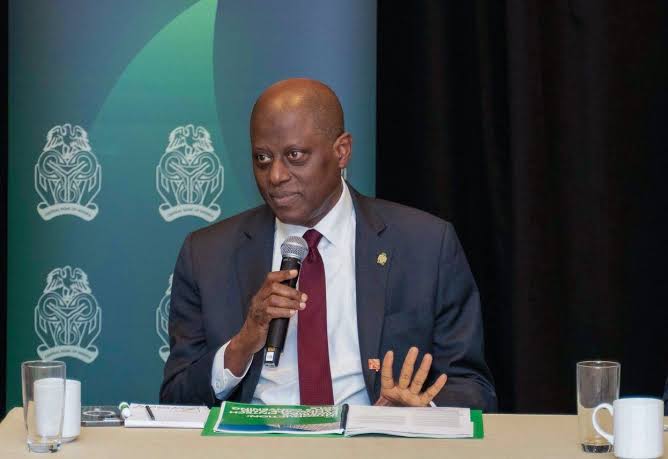
Central Bank of Nigeria (CBN) Governor Olayemi Cardoso has said Nigeria will pursue stronger cross-border payment arrangements with China during an upcoming visit to Beijing, after meeting Pan Gongsheng, governor of the People's Bank of China, on the sidelines of the International Monetary Fund and World Bank annual meetings in Bangkok.
Cardoso disclosed the plan at a news briefing at the close of the meetings, saying the discussions had covered cross-border payments, settlement arrangements, financial technology and trade finance between the two countries.
From Bangkok to Beijing
"Nigeria would build on the discussions during an upcoming visit to Beijing, with emphasis on facilitating cross-border payments, supporting trade and investment, and strengthening financial intermediation between the two countries," Cardoso said. He added that technical teams from both sides would examine practical areas of cooperation during the trip.
The CBN has not published implementation plans or a timeline for the proposed arrangements, but the governor framed the visit as a way to convert dialogue into working channels. "We want to avoid a situation in which these engagements become merely a talk shop," Cardoso said, noting Nigeria's interest in learning from China's payment infrastructure, which he described as robust.
Chasing Chinese capital
Cardoso also made the case for drawing Chinese investors into Nigerian financial instruments, arguing that the country's enormous liquidity has rarely found its way into the nation's markets. "Despite the considerable liquidity available in China, there has not been much investment in Nigerian financial instruments over time. This could be an opportunity to change that trajectory and generate greater interest from Asian markets in Nigerian instruments and African instruments generally," he said.
The push matters because China is one of Nigeria's largest trading partners, and businesses on both sides have long complained that settlement bottlenecks add cost and delay to transactions. Any arrangement that narrows those frictions could support importers, exporters and manufacturers who currently rely on a patchwork of correspondent banking routes.
Ratings, AI and monetary policy
On the wider Bangkok agenda, Cardoso said engagements with Standard & Poor's and Moody's focused on Nigeria's prospects of reaching an investment-grade rating over the medium term, which he linked to consistent policies and coordination between fiscal and monetary authorities.
He also participated in an IMF seminar on central bank decision-making under uncertainty, citing the CBN's September reduction of the monetary policy rate from 26.5 per cent to 23 per cent as evidence of the value of credible institutions and clear communication. On artificial intelligence, the governor said African countries must move beyond being passive participants in the technological revolution.
Wider Asian engagement
Beyond China, Nigeria's delegation engaged the Monetary Authority of Singapore and signed a memorandum of understanding with an unnamed global financial technology network, while convening a Nigeria-Asia Financial Connectivity Dialogue with JPMorgan, Nigerian Exchange Group and FMG Group. The CBN said its priorities remain price stability, monetary discipline and financial system stability, with single-digit inflation as the medium-term objective.
Up next
CITA Energies Seeks Review of Dangote Refinery's Jet A1 Pricing Formula
Aviation fuel marketer CITA Energies has called on Dangote Refinery to review its Jet A1 pricing formula, a premium introduced in March and a requirement that 25% of buyers' payment instruments be placed under lien, saying the extra costs are passed on to airlines.
More in Finance
See all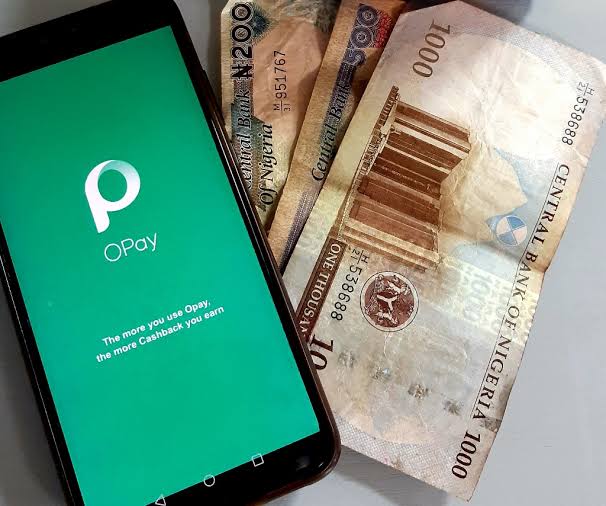
OPay Earns More From Lending Than Payments as Profit Hits $90.9 Million
OPay's US listing filing shows lending generated 50.6% of revenue in the first half of 2026, overtaking payments, as profit reached $90.9 million.
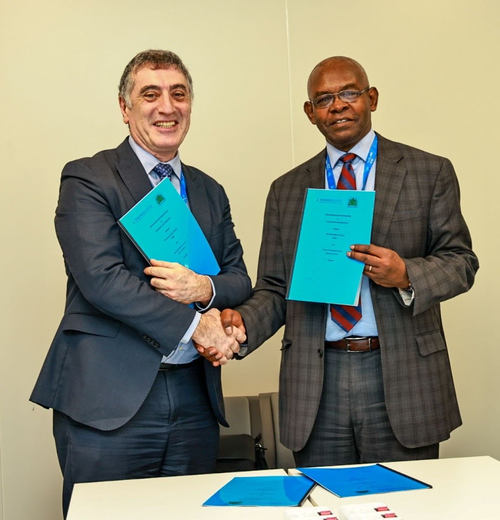
CBK Signs MoU With Toronto Centre to Strengthen Supervisory Training
The Central Bank of Kenya has signed a memorandum of understanding with the Toronto Centre for Financial Supervision, signed in Bangkok on the sidelines of the IMF and World Bank annual meetings, to strengthen supervisory training.
Vodacom-Safaricom Appeal Fast-Tracked as Kenya Refund Risk Lingers
Kenya's Court of Appeal has decided to fast-track the challenge to the nullified Sh204.3 billion sale of government Safaricom shares to Vodacom, preserving the status quo while about $1.557 billion in foreign exchange inflows hangs in the balance.
About the author
Musa Abdullahi
Finance Correspondent
Musa Abdullahi writes for BusinessPress.