CBN roundtable puts payments and export finance at centre of reform push
Business leaders pressed the CBN on cross-border payments, export credit and investment barriers at a high-level roundtable.
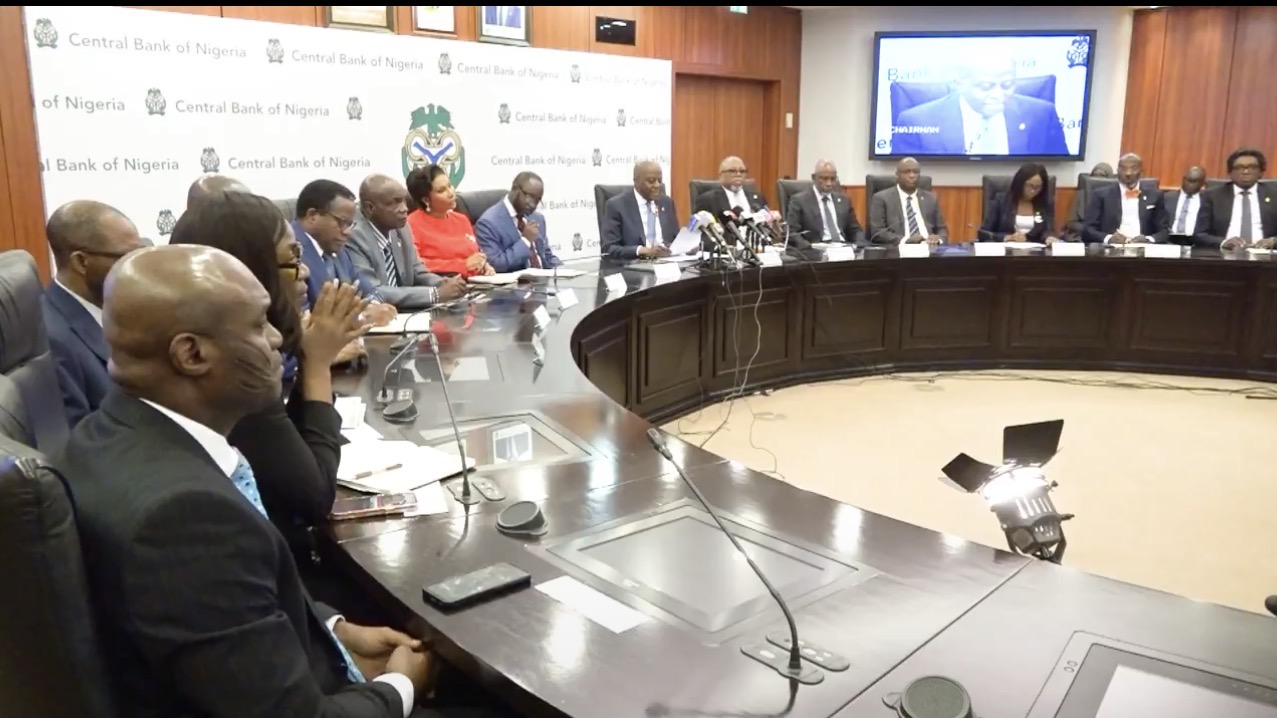
Business leaders and former Central Bank of Nigeria governor Muhammad Dambazau put payments, export finance and investment at the centre of a CBN roundtable in October 2026, according to ThisDay. The discussion reflected growing concern that Nigeria’s financial system is not doing enough to support exporters and long-term investment.
The roundtable brought together bankers, policymakers and business executives to discuss the challenges facing the economy. Payments infrastructure, access to foreign exchange and the cost of credit were among the main issues raised.
These are not abstract concerns. Nigerian exporters face delays in receiving payments, high transaction costs and uncertainty about foreign-exchange rules. Investors face similar obstacles when trying to move capital in and out of the country.
Why payments matter
Efficient payments are the plumbing of the economy. When payments are slow or expensive, businesses lose competitiveness and consumers pay more. Cross-border payments are particularly important for exporters, who need to receive dollars and convert them into naira.
Nigeria has made progress in domestic payments, with instant transfers and mobile money widely used. Cross-border payments remain more fragmented, with correspondent banking relationships, compliance checks and foreign-exchange controls adding cost and delay.
Fintech companies have entered the space, offering faster and cheaper alternatives. But they face regulatory uncertainty and limits on their ability to access foreign exchange. Traditional banks still dominate large corporate payments.
Export finance gap
Nigerian exporters often lack access to affordable credit. They need working capital to buy raw materials, process goods and ship them to international markets. Without finance, they cannot compete with exporters in countries where credit is cheaper and more available.
Development finance institutions and export credit agencies can help, but their products are often too large or too complex for small exporters. Commercial banks are reluctant to lend because of currency risk and weak collateral.
The CBN has introduced schemes to support export-oriented businesses, but uptake has been limited. Many exporters complain that the application process is cumbersome and that funds arrive too late.
The investment climate
Long-term investment requires stable rules and predictable returns. Businesses at the roundtable likely raised concerns about multiple taxation, regulatory overlap and policy inconsistency. Those issues increase the cost of doing business and discourage capital formation.
Foreign investors also need assurance that they can repatriate profits. Capital controls or delays in accessing foreign exchange can trap returns and reduce the attractiveness of Nigerian assets.
The CBN has a role in improving the investment climate by maintaining a stable exchange rate, ensuring liquidity and communicating clearly. But many of the obstacles lie outside its control, including security, infrastructure and fiscal policy.
What the CBN can do
The central bank can simplify foreign-exchange procedures, expand access to hedging instruments and support the development of a deeper capital market. It can also work with other regulators to reduce compliance burdens.
On payments, the CBN can promote interoperability, strengthen consumer protection and encourage innovation while managing risks. A modern payments system is essential for financial inclusion and trade.
On export finance, the CBN can provide refinancing facilities and guarantees, but it should avoid subsidizing inefficient producers. The goal should be to make credit available on commercial terms, not to pick winners.
The outlook
The roundtable is a sign that policymakers recognize the problem. But talk is cheap. Businesses will judge the CBN by whether payments become faster, export finance becomes more accessible and investment becomes easier.
Nigeria’s economic future depends on its ability to diversify exports and attract long-term capital. A financial system that supports those goals is essential.
The CBN cannot solve all the problems alone. It needs coordination with fiscal authorities, regulators and the private sector. But it can remove some of the bottlenecks that are holding businesses back.
Up next
Bank of Industry targets three million jobs with N1.85 trillion annual lending
The development bank plans a major expansion of industrial finance, but capital, governance and bankable projects will determine success.
More in Finance
See all
CBN offers N2trn OMO bills as banks park over N6trn at deposit window
The Central Bank of Nigeria offered N2 trillion in OMO bills on October 22 as commercial banks continued to hold more than N6 trillion at the standing deposit facility.

Abbey Bank set to begin full commercial operations in November as CBN approves upgrade
Abbey Bank transitions from mortgage bank to full commercial bank with approval from the CBN.

Banking system braces for N2.86trn OMO maturities as liquidity surges
Large OMO maturities are set to hit the system as liquidity remains elevated and CBN manages absorption.
About the author
Musa Abdullahi
Finance Correspondent
Musa Abdullahi writes for BusinessPress.
More by Musa Abdullahi