Standard Chartered confirms Adelagun as Nigeria CEO amid foreign-bank reset
The local appointment signals continuity at a key trade-finance bank as foreign lenders reassess risk, capital and growth in Nigeria.
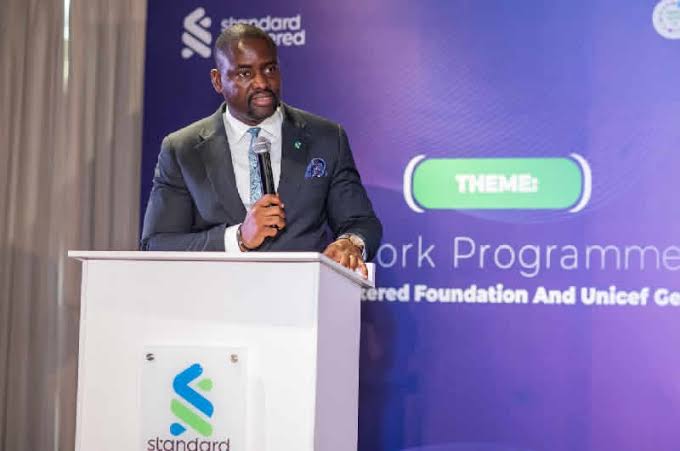
Standard Chartered has confirmed Adeola Adelagun as its Nigeria chief executive, according to Punch, a leadership change at a bank that plays an important role in financing trade and investment between Nigeria and global markets. The appointment comes at a time when foreign banks are reassessing their exposure to Africa’s largest economy.
Standard Chartered has operated in Nigeria for decades, serving multinational corporations, local businesses and high-net-worth clients. Its presence is important for companies that need international banking services, including trade finance, foreign exchange and cross-border payments.
The new CEO inherits a difficult operating environment. The naira is volatile, inflation is high and the regulatory landscape is changing. Foreign banks have also faced pressure from the central bank to increase local capital and lend more to the real economy.
Who is Adelagun?
Adelagun is a career banker with experience across corporate and commercial banking. Her appointment is significant because it places a Nigerian executive at the head of a major international bank’s local operation, rather than importing a leader from London or Dubai.
Local leadership can help the bank navigate relationships with regulators, customers and government agencies. It can also demonstrate a commitment to the Nigerian market, which matters when foreign investors are looking for signs of long-term confidence.
Her challenge will be to balance the bank’s global standards with local realities. Standard Chartered operates in some of the world’s most difficult markets, but Nigeria has its own specific risks and opportunities.
The foreign bank dilemma
International banks in Nigeria face a strategic question. The market is large and profitable, but it is also volatile and capital-intensive. Some foreign banks have scaled back, while others have expanded.
Standard Chartered has maintained a presence, but it has also been selective about the businesses it serves. The bank focuses on large corporates, financial institutions and wealthy individuals, rather than mass-market retail banking.
The new CEO may need to broaden the bank’s reach, particularly in trade finance for SMEs and sustainable finance. Those areas align with Nigeria’s development needs and with the bank’s global expertise.
The trade finance role
Trade finance is critical for Nigeria’s import-dependent economy. Letters of credit, guarantees and supply-chain finance allow businesses to import goods and export products. Foreign banks have the networks and credit lines to support those transactions.
Standard Chartered’s global footprint gives it an advantage in connecting Nigerian businesses to international markets. That is particularly important as Nigeria seeks to diversify exports beyond oil.
But trade finance is also exposed to currency risk and compliance costs. A weaker naira can increase the cost of imports and make it harder for businesses to repay dollar loans. Banks must manage those risks carefully.
The regulatory environment
The CBN has been pushing banks to increase their capital and support the real economy. Foreign banks are not exempt. They must comply with local rules, including lending targets and foreign-exchange regulations.
Standard Chartered will also need to navigate the central bank’s efforts to stabilize the naira and manage liquidity. Those policies can affect the bank’s profitability and its ability to serve clients.
Regulatory relationships are a key part of the CEO’s job. A strong local leader can help the bank anticipate policy changes and respond quickly.
What it means for customers
For corporate customers, a leadership change may bring a new focus or strategy. Clients should watch for changes in product offerings, pricing and credit appetite.
For the market, the appointment is a sign that Standard Chartered remains committed to Nigeria. That is reassuring at a time when some foreign investors are cautious.
The bank’s ability to support large projects, trade and investment will depend on its capital, risk appetite and the broader economy. The new CEO cannot control the macro environment, but she can shape how the bank responds to it.
The outlook
Adelagun’s appointment is a significant test of local leadership in a global bank. Success will be measured by growth, profitability and risk management.
If she can deepen client relationships and expand the bank’s role in trade and sustainable finance, Standard Chartered will be well positioned for the next phase of Nigeria’s economic development.
The challenge is significant, but so is the opportunity. Nigeria’s banking market is large, underpenetrated and evolving. A well-run international bank can play a valuable role.
Up next
Stablecoins could unlock capital trapped in cross-border payments, Paga CEO says
Digital dollar tokens promise faster, cheaper settlements, but regulation, reserve risk and conversion costs remain unresolved.
More in Finance
See all
CBN’s 350bps reset fails to pull market yields below 17%
Policy easing has not lowered market borrowing costs, exposing weak transmission and the premium investors demand for inflation and currency risk.

Bank of Industry targets three million jobs with N1.85 trillion annual lending
The development bank plans a major expansion of industrial finance, but capital, governance and bankable projects will determine success.

Credit to government jumps 63% to N39.4 trillion as private lending slips
Banks are channeling more credit to the public sector, crowding out private borrowers and raising questions about Nigeria’s growth financing.
About the author
Musa Abdullahi
Finance Correspondent
Musa Abdullahi writes for BusinessPress.
More by Musa Abdullahi