
China's Import Expo Opens Fresh Trade Opportunities for African Businesses
China's Import Expo is again courting the world to sell to China, opening import demand Nigerian sesame, cocoa, cashew and leather can serve.
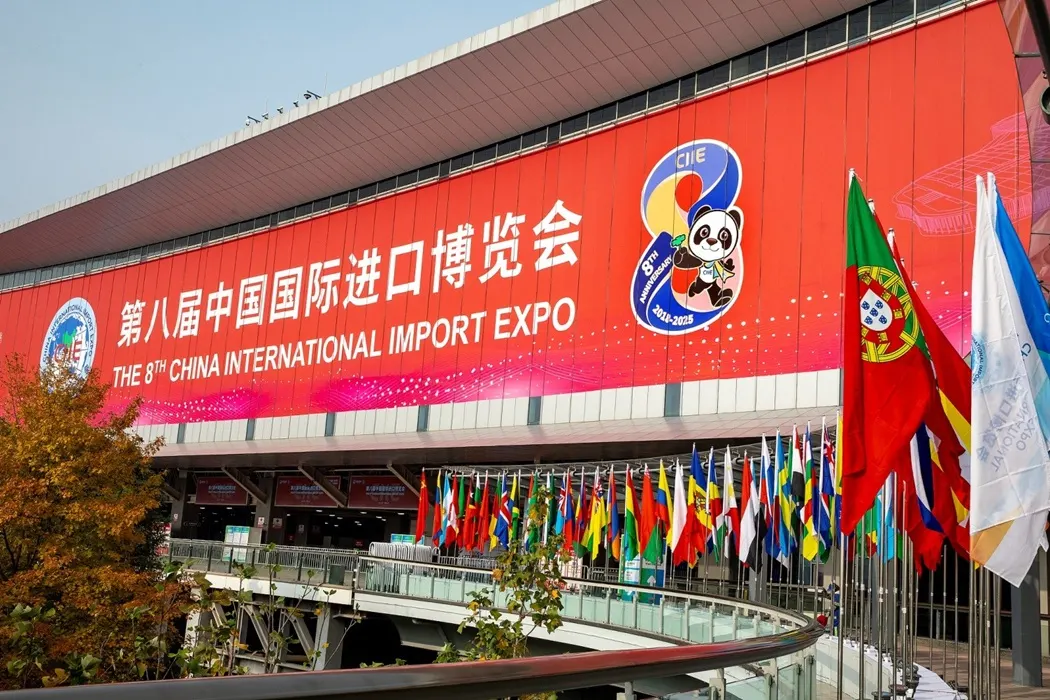
China's International Import Expo is once again turning Shanghai into an auction house for global supply, and the opportunity it opens for African businesses — Nigerian exporters chief among them — is bigger than the diplomatic choreography around it suggests. The expo, now a fixture of China's trade calendar, is built on an unusual premise for the world's export superpower: China inviting the world to sell to China.
For African economies whose China relationship has been defined by the flow of Chinese manufactures into African markets, the CIIE symbolises the other half of the balance sheet that has never been operationalised at scale. China imports some $2 trillion-plus in goods annually — agricultural products, minerals, foodstuffs, consumer inputs — and African suppliers have historically captured a thin slice of that basket, dominated by unprocessed commodities from a handful of countries. Nigeria's exports to China remain overwhelmingly mineral and unprocessed, with manufactured goods nearly absent from the ledger despite two centuries of shared commerce across the Indian Ocean routes.
What Nigerian businesses can actually sell China
The pitch list is longer than the trade data suggests. China's import demand intersects with Nigeria's supply capacity in agricultural foodstuffs and inputs: sesame, of which Nigeria is a top-five global producer; cocoa, whose bean prices make origin diversification a Chinese policy priority; cashew, ginger — Nigeria's ginger is already a staple on the China route — hibiscus, shea derivatives and finished leather from Nigeria's tanneries. Beyond agriculture, China's manufacturing supply chains source inputs — metals, hides, processed industrial materials — that Nigerian producers can scale toward once quality certification and volume reliability are established.
The practical barrier has never been Chinese willingness to buy. It has been the Nigerian side of the trade: no volume aggregation, no export-standard processing, no certification infrastructure, and no financing that connects a Kano merchant to a Guangzhou buyer. The expo model works for countries where a trade-promotion apparatus connects domestic producers to the exhibition floor — a machinery Nigeria's export-promotion institutions have been rebuilding, unevenly, through the last five years.
The policy window behind the expo
The CIIE's importance is characterised by everything around the exhibition itself. Chinese import expansion is explicit policy: Beijing has set import-expansion targets, built dedicated import-promotion platforms and opened duty-free channels for partner economies — including, through the zero-tariff treatment announced for least-developed countries, preferential access frameworks that African exporters can build toward. African businesses that engage the Chinese market this cycle are doing so into a policy infrastructure designed to receive them, not despite restrictions.
For Nigeria specifically, the bilateral instruments are also in place: currency-swap facilities easing settlement, ongoing talks on expanding market access for Nigerian agricultural products, and the infrastructure financing relationships that shape logistics corridors. What remains absent is the supply-side conversion — aggregation, processing, certification — that turns a trade agreement into an export shipment.
The honesty about competition and execution
The sobering context: Nigeria is not entering a vacuum. Southeast Asian suppliers, Latin American agribusiness and other African origins — Ethiopia's sesame, Ghana's cocoa, Tanzania's cashew — are competing for the same Chinese import demand, many with deeper export-processing infrastructure than Nigeria's. The Chinese buyer's incentive is reliability: consistent quality, consistent volume, consistent certification. That competition is won not on the exhibition floor but in the warehouses and processing plants at home.
The opportunity, then, is real but operates on a lag. Businesses that use this cycle's expo engagement to secure buyer relationships, understand Chinese certification requirements and contract forward volumes are building for the cycle after next, when Nigeria's processing capacity catches up with its endowment. The China trade opportunity for Nigerian business has always been less about access, which is on offer, and more about national readiness, which must be built at home.
Up next
Analysis: What Nigeria's 12-Month Disinflation Streak Has Permanently Taught Us
Analysis: twelve straight months of falling inflation to 15.39% prove the 2023 reforms worked differently from every prior disinflation. Here is what persists.
More in Business
See all
Four Nigerian-Americans Win US Midterm Elections As Diaspora Clout Grows
Will Jawando, Junior Ezeonu, Oye Owolewa and Carol Kazeem won offices in the US midterms while Georgia's Segun Adeyina still leads his race, extending Nigerian diaspora political power.

Afreximbank Backs 81.9m Nigerian Tile Factory Expansion
An 81.9 million dollar Afreximbank loan expands Veenocks Sagamu porcelain tile plant, tripling capacity for eight African export markets.

Dangote Eyes Egypt In Pan-African Industrial Push
Dangote Group is exploring industrial investments in Egypt as the conglomerate deepens its pan-African manufacturing footprint beyond a dozen countries.
About the author
Kwame Mensah
Markets Correspondent
Kwame Mensah writes for BusinessPress.
More by Kwame Mensah


