
China Splits in Two: Factory-Gate Inflation Hits 4.5-Year High as Consumer Prices Cool
October producer prices surged 5.7 per cent while consumer inflation slowed to 0.7 per cent, compressing manufacturing margins across the world’s factory.
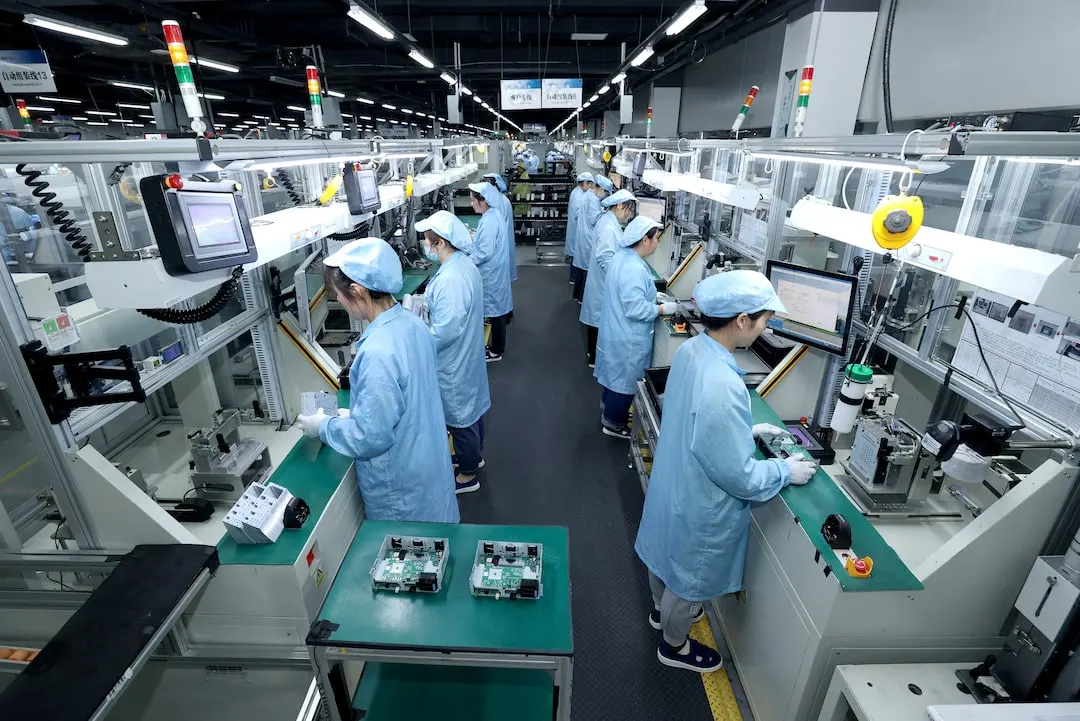
China reported a rare and powerful split in its October price data on Monday: consumer inflation slowed to a three-month low of 0.7 per cent even as factory-gate prices accelerated to a 5.7 per cent year-on-year rise — the biggest in four and a half years — leaving the world's second-largest economy with a product-cost boom its households are not participating in.
The consumer side was unambiguous weakness: headline CPI rose 0.7 per cent against September's 0.9 per cent and a Reuters consensus of 0.8 per cent, with month-on-month prices flat. Food prices fell 2.9 per cent year-on-year, and the only acceleration in the consumer basket — energy, up 9.9 per cent at more than two points faster than September's pace — was imported from the oil market rather than generated domestically.
The producer boom the consumer didn't cause
The factory-gate acceleration is the real information. Producer prices rose 5.7 per cent against a consensus of 5.3 per cent and September's 5.0 per cent, the fastest reading since June 2022 and the third straight month of acceleration. Mining-industry prices surged 27.9 per cent and raw-material prices 11.6 per cent, driven chiefly by the global commodity cycle — energy above all, with petrol prices up more than 22 per cent year-on-year on the elevated crude base the Middle East conflict has created — rather than by Chinese domestic demand.
That distinction is what makes the split meaningful rather than merely statistical. In a demand-led inflation, upstream price gains pass through to consumers as firms find pricing power; in a supply-led one, upstream costs compress downstream margins because households refuse to pay more. China's core CPI — excluding food and energy — rose just 0.8 per cent, easing from 1.0 per cent, which confirms the second case: the cost of making things in China is rising much faster than what anyone is being paid to buy them.
The squeeze downstream manufacturers and exporters face
Downstream, the squeeze is already visible in the real economy. Manufacturing margins compress when input costs rise 5.7 per cent and output prices at the factory gate can only follow at the pace consumers will bear — a dynamic that squeezes exactly the export manufacturers that employ the bulk of China's industrial workforce, and by extension the commodity and component suppliers across Southeast Asia, Africa and Latin America that feed China's factories. For African commodity exporters, the 27.9 per cent mining-price rise is direct revenue: coppers, chromites, rare earths and iron-ore-linked products are fetching mark-ups from a Chinese industrial base that is paying more to stockpile inputs.
But the frontier-market corollary is caution, not celebration. Chinese manufacturers paying more for inputs while earning the same for outputs respond by cutting costs — wage restraint, production rationalisation, and above all, price competition in third markets. Export prices from China have historically followed producer-cost trends with a lag; if the pass-through arrives in 2027 shipments, African and other emerging-market producers of manufactured goods will face a cheaper Chinese competitive wall exactly as their own domestic demand cycles face the same imported-inflation margin compression.
What it means for the global inflation debate
Central banks watching the supply side of the world's inflation equation have now got the data point they feared: a factory-gate inflation surge that has not yet reached consumer prices may do so, or may simply destroy producer margins first. US, European and emerging-market policy committees that have been treating goods disinflation as the permanent gift of Chinese overcapacity now must consider the reverse transmission — a China that passes through the oil and commodity cost shocks it has been absorbing internally for a year.
The timing lands awkwardly ahead of two key data fixtures: US October CPI on Tuesday (a print that Fed futures already price at 76 per cent odds of a December rate hike) and China's own October trade figures midweek, which will show whether the producer-price surge is being exported in Chinese goods prices or absorbed in margins. Either way, the global disinflation narrative that carried emerging markets' rate-cut cycles through 2026 has acquired its first serious headwind.
China's own policy dilemma
For Beijing, the split presents a policy problem its stimulus framework is badly suited to solve. Consumer-price weakness argues for more demand stimulus — the case China has been making since its property downturn deepened. But producer-price strength argues against aggressive monetary easing, and steel-hungry industrial output that has been juicing the upstream price indexes is itself the product of the state-directed investment push that macro-modernists say has outlived its usefulness. The iron-ore market's pricing perhaps captures the tension best: at roughly $90-93 a tonne, the bulk commodity sits at its lowest sustained level since October 2022 — weak steel demand offsetting the upstream inflation that mining prices elsewhere are reporting.
Nigeria's direct exposure runs through two channels: the oil that has driven the energy side of China's price data (Brent's below-$100 trading range keeps Nigerian crude receipts moderating), and the manufactured-goods competitive channel, whose next move depends on whether Chinese exporters choose margin defence or price war through 2027. Either way, the data shifts the global inflation conversation's terms: the question is no longer whether disinflation lasts, but how far upstream cost pressure can travel before demand-side weakness stops it.
Up next
Eurozone Inflation Hits 4% as Lagarde Warns Prices Will Stay High
Annual inflation reached its highest level since September 2023 on an energy-driven surge, but the ECB president declined to commit the council to a December hike.
More in Economy
See all
Japan Factory Output Bounces 2.2% in September
Japan's industrial production rose 2.2% in September to 104.1, the first rise in three months, led by motor vehicles as plants recovered from August disruptions.
Ajaokuta steel revival falters on power and raw-material gaps
Nigeria’s flagship steel complex needs reliable power, inputs and financing before it can anchor industrialisation, analysts warn.

Financing Overtakes Power as Nigerian Traders’ Number-One Constraint, NESG Finds
The NESG’s H1 2026 trade report ranks access to financing first, shows operating profit slipping to 98.1 into contraction, and finds investment plans stuck at neutral despite 156.1 expectations.
About the author
Tunde Balogun
Economics Correspondent
Tunde Balogun writes for BusinessPress.


