
Onion Prices Jump 162% to N3,100/kg, Squeezing Kitchens and Vendors
NBS average prices show onions at about N3,100/kg in October against N1,180 in May, as a supply gap of up to 700,000 tonnes meets post-harvest losses of 45-50 per cent.
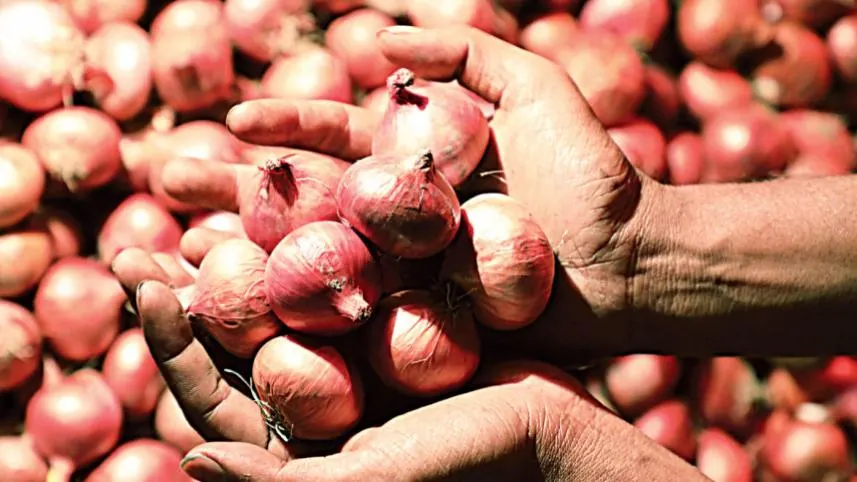
The average price of onions hit about N3,100 per kilogramme in October, a 162 per cent climb from the N1,180.01 recorded in May 2026, according to National Bureau of Statistics average price data that circulated widely following Daily Trust's fresh report on the household impact. A 100-kilogramme bag that sold for roughly N25,000 earlier in the year now tops N200,000 in Jos, Kano and other major markets.
The state-level granularity is starker. In Katsina, a 120-kilogramme bag rose from about N30,000 in April to around N170,000 in October. In Abuja, small retail bags that cost between N8,000 and N10,000 three months ago now go for N28,000 to N35,000. Market watchers report shelves thinning in Kano, Jos and the capital, with traders rationing stock and customers switching to alternatives for the flavour base a staple Nigerian kitchen cannot easily be cooking or stewing without.
A structural supply gap, not a seasonal blip
The Onion Producers and Processors Marketers Association of Nigeria estimates annual demand at about 2.4 million tonnes against domestic production of roughly 2.1 million tonnes — a 300,000-tonne shortfall. An independent estimate by Selina Wamucii puts the supply gap even wider, at around 700,000 tonnes, if production is closer to 1.67 million tonnes. Either way, Nigeria has been running an onion deficit every year, and this year's drawdown was sharper than usual.
The shortfall has been compounded by post-harvest losses of between 45 and 50 per cent, driven by inadequate storage, heat, pests and the near-absence of cold-chain and processing infrastructure. Onion is among the most perishable of Nigeria's staple vegetables — branching growth, thin skins and sensitivity to humidity mean that what little reaches market is a fraction of what leaves the farm. Traders and consumers blame reduced supply from the northern producing states, higher transport and fuel costs and suspected hoarding by large dealers, but the storage deficit is the structural chokepoint that hoarding merely exploits.
What it does to October inflation arithmetic
The particular timing matters for Nigeria's inflation narrative. The Bureau's headline print for October showed the third straight month of disinflation, with headline inflation easing to 15.39 per cent — but the vegetable category that onions anchor has been an opposite current in the data. Food inflation has been the stickiest component of Nigeria's disinflation for two years precisely because perishables index to weather, transport and insecurity in ways that monetary policy cannot reach. A 162 per cent onion move inside a single disinflation window is a reminder that the aggregate can fall while the household's bill of staples rises.
For restaurants, chopped-fresh food vendors and foodservice businesses, the cost stacks directly into operating expenses. The typical Nigerian stew, soup and street food vendors that employ millions of people in the informal economy use onions in near-every preparation. When the staple triples in price faster than menu prices can adjust, the margin compression shows up as smaller portions, substitute flavours or vendors exiting the market altogether — an employment cost, not merely a household-cost item.
The investment answer is storage, and it is underfunded
The economics of onion storage are unusually attractive for private capital: modern cold storage and improved management can cut post-harvest losses from 45 per cent to under 10 per cent in trial projects worldwide, and the seasonal price differential — currently a 162 per cent gap between harvest and lean-season pricing — is exactly the arbitrage a storage operator captures. Yet Nigeria's storage financing has remained a gap: agricultural lending flows heaviest to crops with clearer collateral and longer-standing intervention programmes, while the vegetable complex, including onions, garlic and tomatoes, has attracted only niche tranches.
Producer-state interventions have splintered the response. Kano, Sokoto, Jigawa, Kaduna and Katsina — the onion belt — have each run modest input-distribution programmes, but no co-ordinated national strategy stakes the country's demand-gap arithmetic against the sector's 45-50 per cent loss rate. The National Institute for Horticultural Research has documented varietal and storage techniques capable of extending onion shelf life from weeks to months; what is missing is financing at scale and a logistics framework that lets producers hold stocks through the deficit window instead of dumping at harvest.
Consumers, meanwhile, face a familiar Nigerian dilemma: the same market forces that push down an interest rate or a diesel price elsewhere leave them exposed to a perishable staple tripling in months. Where central banks cannot target a bulb, policy must respond by expanding supply, reducing losses and smoothing logistics — the unglamorous work of building physical market infrastructure, where a mega-factory of the future is measured in warehouses and cold rooms and sits between Abuja and the onion farms of the north-west.
If October NBS print turns out to mark the peak of the onion cycle — a harsh harvest gone, transport normalised, hoarded stock released — the pressure will ease through the end of the year. But until storage infrastructure meets Nigerian vegetables where they live and die, consumers should expect a repeat of this autumn's arithmetic in every bad season to come.
Up next
Nigerian Startups Raised Only $11.3m in September, Down 96.9%
September funding collapsed to $11.3m across nine deals from August’s $364.1m, leaving the ecosystem idle ahead of the government’s JICA-NSIA six-fund plan.
More in Economy
See all
Bank of England Lifts Rates to 4 Percent
The Bank of England raised rates 25bp to 4%, the first hike in three years, as war-era energy costs pushed UK inflation back up.

Nigeria Money Supply Approaches The 100tn Mark
Nigeria broad money supply has climbed to N99.23 trillion despite CBN tightening, reviving inflation and naira concerns ahead of the December MPC.

Eurozone Factories Hold Growth as Costs Surge Again
The S&P Global Eurozone Manufacturing PMI eased slightly to 52.7 in October for a ninth straight month of growth as input costs hit a five-month high, keeping ECB rate pressure alive.
About the author
Tunde Balogun
Economics Correspondent
Tunde Balogun writes for BusinessPress.


