Food Security Council moves to formalise grain mopping-up framework for dry-season harvest
The Presidential Food Security Council is formalising a mopping-up framework to absorb dry-season grain gluts at harvest, protecting farmgate prices and building strategic reserves alongside the N200bn BOA price-floor programme.
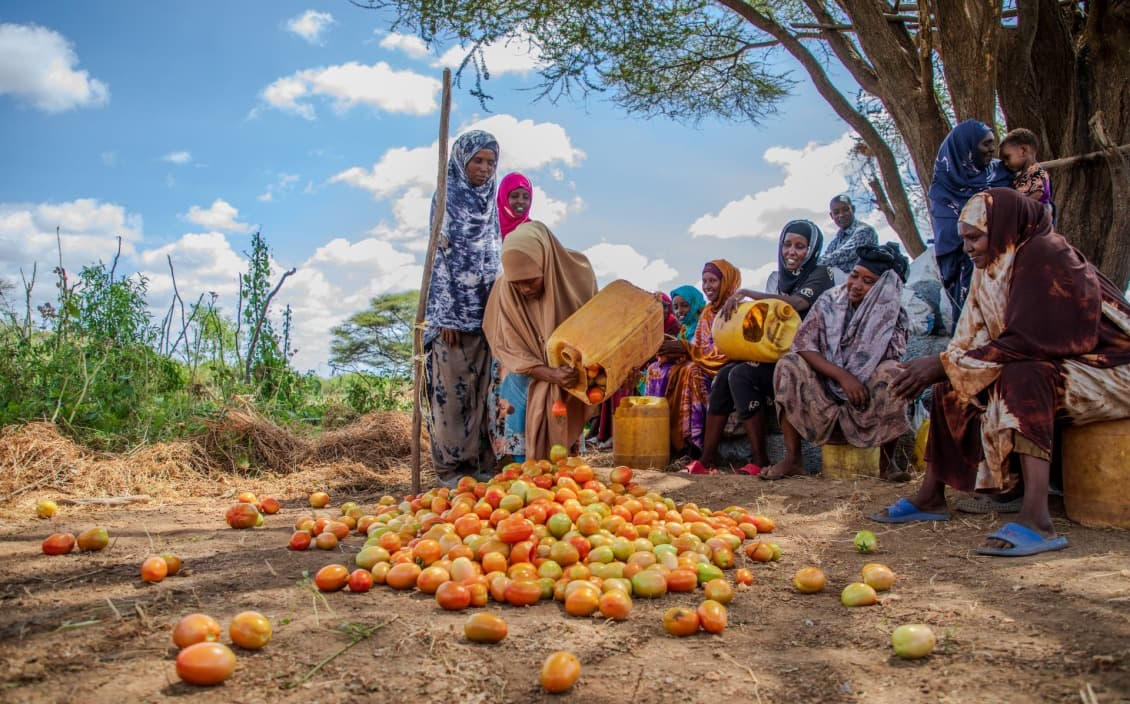
The Presidential Food Security Council has moved to formalise a mopping-up framework for the 2026 dry-season harvest, a mechanism to buy up excess grain directly from farmers at harvest time so that gluts do not crush farmgate prices and strategic reserves are built while stocks are cheap, according to reporting this week on the council's coordination plans.
The framework's premise is straightforward: Nigeria's biggest agricultural price instability is timing-driven. At dry-season harvest, grain and tuber output arrives in markets within a compressed window, supply floods depots and processors, and farmgate prices collide downward, which discourages farmers from planting the following season. Months later, stocks have moved into storage or export channels, and prices rebound sharply, often ahead of the next planting window, squeezing consumers and planners alike. Mopping-up breaks that cycle by absorbing supply at its peak.
What mopping-up involves in practice
The mechanism requires three moving parts. The first is a buying agent with the financial credibility to transact with farmers' groups and aggregators at scale, historically a role played by commodity marketing companies and state agencies, and more recently by private aggregators. The second is storage capacity, where mopped-up grain can sit without spoilage, a bottleneck that Nigeria's silo network and the strategic grain reserve system have repeatedly struggled to keep adequate. The third is a release strategy, an agreed timetable and trigger for returning stocks to the market during the lean months, so that public buying stabilises prices rather than distorting them.
The Presidential Food Security Council's organising of the framework suggests an attempt to coordinate these three parts across federal and state-level programmes rather than repeat the standalone buffer-stock interventions of previous cycles. Analysts note that earlier grain purchase programmes, including fertiliser and maize market interventions, struggled less with the buying itself than with storage losses and untimed releases that undercut their stabilisation purpose.
[irp]
Why the timing is deliberate
The mopping-up push lands as several other agricultural programmes converge on the dry-season cycle. The Agricultural Bank of Nigeria's recently announced N200 billion intervention anchored on guaranteed minimum prices is designed to floor farmgate prices for staples including maize, under which the bank pays farmers a guaranteed price of N350,000 per tonne of maize. Meanwhile, state-level dry-season farming support programmes and the NSIA's agricultural prize programme, which rewards commercial innovators in the farming value chain, are all aimed at lifting output in the same window.
Coordinating output growth with an offtake mechanism is essential arithmetic. If production support succeeds and yields rise meaningfully over the dry season, without an absorption mechanism the incremental harvest would simply depress prices, undermining the income objective of the entire support programme. The mopping-up framework is, in effect, the demand-side complement to supply-side programmes whose success would otherwise punish the farmers they intend to help.
[irp]
The constraints that will decide its impact
Nigeria's experience with market interventions offers three recurring warnings. First, payment discipline: if farmers deliver grain and payments lag for months, the programme damages the very credit relationships and aggregation networks it is meant to strengthen, and farmers revert to selling to traders who pay cash, however low the price. Second, storage integrity: grain bought at harvest and lost to poor silos or to moths and damp is a double loss, the purchase cost and the release inventory. Third, leakage: buffer-stock programmes in several producing countries have historically been captured by political intermediaries who buy at discount and resell at profit without ever touching a farmer's gate.
The council's framework, if it includes transparent price publication for purchase lots and independent storage audits, will distinguish itself from past interventions. Where the mopping-up agent is a commercial entity operating to published prices and audited volumes, the programme can function as a genuine market-stability instrument; without disclosure, it becomes a channel whose inefficiency the market will price into the following season's supply decisions.
[irp]
What businesses and investors should watch
Aggregators, processors and grain traders have direct exposure to the framework's mechanics. A credible mopping-up programme reduces the volatility that makes it difficult to commit to processing capacity, and it creates a supplier of last resort for industrial users, including feed millers and flour processors, whose procurement costs have been whipsawed by the seasonal cycles. Movements in maize, rice and soya prices over the next quarter will show whether the mechanism is functioning as a floor or remaining an announcement.
The framework also positions the country in the direction that commodity-producing peers have travelled: moving from ad hoc crisis buying, which the government has historically done during food inflation spikes, to a rules-based buffer stock that operates countercyclically every season. Whether 2026's dry-season cycle is the start of that shift will be visible in farmgate prices over the coming months.
[irp]
Up next
Week-43 food price watch: maize dips 1.6% as palm oil climbs 2.8%
Food market surveillance for week 43 shows maize down 1.6%, cashew down 2.7% and palm oil up 2.8%, even as September food inflation cooled to 19.59% year on year, per Useagrios data and NBS.
More in Agriculture
See all
NEC approves 90-day plan to cut food costs and ease living crisis
The short-term plan targets production, transport and market bottlenecks, but structural food insecurity will require longer-term investment.

Nigeria develops disease-resistant ginger to revive $730 million industry
New resistant planting materials could cut crop losses and lift exports, but commercial seed supply and processing gaps remain.
NAFDAC, agriculture ministry trade blame as unsafe food floods markets
Overlapping mandates and weak enforcement are allowing contaminated food into Nigerian markets, with serious health and economic costs.
About the author
Abena Ofori
Agribusiness Correspondent
Abena Ofori writes for BusinessPress.