Depots crash petrol prices across Nigeria even as diesel surges N110 per litre
Petrol depot prices fell in Lagos, Port Harcourt and Calabar last week while diesel jumped by as much as N110 to N1,900 per litre, and Dangote Refinery suspended diesel loading pending a price review.

Nigeria's downstream fuel market produced contradictory price signals last week: petrol depot prices fell across Lagos, Port Harcourt and Calabar even as diesel surged by as much as N110 per litre, according to depot price data reported by Legit.ng covering Monday, October 19 to Friday, October 23, 2026, as Brent crude pushed above $116 a barrel.
In Lagos, MRS at Tincan cut its petrol price from N1,346 to N1,340 per litre, Pinnacle lowered its rate from N1,345.50 to N1,341, and AITEO trimmed N1,344 to N1,340. Port Harcourt recorded the biggest petrol cuts: Bulk Strategic slashed N20 off its price to N1,340, TSL and Masters each subtracted N10 to N1,340, and Matrix reduced by N7 to N1,343. In Calabar, Matrix dropped N10 to N1,350 and Soroman N5 to N1,350. Only Warri moved the other way, with Matrix up N2 to N1,352 and Parker up N2 to N1,350.
Diesel tells the opposite story
The diesel market moved sharply in the opposite direction. AITEO raised its Automotive Gas Oil price by N110, from N1,790 to N1,900 per litre, and Wosbab followed with a N105 increase to N1,900. African Terminal, Duport, Pivot and Integrated each lifted diesel N60 to N1,850, while Honeywell closed the Lagos pricing round up N30 at N1,850. In Warri, Matrix added N50 to N1,900, although Prudent trimmed N25 to N1,815 and Rainoil and A.Y.M. Shafa cut N15 each.
The divergence is economically deliberate, not accidental. Petrol competes domestically with Dangote Refinery's supply and with existing inventory flows, giving depot operators an incentive to discount to move product. Diesel, which is largely priced off imported cargoes and industrial demand, repriced almost immediately with the surge in international crude and refined product costs, since manufacturers, logistics companies and bakeries cannot defer their consumption.
[irp]
The Dangote suspension adds uncertainty
The week's most consequential single event was the report, on Saturday, that Dangote Petroleum Refinery had suspended diesel loading at its gantry pending a price review. The suspension, coming in the same week that Brent climbed from about $110 to above $116, immediately raised expectations of a domestic diesel price reset and forced marketers to price the risk of supply tightness into their next cargoes.
That uncertainty lands hardest on the industrial economy. Diesel is the workhorse fuel for Nigerian manufacturers, cold-chain operators and logistics firms, and several of them already report paying above N1,800 per litre at pump level. Every N100 movement in the depot price feeds into transport tariffs, food inflation and factory overheads, with a lag measured in days rather than weeks.
[irp]
Why consumers may still see reason for relief
Petrol consumers have seen prices soften at the margin despite the crude rally: pump prices have fallen in certain locations over the last fortnight as marketers pass depot discounts down, an outcome that market observers attribute to fierce competition among depot operators and adequate inventories rather than to falling input costs. Those reductions remain fragile. A single week of materially higher Brent, or a restart of diesel pricing at Dangote at a higher level, could reverse the trend before November.
The Federal Government, for its part, has kept the reform-era stance that pump prices will be market-determined, ruling out a return to subsidy while leaving marketers to compete on price. That framework means the immediate risk to motorists and manufacturers comes from the international barrel and refinery logistics, not from policy.
[irp]
What to watch next week
Three variables will drive the next set of depot prices. The path of Brent crude as the US-Iran situation develops, the outcome of the Dangote Refinery's diesel price review and the pace of import landing-cost adjustments will together determine whether pump prices follow the recent petrol discounts lower or give way to another round of increases. Marketers also face a demand-softness wildcard: weak purchasing power has repeatedly limited their ability to pass cost increases to the market, and that constraint continues to hold the ceiling down on pump prices.
For households, the near-term positives are the depot-level petrol cuts in Lagos and Port Harcourt, and for businesses, the more painful signal is the diesel reset already in train. Both groups would be prudent to expect volatility, not direction, until the geopolitical risk premium over Brent dissipates.
[irp]
Up next
Naira weakens 2.17% to N1,361.84/$ even as official-parallel premium narrows to 1%
The naira depreciated 2.17% at the official window in the week ended October 23, 2026 to N1,361.84/$ while the parallel rate slipped to N1,375, narrowing the premium to 0.97% from 2.83% as interbank turnover hit $1.01bn.
More in Economy
See all
Tinubu, Atiku Clash Over Competing Plans to Cut Petrol Prices
President Tinubu's administration and opposition leader Atiku Abubakar have advanced rival plans to lower petrol prices as Nigeria heads toward the 2027 election.
Disco revenue up 666% in a decade while energy supply grew just 32%, new data show
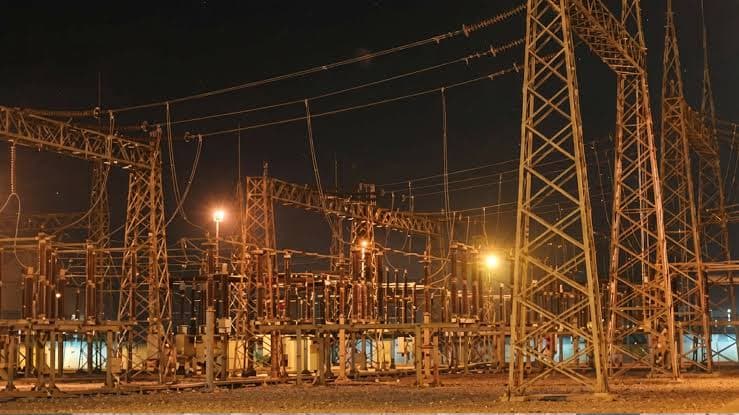
Regulatory data show Nigeria distribution companies grew revenue collection about 666% over ten years while electricity supplied rose only 32%, a gap that frames the sector tariff and investment debate.

FG accuses Lagos firms of stealing up to 150MW of electricity daily from national grid
The Federal Government has accused some Lagos companies of stealing as much as 150 megawatts daily by connecting factories directly to the national grid without DisCo consent, and intends to recover the charges owed.
About the author
Tunde Balogun
Economics Correspondent
Tunde Balogun writes for BusinessPress.
More by Tunde Balogun
Bank of Agriculture anchors N200bn intervention on N350,000/tonne maize price floor
Agriculture25 mins ago
Week-43 food price watch: maize dips 1.6% as palm oil climbs 2.8%
Agriculture34 mins ago
FG commissions six transmission substations in Kano, Katsina, adding 640MW
Economy1 hr ago