
“The Emergency Is Over”: Tinubu Pivots From Stabilisation to Prosperity at Lagos Trade Fair
Opening the 40th Lagos International Trade Fair, the president cited an 18-year reserves high of $55.07bn, 14.63 per cent inflation and 4.43 per cent growth as the foundation repaired.
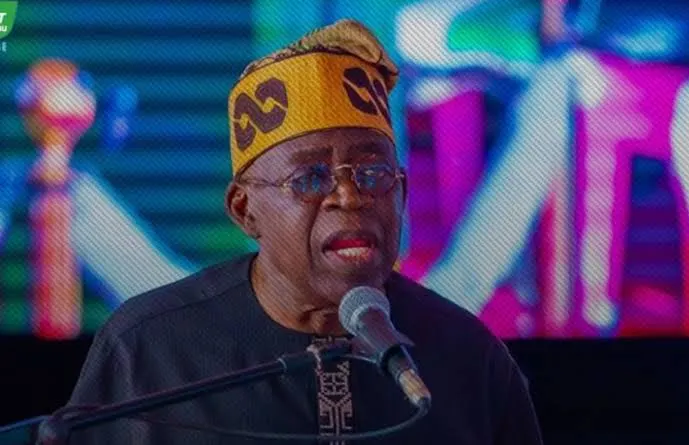
President Bola Tinubu has declared that Nigeria's reform phase has achieved stability and the task now is to convert it into prosperity, telling the opening of the 40th Lagos International Trade Fair that "the emergency is over. The foundation has been repaired. Our task now is to turn stability into prosperity, and enterprise is at the heart of that task."
The president, represented at the Tafawa Balewa Square event by Minister of State for Industry John Enoh, paired the rhetoric with a macro scoreboard the administration has not previously assembled in one place: gross external reserves of approximately $55.07 billion in October 2026, the highest in 18 years; net reserves exceeding $40 billion, from less than $4 billion in 2023; inflation down to 14.63 per cent in September; and second-quarter growth of 4.43 per cent.
The numbers behind the claim
Each figure is checkable and, checked, they hold up. Reserves above $55 billion have been corroborated by central bank data reported through the week, and the naira's 6.26 per cent appreciation against the dollar over the past twelve months — closing at N1,346.79 on November 6 — gives the stability claim its strongest single exhibit. A currency that strengthens through an election-adjacent year, rather than collapsing into one, is the clearest break with Nigeria's recent macroeconomic past.
The trade numbers are equally specific. Non-oil exports exceeded $6.1 billion in 2025, capital importation reached roughly $21 billion, and the Ministry of Industry, Trade and Investment and its agencies supported more than 115,000 micro, small and medium enterprises last year, the president said. He framed the National Industrial Policy as the roadmap for converting raw materials into finished products and pointed to the African Continental Free Trade Area as the market Nigerian businesses should now be scaling toward.
From stabilisation to production
The political economy of the speech lies in its pivot. The administration's first years were consumed by the stabilisation agenda — subsidy removal, exchange-rate unification, fiscal consolidation — whose costs households felt immediately and whose benefits accumulated slowly in reserves and credibility. The Lagos Trade Fair address marks the declared start of phase two: production, job creation and expanded trade, with the president stressing that growth must be driven by domestic production and value addition rather than import dependence.
Whether the pivot lands is now an investment question. Industry responds to stable rules, reliable power and affordable credit — and the same week's evidence shows all three remain works in progress, from manufacturers' N820.7 billion nine-month energy bill to the NESG's finding that financing has become the trade sector's number-one constraint.
What the business audience heard
The venue carried its own message. The 40th edition of the fair — a six-decade institution of Lagos commerce, staged this year at Tafawa Balewa Square — assembles the importers, manufacturers and distributors whose constraints the reform era has done most to reshape, and the president's framing implicitly asked them to move from hedging the macro to building the productive base.
The Lagos Chamber of Commerce and Industry's fair is the country's largest annual commercial gathering, and the presidential message was calibrated for exactly that audience. The implicit offer: the macro repairs that businesses most distrusted — the naira, the subsidies, the data — have been done, and the administration's next test is whether industrial policy, electricity and finance reach the productive base. The promise of continued efforts to improve MSMEs' access to finance, electricity and markets is the operative commitment to hold against next year's numbers.
Markets have already begun voting on the stabilisation record. The Nigerian Exchange's year-to-date return above 59 per cent, the T-bill auction books crowding past N2 trillion and the IMF's projection that investment will reach 20 per cent of GDP all price in a country that has stopped lurching between crises.
The test that matters
Prosperity is measurable, and the metrics are already published monthly: inflation toward single digits, PMI expansion translating into hiring, non-oil exports compounding past $6 billion a year, and capital formation lifting toward levels that sustain 5-per-cent-plus growth. The president has set his own benchmark — stability was the foundation, prosperity is the building. The 2026 close and the 2027 budget will show whether the foundation holds weight.
Up next
Pipeline Outages Deferred 42.55 Million Barrels and $2.97bn of Output in 2025, NUPRC Data Show
The upstream regulator’s figures turn Nigeria’s chronic evacuation losses into a hard number — weeks of national production that never reached a buyer or the federation account.
More in Economy
See all
China Factories Slip Back Below Growth Line in October
China's October manufacturing PMI fell to 49.3 from above 50 in September, with new orders at 49.4 and production at 49.8, NBS data shows.

India GST Collections Jump 23% to Rs 2.31 Lakh Crore
India's October goods-and-services tax collections rose 23% to Rs 2.31 lakh crore, with net receipts up 26%, after stamp-duty cutoffs.

Korea Exports Double in October on Chip Demand
South Korea's October exports surged 93.7% to $115.28 billion, the second-highest month ever, as semiconductor shipments rose 259%.
About the author
Abiodun Abdullahi
Author / Business and Markets Writer
Abiodun Abdullahi writes for BusinessPress.


