FG Backs Plan to Give Students 10 Dangote Refinery IPO Shares Each
FG hails Aliko Dangote Foundation plan to give eligible tertiary students 10 Dangote Refinery IPO shares each, potentially reaching four million students.

The Federal Government has commended Aliko Dangote and the Aliko Dangote Foundation over plans to acquire shares in Dangote Refinery's proposed initial public offering for eligible students of Nigerian tertiary institutions, an initiative aimed at promoting financial literacy and wealth creation among young people.
Under the proposal, each eligible student aged 18 years and above is expected to receive 10 IPO shares, with the programme potentially reaching up to four million students without requiring them to make an initial investment or buy the shares themselves. The plan was publicised as Dangote Refinery's offer of up to N2.15 trillion in shares continued to run.
The Minister of Education, Tunji Alausa, said the initiative aligns with the Nigeria Education Sector Renewal Initiative and President Bola Tinubu's Renewed Hope Agenda by linking education with enterprise, human capital development and inclusive economic growth. [irp] [irp] [irp] [irp] [irp]
How the student allocation would work
The proposal would place a small holding of refinery shares in the hands of students who are old enough to hold securities, giving them a direct stake in one of Nigeria's largest industrial projects. At 10 shares each, a cohort of four million students would account for about 40 million shares, a modest slice of an offer built around 4.1 billion shares priced at N525 per share and a minimum subscription of 10 shares.
The allocation would not require students to pay, according to the plan, distinguishing it from ordinary retail participation. The foundation would fund the shares, and the education ministry has said the goal is to build familiarity with investing rather than to steer students toward any single stock.
Linking education with enterprise
Alausa said the ministry would keep strengthening partnerships with private-sector organisations to improve the quality, relevance, equity and efficiency of education while equipping learners with skills for a changing economy. He thanked the Aliko Dangote Foundation for its contribution to youth development and urged other corporate organisations to support initiatives that promote financial awareness, economic productivity and entrepreneurship among young Nigerians.
The minister, however, clarified that the ministry's commendation rested on the initiative's educational and developmental value and did not amount to an endorsement of any particular investment decision. That distinction matters because shares can fall as well as rise, and a gift of equity carries market risk even when the entry cost is zero.
A wider effort at financial inclusion
The student plan sits within a broader push to widen share ownership in Nigeria, where retail participation in the capital market has historically been thin relative to the size of the economy. The Dangote Refinery offer, which opened on September 14 and was extended to October 27, has drawn investors from more than 90 countries, according to the company and its advisers.
Dangote Refinery, which began processing crude in 2024, has moved towards profitability as it runs closer to full capacity. The offer is priced at N525 per share, targets as many as 10 million retail investors across Nigeria and Africa, and was extended by two weeks to October 27 to broaden access to the sale.
If implemented, the initiative would give students a practical experience of equity ownership at a time when the rising cost of living has made financial security a pressing concern for young Nigerians. It would also deepen the pool of retail investors the Nigerian Exchange is courting as it seeks to broaden the market's domestic base.
Yet the plan also raises questions that the education ministry acknowledged only indirectly: who will administer the thousands of small holdings, how students will be taught to understand the shares they receive, and whether a one-off allocation can build lasting investing habits. Supporters argue those concerns are manageable and that the symbolic value of turning students into shareholders is worth the effort.
For its part, the government is presenting the proposal as one more link between its education and enterprise agendas, positioning the classroom as a starting point for participation in the capital market rather than a world apart from it.
Up next
Nigeria's Portfolio Investment Rises 45% to $6.51 Billion in Q2 2026
Nigeria's portfolio investment rose 45 per cent to $6.51 billion in the second quarter of 2026, Central Bank data show, with debt securities driving most of the increase as the government courts more foreign capital.
More in Business
See all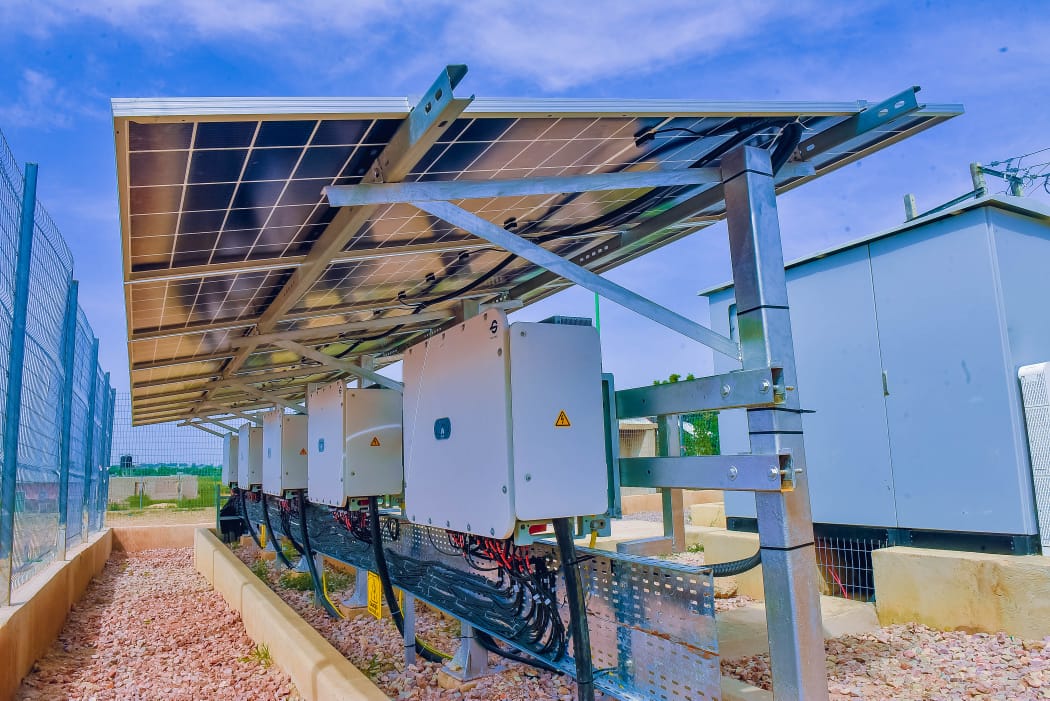
Nigeria Commissions Mini-Grids and Gombe Solar Project to Widen Power Access
Nigeria has commissioned a batch of mini-grids with roughly 16MW of combined capacity and a 1MW solar power installation in Gombe State, extending electricity to communities outside the national grid's reliable reach.
Lagos Commodities Exchange Targets Transparent Petroleum Pricing After NMDPRA Licence
The Lagos Commodities and Futures Exchange has obtained a licence from the Nigerian Midstream and Downstream Petroleum Regulatory Authority, positioning itself to bring greater price transparency to petroleum product trading.
Lagos to Host South-West Food Systems Strategy Review as States Push for Stronger Food Security
Scheduled for October 20–22, 2026, the bi-annual review will also feature the validation of a draft Standard Operating Procedure (SOP)...
About the author
Amaka Obi
Senior Business Reporter
Amaka Obi writes for BusinessPress.