TotalEnergies Deepens Nigeria Bet With Two Gas Investment Decisions
TotalEnergies EP Nigeria has taken two gas investment decisions in just over a year, tying the Ubeta and Ima projects to Nigeria LNG expansion.
TotalEnergies EP Nigeria Limited has taken two final investment decisions in Nigeria in a little over a year, a signal that the French energy major is deepening its gas commitment even as the industry debates divestments and ownership changes.
The company's deputy general manager for external relations and country communication, Senan Murray, said the decisions covered the Ubeta gas project, sanctioned in June 2024 with the Nigerian National Petroleum Company Limited and its partners, and the Ima gas project, approved last month. He spoke at the 2026 Annual Energy Conference of the Association of Energy Correspondents of Nigeria in Lagos, themed "Access to Assets: Empowering Players and Driving Growth."
"In June 2024 we took FID with NNPC and our partners to develop Ubeta, and only last month we took another FID to develop the IMA gas project," Murray told the conference, describing the operating climate as encouraging. [irp] [irp] [irp] [irp] [irp]
What the two projects commit to
The Ima field straddles the OML 112 and OML 117 blocks in shallow waters near Bonny Island. TotalEnergies holds 40 percent and operates the project, while Nigerian independent AMNI International Petroleum Development Company holds 60 percent. The development carries an estimated cost of about $1.108 billion and independently confirmed gross reserves of roughly 1.28 trillion cubic feet of non-associated gas.
At plateau, Ima is designed to produce about 350 million standard cubic feet of gas per day, equivalent to more than 60,000 barrels of oil equivalent daily, for a minimum of eight years. The gas will travel through a 22-kilometre pipeline to the Nigeria LNG terminal, where it is expected to supply about a third of the feed gas needed for the plant's Train 7 expansion. First gas is targeted for 2028.
Ubeta, developed on OML 58 with NNPC and partners, is a non-associated gas scheme designed to unlock roughly 350 million standard cubic feet per day as well. The partners have said the project could generate revenue above $7 billion over 20 years, with output also earmarked for Nigeria LNG. The Ima development is expected to source about 60 percent of its workforce from host communities during construction, with all key contractors drawn from local companies, while Ubeta includes a five megawatt solar plant being built at the Obite site and electrification of the drilling rig to lower its carbon intensity.
Both projects feed a national push to treat gas as a transition fuel and to expand the country's liquefaction capacity. Nigeria LNG's Train 7 will lift output from 22 million to 30 million tonnes a year, raising demand for the kind of non-associated gas that Ubeta and Ima are designed to supply.
Emissions, incentives and methane monitoring
Murray said both investment decisions incorporate zero routine flaring and draw on government incentives introduced for non-associated gas developments. Those fiscal and policy measures, industry executives say, have improved the economics of offshore gas projects that had stalled for years.
TotalEnergies has also worked with NNPC to strengthen methane monitoring across its sites, using technology the company has deployed to detect and measure leaks. Murray framed the two projects as consistent with a strategy of producing more energy with lower emissions.
A long presence in a shifting industry
Murray stressed TotalEnergies' history in the country, noting that the company has operated in Nigeria's downstream sector for 70 years and in the upstream for 67 years. TotalEnergies says it employs more than 1,800 people in Nigeria and runs about 530 service stations.
The NAEC conference gave operators a platform to examine barriers to acquiring assets, divestment trends and the operational changes reshaping Nigeria's oil, gas and power industries. The debate has intensified as international oil companies sell onshore and shallow-water assets to indigenous players, a wave that included Shell's agreement to sell its Nigerian gas distribution business to Vaaris Energy.
For TotalEnergies, the message was that it is staying and expanding. "These are exciting times, the environment is now very amenable to business, and we will see even more in the coming months and years," Murray said.
Whether that pipeline of projects materialises will depend on financing, regulatory approvals and the pace of the Nigeria LNG expansion that underpins demand for the new gas. For now, the company's two decisions in barely a year give Nigeria's gas ambitions a tangible, if still early, commitment from one of the country's largest foreign investors.
Up next
FG Backs Plan to Give Students 10 Dangote Refinery IPO Shares Each
FG hails Aliko Dangote Foundation plan to give eligible tertiary students 10 Dangote Refinery IPO shares each, potentially reaching four million students.
More in Business
See all
Lagos to Host South-West Food Systems Strategy Review as States Push for Stronger Food Security
Scheduled for October 20–22, 2026, the bi-annual review will also feature the validation of a draft Standard Operating Procedure (SOP)...
FT: Africa's Fastest-Growing Cities to Add 19 Million People a Year
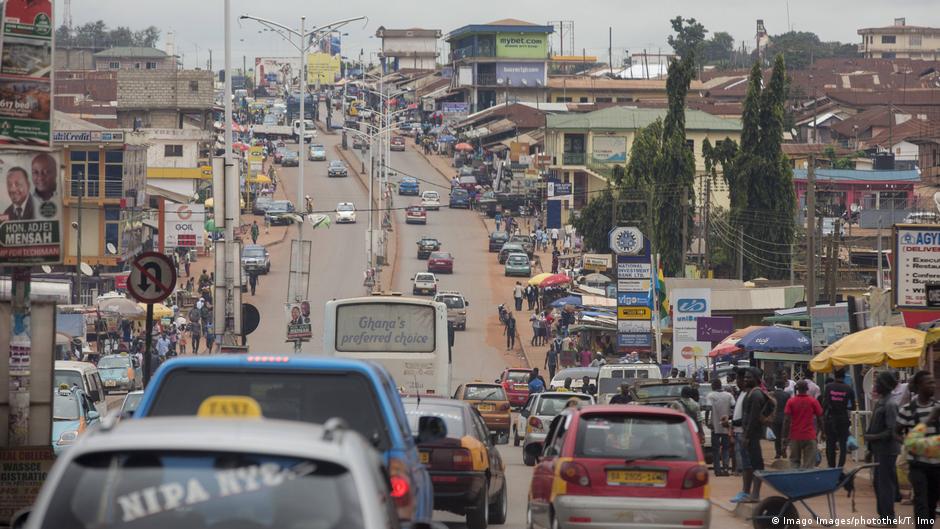
The Financial Times' Big Read on the world's fastest-growing cities reports that Africa's urban centres are set to expand by 19 million people a year, nearly two Londons annually, with growth concentrating in a handful of hubs and spreading in unfamiliar patterns.
Oil Marketers Reject FG's Proposed N1,350 Petrol Price Ceiling
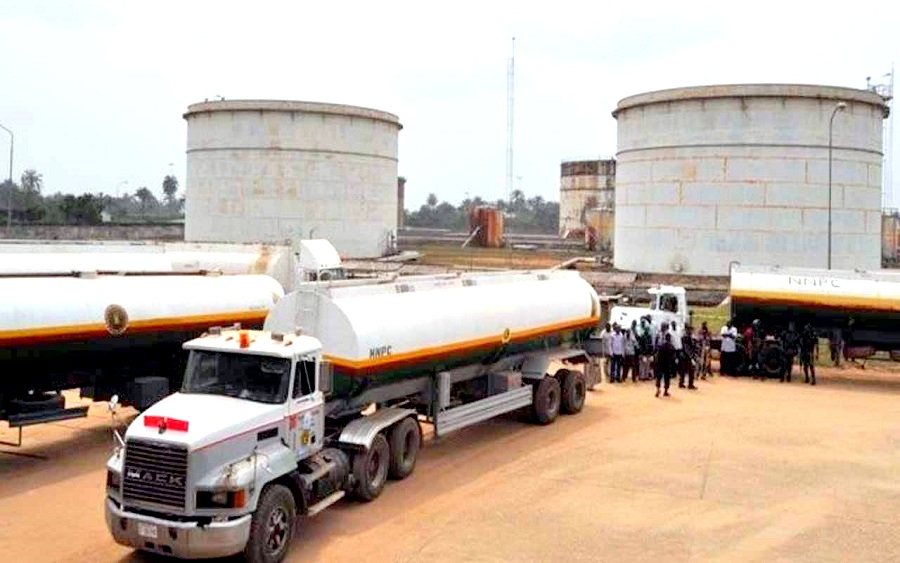
The Major Energies Marketers Association of Nigeria has rejected the federal government's proposed N1,350 per litre ceiling on petrol ex-gantry and landing costs, arguing that arbitrary price caps distort competition without fixing supply bottlenecks.
About the author
Amaka Obi
Senior Business Reporter
Amaka Obi writes for BusinessPress.