CITA Energies Seeks Review of Dangote Refinery's Jet A1 Pricing Formula
Aviation fuel marketer CITA Energies has called on Dangote Refinery to review its Jet A1 pricing formula, a premium introduced in March and a requirement that 25% of buyers' payment instruments be placed under lien, saying the extra costs are passed on to airlines.
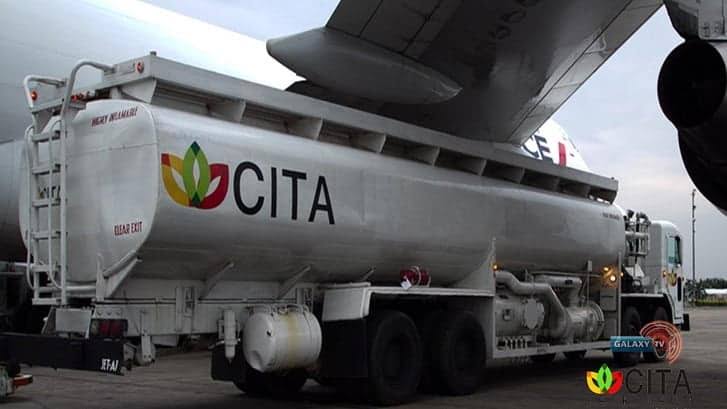
CITA Energies, one of Nigeria's leading indigenous aviation fuel marketers, has called on Dangote Petroleum Refinery to review the pricing structure it applies to Jet A1, arguing that mismatches between the refinery's formula and global benchmarks are keeping the cost of jet fuel high for airlines.
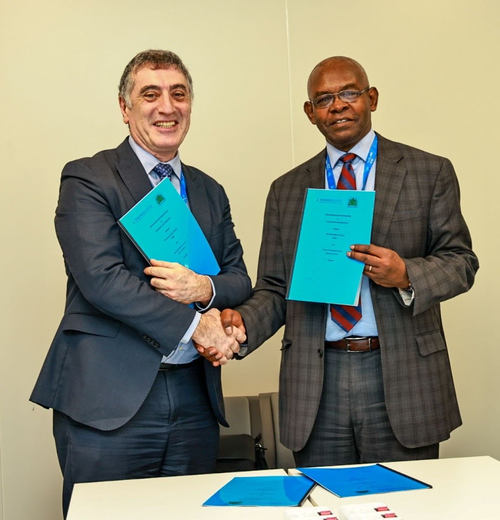
Dr Thomas Ogungbangbe, the company's chairman, made the appeal on Friday in Lagos during celebrations marking CITA's 20 years of operations, saying that while local refining had ended the scarcity of aviation fuel, the pricing arrangements attached to it had created new uncertainties for marketers and their airline customers.
Two formulas that do not match
Aviation fuel contracts worldwide are typically priced on a month-minus-one basis, using the average of published benchmark prices in the preceding month. Marketers selling in October, for instance, price against the September average, which gives both buyer and seller visibility of costs in advance.
Dangote Refinery, Ogungbangbe explained, operates on a different arrangement known as "BL plus five", under which the final purchase price can be determined up to five days after loading. "You can even be selling in Lagos without knowing the price at which you bought the product," he said, describing the gap as the major challenge facing marketers.
A premium, a lien and red figures
The CITA chairman also criticised an additional premium introduced by the refinery around March, during unrest in the Middle East, which has not been removed. Because the premium is not part of the global formula, marketers can only pass it on to customers, he said, adding that this is why airlines have been vocal about fuel costs.
A third complaint concerns a requirement that 25 per cent of the value of payment instruments submitted by buyers be placed under lien until reconciliation. A marketer presenting a $10 million instrument, he noted, would be serviced for only $7.5 million initially while paying financing costs on the full amount, sometimes for weeks.
The combined effect, according to Ogungbangbe, is that CITA's accounts are now "a sea of red figures", to the point where the company sometimes advises customers to buy from competitors rather than execute loss-making trades.
Single-source risk
Titilayo Olaore, CITA's acting managing director, said marketers now operate under what she called a "one-source justification hazard", all buying from a single major domestic supplier, which leaves prices between marketers varying by only about N5 a litre and removes room for competitive discounting. Aviation fuel accounts for at least 40 per cent of Nigerian airlines' operating expenses.
The appeal
Ogungbangbe acknowledged that Dangote had eradicated jet fuel scarcity and praised the refinery for opening the market to indigenous operators, but asked it to remove the March premium and align its pricing with international practice. Whether the refinery responds will shape not only airline costs but the credibility of the promise that local refining would make fuel cheaper.
Up next
Petrol Discount Eludes Motorists as NNPCL Pump Price Returns to N1,405
Nigeria's 30-day petrol discount has failed to reach most motorists, with NNPCL stations back at N1,405 a litre and the N66 reduction available only through the company's app at self-service pumps, while transport fares keep rising.
More in Business
See all
Power Minister Rules Out Electricity Tariff Increase, Targets 24-Hour Supply
Minister of Power Joseph Tegbe says there is no plan to raise electricity tariffs, insisting the focus is round-the-clock supply as the FG flags off 17.7MW of mini-grids in Oyo State.
Airlines Risk N6.6 Billion From 25-Day Owerri Airport Closure
Domestic airlines could lose over N6.6 billion from the planned 25-day closure of Owerri's Sam Mbakwe airport for runway rehabilitation, affecting 55,000 passengers.
NNPC says October petrol discount does not restore subsidy
The state oil company's retail arm is giving up its margin for 30 days, offering temporary relief without imposing a nationwide pump price.
About the author
Amaka Obi
Senior Business Reporter
Amaka Obi writes for BusinessPress.
More by Amaka Obi