NGX market capitalisation crosses N160 trillion as banking stocks rally
Fresh buying in banking and industrial counters lifted the bourse, with improved breadth suggesting the rally is broadening beyond a few stocks.
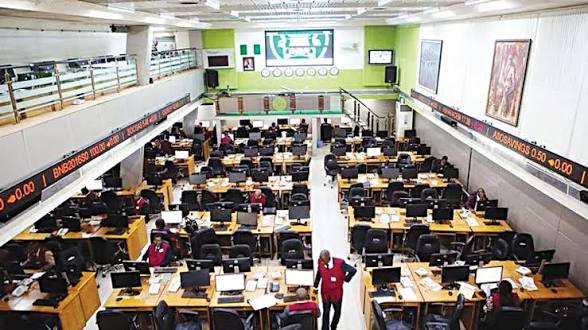
Nigeria’s equity market closed the week ended October 23, 2026 on a strong note, with total market capitalisation rising above N160 trillion as banking and industrial stocks attracted fresh buying. The gain marked a recovery from the previous week’s profit-taking and reinforced the market’s upward bias for the year.
The All-Share Index advanced as investors positioned for third-quarter earnings and dividend announcements. Turnover improved, suggesting that the rally was not confined to a few illiquid counters. Market breadth was positive, with more stocks gaining than losing.
Crossing the N160 trillion threshold is psychologically important, but the market’s underlying condition matters more than the round number. Liquidity is stronger than it was earlier in the year, foreign participation has stabilised and domestic institutions continue to provide support. Those factors suggest the rally has a firmer base than a purely speculative surge.
What lifted the market
Banking stocks led the advance as investors reacted to strong nine-month results and expectations of higher dividends. First HoldCo’s profit surge and the broader sector’s resilience helped offset concerns about the naira and the cost of recapitalisation.
Industrial counters also contributed. Cement and consumer goods companies benefited from bargain hunting after recent declines, while energy stocks tracked the rise in crude oil prices. The gains were broad enough to lift the index without relying on a single large-cap name.
Third-quarter earnings have been the main catalyst. Companies that reported profit growth and declared interim dividends have been rewarded, while those with weak results have lagged. That discrimination is a sign of a more mature market, where investors are paying attention to fundamentals rather than buying indiscriminately.
The liquidity backdrop
Domestic liquidity remains ample. Pension funds, insurers and asset managers have cash to deploy, and bank deposits continue to grow faster than lending. Some of that money has flowed into equities as investors seek returns that outpace inflation and fixed-income yields.
Foreign portfolio investors have also returned selectively. Nigeria’s inclusion in JPMorgan’s frontier bond index and the prospect of improved foreign-exchange liquidity have encouraged some managers to re-examine Nigerian assets. Foreign flows remain volatile, but their return has added depth to the market.
The naira’s recent weakness is a risk. A sharp depreciation can erode dollar returns for foreign investors and prompt outflows. It also raises import costs for companies, which can compress margins. The market has so far looked through the currency move, but that could change if the decline continues.
Valuation and earnings
Nigerian equities are no longer cheap in absolute terms. The market has rallied strongly over the past year, and some stocks now trade at valuations that assume continued earnings growth. That does not mean the market is expensive relative to its own history, but it does mean that disappointments will be punished.
Earnings quality is the key variable. Profit growth driven by higher interest rates or one-off gains may not be sustainable. Investors are beginning to distinguish between companies with pricing power and those benefiting from a cyclical windfall. That should support a more durable re-rating for well-run businesses.
Dividend yields remain attractive for income-focused investors, particularly in banking and consumer goods. But investors should check payout ratios and capital adequacy before chasing yield. A high dividend that weakens the balance sheet is not a good outcome.
Risks to the rally
The biggest risks are external. Global interest rates, oil prices and risk appetite can change quickly, and Nigeria is still sensitive to shifts in foreign investor sentiment. A sudden stop in portfolio flows would test the market’s liquidity and could trigger a sharp correction.
Domestic policy is another variable. Changes to the exchange rate, monetary policy or tax rules can alter corporate earnings and investor confidence. The market has coped with significant reforms over the past two years, but fatigue is a real risk.
For now, the balance of evidence favours a constructive outlook. Earnings are improving, liquidity is adequate and valuations are not stretched relative to growth. The N160 trillion milestone is a reflection of that environment, not a guarantee that the rally will continue indefinitely.
Up next
CBN sells N2.63 trillion OMO bills as banks chase yield and safety
The October 23 auction was oversubscribed by N629 billion, showing abundant banking-system liquidity even as stop rates climbed.
More in Markets
See all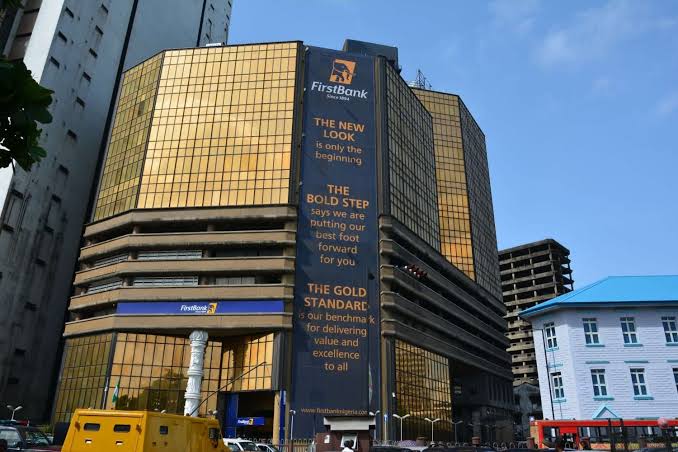
First HoldCo shares jump 10% as N911.24 billion pre-tax profit resets valuation
The banking group’s 60.84 per cent profit growth drew fresh buying, narrowing the holding-company discount and lifting sentiment on the NGX.

First HoldCo shares jump 10% as nine-month profit rises 60.84%
First HoldCo shares rose 10% after pre-tax profit climbed to N911.24 billion, prompting investors to reprice the banking group’s earnings outlook.
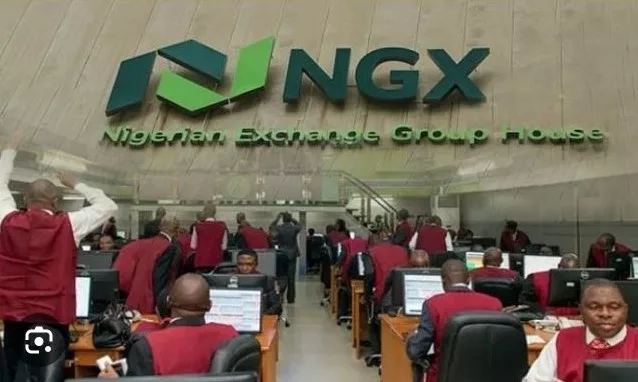
NGX nine-month stock deals surpass N15.06 trillion as liquidity deepens
Nigerian Exchange turnover crossed N15.06 trillion in nine months, signalling deeper liquidity but a market still concentrated in large-cap stocks.
About the author
Kwame Mensah
Markets Correspondent
Kwame Mensah writes for BusinessPress.
More by Kwame Mensah