
DRK Backs LbH Plan to Bankroll Ghana Farmers
Ghanaian agritech LbH raises DRK Foundation backing to expand farmer credit data infrastructure after facilitating $5.4m in loans to 13,000 farmers.
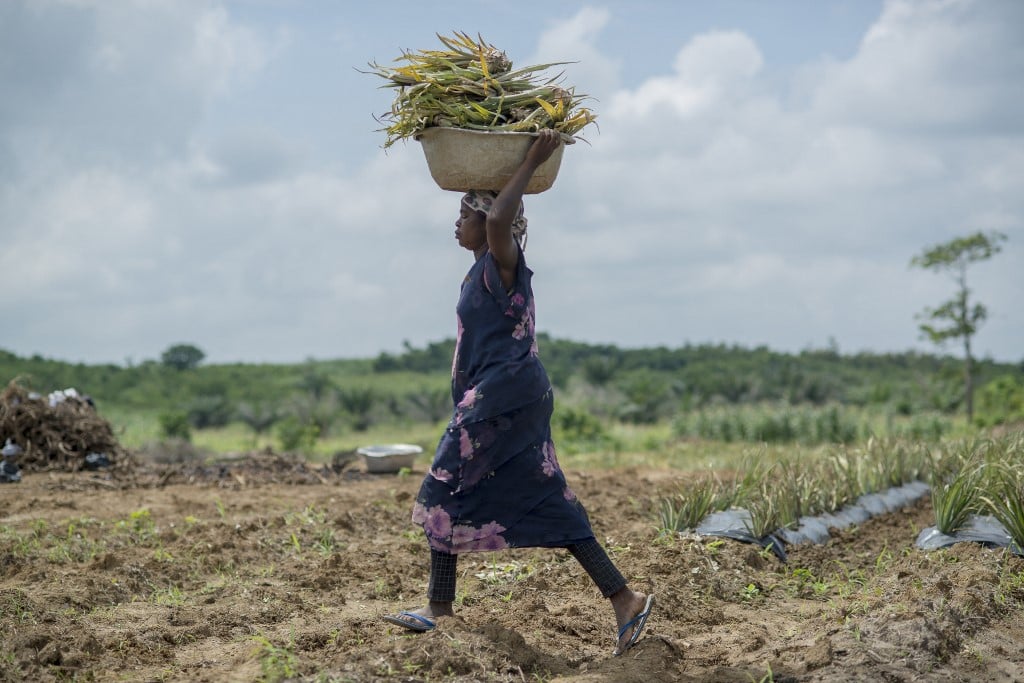
Ghanaian agritech LbH has raised new funding from the Draper Richards Kaplan Foundation to build credit infrastructure that connects smallholder farmers to formal loans — backing that targets the structural reason African farmers remain unbanked: not a shortage of lenders, but a shortage of information lenders can underwrite. Founded by Ato Kwamena Cyrus-Mensah, the company digitises farm-level data into credit assessments that financial institutions can use to price and extend commercial loans.
The numbers behind the raise show a model already operating at meaningful scale. According to DRK Foundation disclosures, LbH has facilitated $5.4 million in financing to more than 13,000 smallholder farmers, digitised records for over 72,000 farmers, and reports an average income increase of 250 per cent among farmers receiving financing through its platform. Its longer-term target is one million farmers by 2031.
Credit infrastructure, not a lending clinic
LbH's positioning is the innovation in the space. Rather than operating as a conventional agricultural lender — carrying loan capital, absorbing defaults and managing collections — the company builds the data layer lenders need: crop types, cultivated acreage, production capacity, farming history and yields, converted into farmer profiles, credit scores and monitoring tools. Loans facilitated through the platform typically run $600 to $2,500 at an average annual interest rate of 18 per cent — expensive by global standards, cheap by the standards of informal rural lending which can charge multiples of that.
The infrastructure framing solves the core problem of agricultural credit economics. Lenders avoid smallholders because screening costs exceed average loan sizes; a fintech layer that produces reliable farmer profiles for a fraction of branch-based underwriting costs changes that calculus permanently. Each digitised record reduces the marginal cost of the next loan — the compounding property that makes data infrastructure businesses fundamentally different from balance-sheet lenders.
The women-and-youth economics of the loan book
Seventy per cent of farmers who received financing through LbH's platform are women and young people — a composition with direct policy relevance. Ghana's agricultural labour force skews female in smallholder production, and youth out-migration from farming is driven largely by lack of working capital and land access. When credit infrastructure prioritises these cohorts, it operates simultaneously as a productivity programme and a rural employment stabiliser.
The 250 per cent average income increase among financed farmers is the metric donors and commercial investors both price. It exceeds the sector's typical documented gains from input credit alone, suggesting the platform's screening matches loans to farmers most likely to deploy them productively — precisely the selection effect a well-designed credit layer should produce. DRK's participation, from a foundation with a record of backing data-driven social enterprises, signals that impact capital increasingly evaluates agritechs on audited outcome metrics rather than narrative.
What the next phase looks like
The company's expansion roadmap extends the data layer into new channels. Plans call for working with larger farmer groups and cooperatives, embedding financing within agricultural distribution channels so that credit is offered at the point of input purchase, and building digital wallet functionality to capture transaction histories and repayment records — giving lenders continuous financial information rather than static seasonal snapshots.
The embedded-distribution model is the strategic centre of gravity. Financing offered at the agro-dealer's counter converts to input credit in a single transaction, cutting customer acquisition costs and default risk simultaneously, since farmers receive inputs rather than cash. The wallet plan completes the loop: once a farmer's transactions and repayments live inside the LbH system, the farmer becomes a continuously underwritable customer — and the platform's data advantage widens with every cycle.
Ghana's agritech moment
The raise lands during Ghana's most active fortnight of agritech funding announcements, with Wami Agro raising international capital to reach 428,000 farmers by 2030 and Proparco's Digital Africa backing Ethiopian social-buying platform ChipChip. The pattern across the deals converges: investors are choosing infrastructure and logistics platforms over consumer apps, application over narrative, and measurable farmer-income outcomes over user counts.
For the wider West African financial sector, LbH's growth reinforces a broader truth: Ghana's commercial banks and rural finance institutions now have a viable data-supply partner for agricultural underwriting, an asset class most have ignored absent reliable information. If the company's 2031 target of one million farmers is even partially achieved, the resulting credit files will constitute the largest structured agricultural risk database in the country's history — infrastructure whose value compounds regardless of which lending institutions ultimately price it.
The risks remain the sector's structural ones: climate shocks that impair the underlying cash flows every credit file depends on, the working-capital intensity of rural agent networks, and the political volatility of cocoa-linked rural incomes. But the DRK Foundation's backing confirms the directional thesis that African agricultural finance has been waiting on for two decades — that the missing layer was never capital for lending, but data for lending. LbH is building exactly that.
Up next
FTSE Stages Fightback After Worst Day Since March
The FTSE 100 falls 2.35% intraday to 10,528 before closing down 1% as Europe absorbs the global AI rout, with insurers and miners leading declines.
More in Business
See all
JobEX Opens Doors to Global Opportunities for Nigerians
For Nigerian users, the Full Access offering is priced at ₦2,999 , providing a relatively modest entry point for users seeking broader...

Dangote Refinery Lifts Petrol Price to N1,300 a Litre
Dangote Refinery raises its petrol gantry price to N1,300 per litre from N1,215 on November 3, with local pump prices rising to about N1,360 as crude costs bite.

Digital Africa Backs Ethiopian Group-Buying App ChipChip
Digital Africa makes its first Ethiopian commitment with funding for ChipChip, a social-buying app aggregating smallholder farm orders into bulk purchases.
About the author
Abena Ofori
Agribusiness Correspondent
Abena Ofori writes for BusinessPress.
More by Abena Ofori


