
FTSE Stages Fightback After Worst Day Since March
The FTSE 100 falls 2.35% intraday to 10,528 before closing down 1% as Europe absorbs the global AI rout, with insurers and miners leading declines.
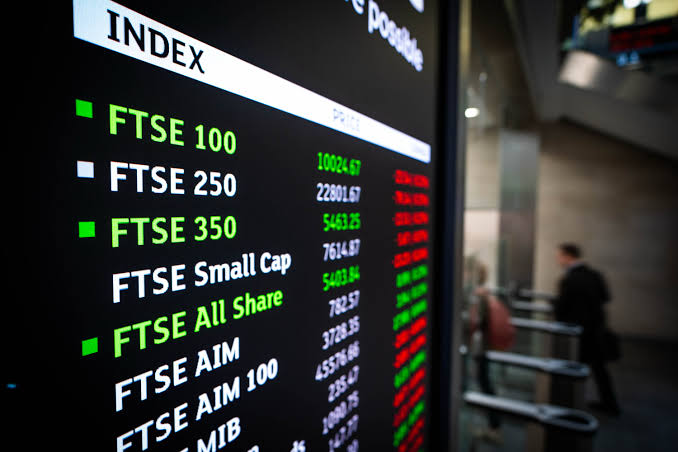
Europe's blue chips spent Friday fighting the worst session since March as the FTSE 100 cratered as much as 2.35 per cent to 10,528 points in morning trade before recovering to close down just 1 per cent, in a day that displayed both the depth of the global AI panic and the surprising resilience of the old continent's non-tech economy. Germany's DAX fell roughly 2 per cent, France's CAC 40 dropped 0.8 per cent and Spain's Ibex lost 0.6 per cent, leaving London's session-level recovery as the session's clearest display of index-level dip-buying.
The European session completed the global chain reaction set off by Democratic victories in this week's U.S. midterm elections, which have revived anxieties over artificial-intelligence regulation and the permitting future of America's data-centre buildout. With Tokyo and Seoul each down six per cent in Asian trading and Wall Street's Nasdaq in correction territory a day earlier, Europe's decline was never in doubt — but its shape diverged instructively from the selling in Asia.
Who sold, who didn't: the composition tells the story
Insurance stocks led indexes lower, a classic pattern consistent in equity history that risk assets get abandoned first in a portfolio-wide deleveraging. Mining shares were the other magnet sellers, with copper heavyweight Antofagasta dropping three per cent — a move that ties European materials names to China demand expectations more than to AI. In that sense, the European swoon was less about direct AI exposure, since the region indexes hold fewer directly exposed AI stocks, and more about the contagion pull of global risk appetite.
The bright spots were equally European in character. Clean-energy and travel stocks found buyers through the session — the rotation trade's beneficiaries when tech-heavy indexes wobble. London's depth in oil-and-gas, defence, banks and consumer staples gave its index a cushion unavailable in AI-dominant Asian markets, which explains why the FTSE closed only half as far down as it traded at its worst: the index's economic composition acted as a partial shock absorber.
Teleperformance's crash punctures the outsourcing calm
Away from the macro panic, France's Teleperformance provided the day's sharpest single-stock story: shares tumbled after management cut its full-year revenue growth outlook, dragging the business-process outsourcing sector into the earnings discount conversation. The move mattered beyond one name because it punctures one of the market's quieter assumptions — that cost-cutting demand from cost-conscious corporates provides steady counter-cyclical growth regardless of the macro cycle — and highlights the pricing pressure that AI-enabled automation has begun to insert into outsourced labour services.
The FTSE 250 — Britain's mid-cap index, where domestic-facing companies concentrate — fell one per cent to 24,396, while the junior AIM All-Share slid one per cent as well. The uniformity of declines across segments shows Friday's risk-off was broad and mechanical, not a story about the U.K. economy: when Asian and American indexes collapsed overnight, funds that need liquidity sell what can be sold, and London's morning session was the market that could.
Why Europe is the AI trade's shock absorber
European valuations have run a narrower discount to global fair value ever since the 2022 energy shock, and 2026's rally in Europe has been powered more by banks, defence and industrial specialities than by AI exposure — an allocation that makes the region structurally less dependent on the very theme that spark last week's panic. When the AI complex falls six per cent in Tokyo and the Nasdaq enters correction, Europe's loss of one to two per cent is not evidence of weakness but of lower beta: the same proportionate exposure DAX and CAC investors carry through their share of global technology giants.
The macro calibrator has been bond markets: European sovereign yields fell through the week as capital sought safety, with the same dynamic that dropped U.S. 10-year yields toward 4.8 per cent. Falling yields support European equity valuations and, by easing financial conditions, reduce the chance that Friday's start-of-session panic becomes a self-reinforcing credit event. Against that cushion, the Frankfurt and Paris declines by European standards read as redistribution rather than rout.
What comes next for European portfolios
Next week's calendar gives Europe the test of whether the November dip is buyable: corporate earnings in the banking complex, forward industrial data from Germany, and the latest U.S. megacap reports that will determine whether the global AI unwind extends or stabilises. If Wall Street holds the rebound it staged Friday, European indexes — down their level since March but still holding their year's gains — would look like the least-damaged developed market of the November panic.
For African and emerging-market investors watching the sell-off from the outside, Europe's Friday offers a portfolio lesson: diversification acts not by eliminating losses, but by changing the composition of the vulnerability. Markets that lean into the current dominant theme get hit hardest when the theme wobbles; markets carrying industrial, financial and consumer balance get a shallower ride down. London's morning losing 254 points in one sweep and closing with half the damage is the textbook illustration of that principle.
Up next
Gold Slides as US Jobs Jolt Lifts the Dollar
Gold drops as much as $66 an intraday session as the surprise US jobs report lifts the dollar and cools Fed rate-cut bets, reversing its week-long haven bid.
More in Markets
See all
Nigerian Stocks Open November With Cautious Pullback
The NGX All-Share Index slipped 0.02 percent in November first session as heavyweight profit-taking offset gains after October record month.

China Halts Yuan Rally As Star 50 Index Slumps
China tightened FX rules to halt yuan strength while fresh market tools failed to stop equity declines, with the Star 50 Index down over four percent.

UBS Upgrade Sends Rivian Shares Up 10 Percent
Rivian climbed 10 percent after UBS upgraded the EV maker to buy, arguing the sell-off overdone ahead of a sales inflection for the R2 midsize SUV.
About the author
Adaeze Okonkwo
Markets Editor
Adaeze Okonkwo writes for BusinessPress.
More by Adaeze Okonkwo


