
Proparco Backs Kenyan Food-Loss Fighter Farm to Feed
Proparco invests €150,000 in Farm to Feed, the Kenyan platform matching 5,500 farmers to institutional buyers and cutting reported food losses by 81%.
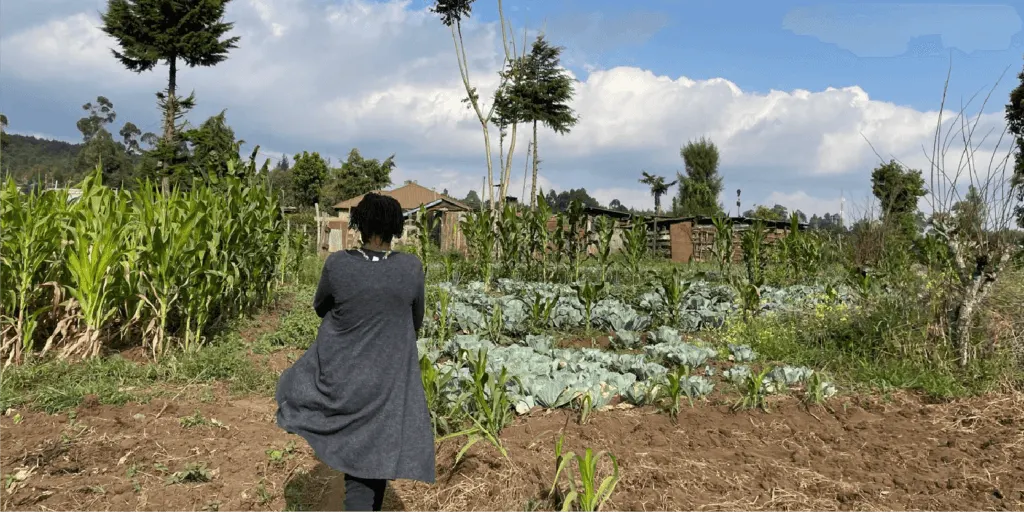
Paris-headquartered development finance institution Proparco has invested €150,000 in Kenya's Farm to Feed, the agrisetu platform that matches smallholder farmers directly with institutional buyers and coordinates sourcing, demand forecasting, logistics, warehousing and payments, the announcement published November 5 confirms. The ticket is small in absolute terms but symbolically loaded: it marks continued European institutional confidence in a model built to attack post-harvest food losses — the estimated one-third or more of African harvests that never reach a paying customer.
Founded in 2021, Farm to Feed connects more than 5,500 registered farmers with over 160 business customers, including hotels, hospitals, schools, food processors and institutional feeding programmes. The company reports annual growth of more than 100 per cent for three consecutive years and — in its 2025 impact report — an 81 per cent reduction in food loss among participating farms, alongside significantly higher farmer incomes, though the figures are company-reported.
Attacking the $100 billion problem
Post-harvest loss is the single most under-priced inefficiency in African agriculture. Produce grown with real input costs spoils at farmgate for lack of matching demand, cold chain and transport coordination. Interventions that reduce spoilage generate value without a single additional hectare planted — the purest productivity lever agriculture offers, and precisely the niche Farm to Feed has built its demand-matching software and logistics coordination around.
What makes the model commercially interesting rather than merely charitable is the customer mix. Buying for institutional catering — hotels, hospital chains, school systems — concentrates demand in predictable volumes and schedules, smoothing the small-producer demand curve. Coordination through forecast-matched sourcing lets the platform capture a commission on the value it creates for both sides rather than carrying inventory risk on the full crop.
Blended finance stacking behind the ticket
The €150,000 investment follows a $1.5 million seed financing announced in 2025, anchored by $1.27 million in equity led by Delta40 Venture Studio and $230,000 in non-dilutive funding from DEG's DeveloPPP Ventures programme. That financing sequence — venture studio equity, DFI grant-linked support, and now DFI equity — is the blended pattern through which early-stage African agri-logistics firms survive the capital-intensive scaling phase.
Proparco's participation also activates the 2X investment framework, because Farm to Feed was founded by women entrepreneurs — the gender-lens qualifier that opens dedicated pools of capital at European DFIs. For a company operating in the thin-margin logistics world, the strategic value of a DFI shareholder extends beyond cash: it unlocks introductions to institutional buyers, favourable lending terms in larger future rounds, and technical assistance on cold-chain and warehouse standards.
Kenya's agriculture-tech runway
Kenya remains East Africa's most developed agritech market, with dense mobile-money rails, a commercialised farm-input network and an institutional catering sector large enough to experiment with structured sourcing. The country's persistence with market-driven models is showing results: post-harvest loss reduction platforms, input financing apps and warehouse-receipt schemes have all scaled there faster than in neighbouring markets. For Farm to Feed, a domestic platform entering expansion beyond Nairobi, the runway is the rest of Kenya's county economies — each with its own production profile and demand concentration.
The company's planning around processing as well as fresh sales deserves attention: converting unsold produce into longer-shelf-life formats is the classic spoilage-risk absorber. If the platform can route surplus into processing streams profitably, its economics shift from commission-based matching into value-added manufacturing, a step-change in margin profile that would explain the DFI investor interest in scaling past Nairobi.
The broader investment signal
For Africa's startup ecosystem, the deal is the latest in a November flurry of agri-finance announcements including IFC's backing for Ethiopia's Kifiya and Ghana's LbH, plus Proparco-backed ChipChip in Ethiopia. The thematic thread: capital is flowing into platforms that make agricultural transactions bankable — data, identity, guaranteed demand — rather than into consumer-facing apps. Development finance institutions are using early-stage tickets to anchor category creation, confident that commercial capital follows where facilitates work.
The risks that decide Farm to Feed's next phase are operational: how far beyond Nairobi the demand-matching network revenues scale, whether the 81 per cent loss-reduction claim holds at larger volumes, and whether institutional demand in a cost-constrained economy continues to expand. With three straight years of 100 per cent-plus growth behind it, the company has so far answered each with execution. Investors and policymakers watching Kenya's food system now get to watch whether the model that turns farmgate surplus into institutional supply can become the template for East Africa's urban food economies.
Up next
Wami Agro Funding Targets 428,000 Ghana Farmers
Ghanaian agritech Wami Agro raises international funding to expand input credit, advisory and buyer links for smallholders, targeting 428,000 farmers by 2030.
More in Agriculture
See all
Cocoa Futures Hold Near 5,467 Dollars on West Africa Weather
Cocoa futures firmed to about $5,467 per tonne as Reuters cited unfavourable West African weather, keeping supply anxiety alive.

Nigeria Woos European Investors for One Million Hectare Tree Crops Expansion
FG is courting European investors to fund expansion of about one million hectares of cocoa, oil palm, cashew and rubber estates.

Borgu Forest Belt Emerges As New Threat To Nigeria Food Security
Armed groups are expanding into the Borgu forest belt, opening a new threat frontier that could spread violence into North-Central food corridors and deepen Nigeria's farm insecurity.
About the author
Tunde Balogun
Economics Correspondent
Tunde Balogun writes for BusinessPress.
More by Tunde Balogun


