Naira holds at N1,497 per euro as French debt stress weighs on currency
The naira traded at N1,497 per euro, falling below N1,500 for the first time since April 2024, as French bond stress weakened the euro rather than reflecting a domestic naira rally.
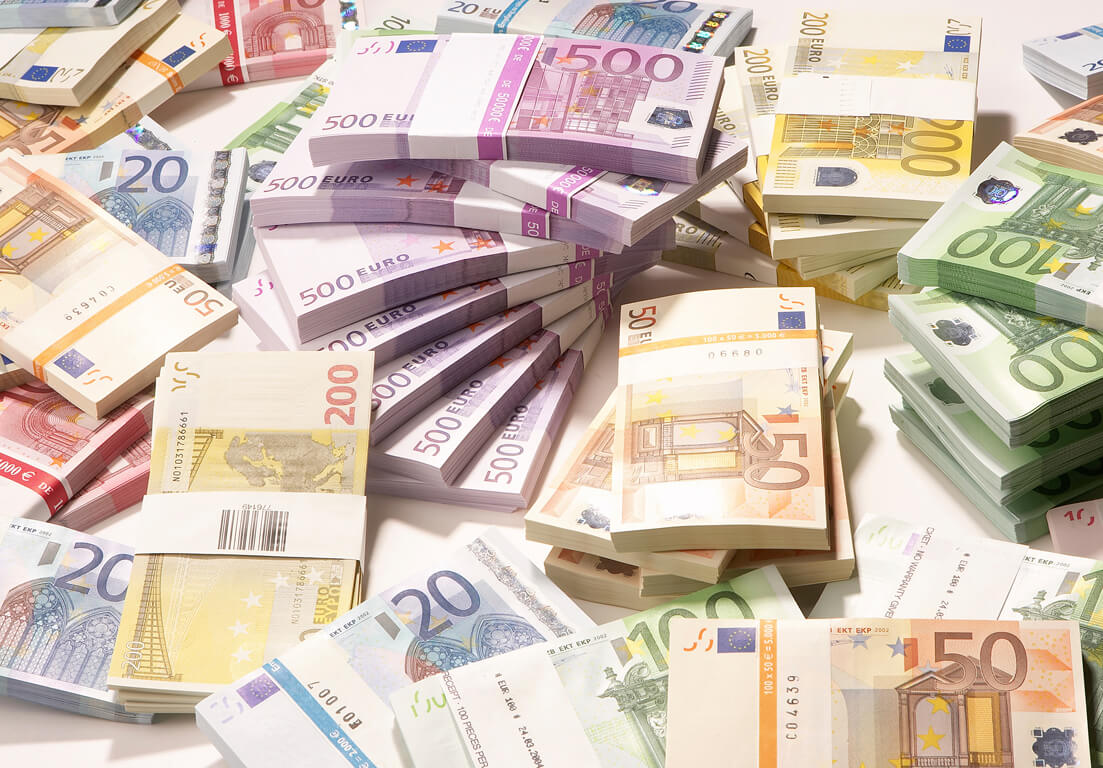
The naira held at N1,497 per euro at midweek, crossing below the N1,500 level for the first time since April 2024, as a sell-off in French government bonds dragged the euro lower against major currencies.
The movement was less a vote of confidence in Nigeria than a reflection of euro weakness. French 10-year government bond yields rose above 5 per cent for the first time since 2002, according to Nairametrics, which reported the naira’s euro rate on October 22. The yield on benchmark French debt advanced seven basis points as bond prices fell, widening the spread over German bunds to 159.4 basis points, the largest gap in 15 years.
Against the dollar, the naira remained close to its recent range. The official rate closed at N1,334.72 per dollar, while the parallel-market rate was quoted around N1,355 to N1,360. The euro’s decline therefore made the naira look stronger in euro terms without a corresponding rally against the dollar.
Why the euro is under pressure
France’s fiscal position has become a source of market anxiety. Investors are questioning whether the government can pass a budget that credibly addresses a widening deficit and rising debt burden. Weekend protests over the cost of living added to the political risk, while higher energy costs have increased the pressure on public finances.
The result is a sharp repricing of French debt. When investors demand a higher yield to hold French bonds, the euro tends to weaken because capital shifts toward assets perceived as safer or more stable. That is what happened this week. The currency move is a European story, transmitted to Nigeria through the cross-currency market.
For Nigerian importers, the euro rate matters. A stronger naira against the euro lowers the naira cost of goods priced in euros, including some machinery, chemicals and consumer products. But the benefit is limited if the naira is stable or weaker against the dollar, which is the currency used for most oil, fuel and capital goods imports.
Nigeria’s own fundamentals
The naira’s relative stability against the dollar is supported by several factors. Gross external reserves stood at about $55.25 billion as of September 18, according to the monetary policy committee’s communiqué, up from $45.57 billion at the start of the year. Higher reserves give the Central Bank of Nigeria more room to smooth foreign-exchange demand.
Inflation has also eased. Headline inflation slowed to 14.63 per cent in September from 15.39 per cent in August, although food inflation remained high at 19.59 per cent. The Central Bank of Nigeria cut its benchmark interest rate by 350 basis points to 23 per cent in September, while keeping the cash reserve requirement at 45 per cent for commercial banks.
Those settings are unusual. A lower policy rate normally reduces the incentive to hold naira assets, but the high cash reserve requirement keeps a lid on bank liquidity and supports the currency. The central bank has also been managing liquidity through open market operations, including a N2 trillion offer on October 22.
Broad money supply has risen above N146 trillion, according to Nairametrics, which warns that excess liquidity could revive speculative pressure on the naira if it is not managed carefully. That is why the central bank’s liquidity operations matter as much as the policy rate.
What the euro move does not prove
A stronger naira against the euro is not evidence that Nigeria’s external position has fundamentally improved. Currency crosses can move for reasons unrelated to the domestic economy. The euro fell because French bond yields rose and political risk increased; the naira did not rally because Nigerian exports surged or foreign investment jumped.
Investors should therefore avoid extrapolating the N1,497 per euro rate into a broader naira-strength narrative. The more relevant benchmarks are the dollar rate, the premium between official and parallel markets, reserve levels and foreign-exchange turnover. On those measures, Nigeria remains stable but not without pressure.
The official-to-parallel gap has narrowed compared with earlier periods, which suggests that the central bank’s reforms have improved price discovery. But the gap has not disappeared. Importers and households still pay a premium for cash dollars, particularly in periods of uncertainty.
What to watch
The next tests are the direction of French and euro-area bond yields, the dollar’s broader trend and Nigeria’s reserve accumulation. If the euro stabilises, the naira’s euro rate could quickly reverse. If French fiscal stress worsens, the euro could weaken further, making the naira appear stronger without any change in Nigerian policy.
Domestically, investors will watch the central bank’s open market operations, the pace of foreign portfolio inflows and the naira’s liquidity in the official market. A sustained decline in reserves or a widening parallel-market premium would be a more meaningful warning sign than a cross-currency move driven by European politics.
For businesses, the practical lesson is to manage currency exposure by invoice currency rather than by headline. A company that imports from Europe may benefit from a weaker euro, but only if it can pass through the gain and if its dollar-linked costs remain contained. A company that borrows in dollars or imports dollar-priced fuel will be more affected by the dollar-naira rate than by the euro.
[irp] [irp] [irp] [irp] [irp]
Up next
Nigeria revives NNPC, NLNG listing plan in push for N750trn market
Vice-President Kashim Shettima has revived plans to list NNPC and NLNG as part of a ten-year strategy to grow Nigeria's equity market to N750 trillion by 2036.
More in Markets
See all
FGN bonds, Eurobonds rally as Treasury bill yields edge higher
FGN bond and Eurobond yields fell modestly while Treasury bill yields rose, leaving Nigeria's fixed-income market mixed as liquidity stayed ample.
Cardoso courts Chinese investment in naira assets after ICBC talks
CBN Governor Olayemi Cardoso has urged Chinese financial institutions to invest in naira-denominated instruments after meetings with ICBC in Beijing.
NGX slips 0.05% as market capitalisation falls to N159.07trn
Nigeria's All-Share Index fell 0.05 per cent to 244,989.9 points on October 22 as market capitalisation slipped to N159.07 trillion, with more stocks declining than advancing.
About the author
Abiodun Abdullahi
Author / Business and Markets Writer
Abiodun Abdullahi writes for BusinessPress.
More by Abiodun Abdullahi