Nigeria Launches Capital Market Masterplan 2.0 Targeting N750 Trillion by 2036
The SEC-led Nigerian Capital Market Masterplan 2.0 targets expansion from about N250 trillion to N750 trillion by 2036, with a National Savings Scheme and a trillion market ambition unveiled in Abuja.
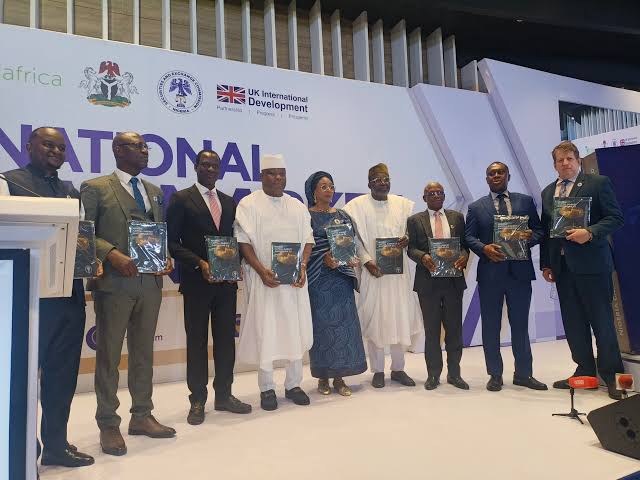
Nigeria has unveiled the Nigerian Capital Market Masterplan 2.0, a ten-year roadmap for 2026 to 2036 that targets expansion of the domestic capital market from roughly N250 trillion to N750 trillion and aims to channel long-term financing into small and medium-sized enterprises, infrastructure and other priority sectors.
Vice President Kashim Shettima launched the plan alongside Finance Minister and Coordinating Minister for the Economy Taiwo Oyedele, United Kingdom High Commissioner to Nigeria Peter Vowles and FSD Africa chief executive Mark Napier at the National Capital Market Conference 2026 in Abuja. The masterplan was developed by the Securities and Exchange Commission (SEC) with technical support from FSD Africa, funded by the UK government, and input from a consortium led by Genesis Analytics and Bourse Consult.
What the five pillars actually change
The roadmap is structured around five pillars: regulatory clarity and enforcement; modernising market infrastructure; broadening the range of issuers and financial instruments; diversifying the investor base; and strengthening institutional and professional capacity. Each pillar carries a sequenced implementation plan with defined responsibilities, timelines and measures of success, which is a departure from the earlier masterplan's looser delivery structure.
The first Masterplan recorded an overall activity completion rate of 63 per cent. The new document explicitly identifies financial inclusion, regional integration, sustainable finance and the mobilisation of capital to priority sectors as areas where progress fell short, framing the 2026–2036 plan as a corrective rather than a fresh start.
SMEs, infrastructure and the savings link
The masterplan was launched alongside a National Savings Scheme, with both initiatives designed to strengthen domestic resource mobilisation and direct more funds into productive investment. For SMEs, the proposed reforms are intended to widen access to capital-market funding as an alternative to conventional bank lending, giving smaller firms a route to longer-tenor financing than overdraft and trade facilities typically provide.
Infrastructure is a parallel priority, with the roadmap seeking to steer capital towards energy, climate resilience and other growth-critical sectors. The document also proposes support for digital and tokenised assets and measures to modernise market infrastructure, signalling an appetite to broaden the range of instruments available to issuers and investors.
MSCI, listings and the foreign investor question
At the same conference, Oyedele said the government is targeting inclusion in MSCI's Emerging Markets classification rather than settling for a return to Frontier Market status, and disclosed that Nigeria has engaged the index provider, including at a recent meeting in Bangkok. Nigeria was moved to MSCI Standalone status in October 2023 amid foreign exchange liquidity and repatriation difficulties, and later returned to FTSE Russell's Frontier Market classification effective September 21, 2026 — a separate system from MSCI's.
The Federal Government has also set a $1 trillion target for the capital market under the new plan, with NNPC and NLNG among the entities anticipated for eventual listing. Whether the N750 trillion ambition and the MSCI objective become measurable progress will depend less on the launch ceremony than on whether the sequenced reforms deliver functioning market infrastructure, credible issuers and the FX access foreign institutions have repeatedly cited as their gating condition.
The delivery question cuts across all five pillars. Capital market masterplans in Nigeria have historically produced strong diagnostics and uneven execution, and the 63 per cent completion rate on the previous roadmap is a reminder that reform documents are judged by their implementation residue. Assigning named responsibilities and success measures per pillar is designed to make that residue easier to audit, but it also exposes the SEC and partner agencies to clearer accountability if timelines slip.
For businesses weighing a future listing or bond issuance, the near-term signals to watch are the enabling regulations that follow the launch, the pace of infrastructure modernisation, and whether the National Savings Scheme accumulates meaningful domestic institutional capital. For foreign investors, the decisive variables remain FX repatriation and market accessibility — the same conditions that determine the MSCI conversation. The masterplan's most consequential sentence may be its acknowledgement that these gaps, not ambition, are what stand between Nigeria and deeper capital markets.
Up next
Fertiliser, Cocoa Lead Nigeria's Non-Oil Export Surge
Fertiliser has emerged as a top non-oil export earner alongside cocoa as Nigeria's industrial and agricultural shipments gain momentum in its diversification drive.
More in Markets
See all
Silver and Copper Hold Firm as the Dollar Eases Into October 19
Silver rose above $57 an ounce and copper advanced on October 19 as the dollar softened, extending a mixed but constructive start to the week for industrial and precious metals.

Africa's Credit Outlook Improves as AfCRA Seeks to Reshape Risk Assessments
Africa's credit outlook has improved as the African Credit Rating Agency (AfCRA) moves to reshape sovereign and corporate risk assessments, challenging international methodologies that have long frustrated African borrowers.

Dollar Retreats From Monthly Highs as AI Credit Fears Lift Treasury Bids
The US dollar retreated from multi-month highs as concerns about artificial intelligence capital expenditure and credit stress in technology infrastructure pushed Treasury yields lower and softened the Dollar Index toward 101.80.
About the author
Kelechi Nwachukwu
Business Reporter
Kelechi Nwachukwu writes for BusinessPress.
More by Kelechi Nwachukwu