Insecurity, Illegal Mining Threaten Nigeria's Solid Minerals Investment Push
Mining Technologies CEO Joshua Egbagbe says insecurity, illegal occupation of licensed sites and policy instability have cost him foreign technical partners and disrupted operations in Nigeria's solid minerals sector.
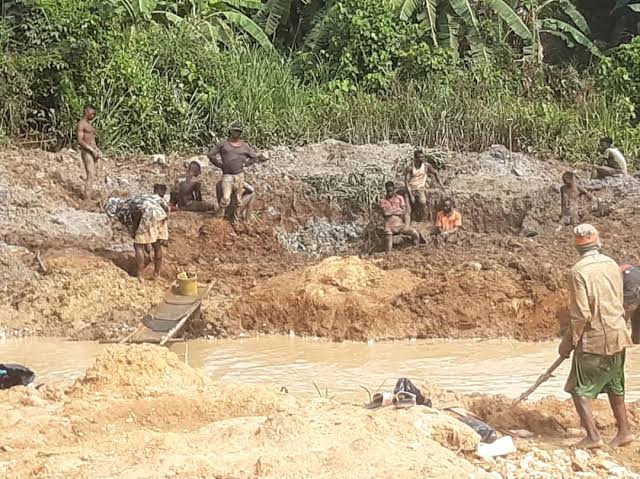
Insecurity and illegal mining are threatening investments in Nigeria's solid minerals sector, discouraging foreign technical partners and disrupting the operations of licensed miners, according to Joshua Egbagbe, Managing Director and Chief Executive Officer of Mining Technologies Company Ltd.
Speaking to BusinessDay in Jos, Egbagbe identified insecurity, policy inconsistencies, exchange-rate instability and the takeover of licensed mining sites by illegal miners as the major challenges holding back the sector. His account is a granular look at why Nigeria's mineral wealth continues to underperform its potential despite repeated government pledges to make mining a pillar of economic diversification.
The investment case is being undermined
"I have friends with mining projects in the Northeast, Northwest and North-Central regions. Insecurity discourages long-term planning and large-scale investment," Egbagbe said, adding that investors require a stable environment to commit resources to mining and mineral processing. That observation cuts to the heart of the sector's problem: mineral projects are long-dated, capital-intensive and immovable, which makes them acutely sensitive to security and policy risk.
Egbagbe said some illegal miners on the Plateau used claims of indigent status to justify taking over mining sites, sometimes resorting to violence against licensed operators despite agreements with landowners and possession of the required licences. He disclosed that the situation had cost him foreign technical partners and disrupted his operations, and that he had come close to losing his life during attacks on his vehicle, his personnel and himself.
Value addition needs protection first
The irony is that illegal mining is stalling precisely the value-addition strategy the government is promoting nationally. Egbagbe identified local processing as critical to expanding Nigeria's mineral market and increasing revenue, noting that minerals are currently exported largely in raw form. But processing plants require security of tenure and feedstock that illegal occupation undermines.
"For example, I work with columbite, which contains niobium and tantalum, as well as pegmatite-related mineral deposits. Setting up a processing plant for such minerals could require an investment of $10 million, $15 million or even $20 million," he said. No investor commits that kind of capital to a site whose licence can be contested by force.
He said Nigeria's solid minerals sector had enormous potential to stimulate industrialisation through industries such as cement, paints, cables and construction, urging the government to give the sector greater attention and develop minerals with strong industrial and technological applications.
What enforcement would require
Egbagbe called on traditional rulers and security agencies to act swiftly against illegal mining and urged the Plateau State and Federal Governments to strengthen the protection of licensed miners, enforce mining regulations and ensure disputes are resolved through lawful channels rather than violence.
His message fits a broader pattern across Nigeria's extractive sector, where the gap between policy ambition and on-the-ground enforcement determines whether investment materialises. Nigeria estimates its mineral resources are worth about $700 billion, and the government has signed international cooperation agreements to deepen mining investment. But as Egbagbe's experience shows, a licence is only as valuable as the state's willingness and ability to defend it — and until licensed operators can work without fear, the processing plants that would retain value in Nigeria will keep being built elsewhere.
The commercial consequence extends beyond individual operators. When foreign technical partners withdraw, they take with them the equipment specifications, processing know-how and market linkages that Nigerian mining needs to move up the value chain. That loss compounds the sector's existing financing gap, because junior miners with weak technical backing struggle to satisfy the feasibility and resource-certification standards that banks and development finance institutions require.
A coordinated response would have to combine three things: credible security for licensed sites, faster adjudication of licence disputes so that occupation cannot substitute for legal title, and a transparent cadastral system that leaves little room for overlapping claims. The Nigerian Mining Cadastre Office has made progress digitising titles, but digital records mean little when enforcement on the ground is contested.
For the Federal Government's diversification agenda, mining remains one of the few sectors that could absorb significant capital, create regional employment and generate foreign exchange outside oil. Realising that promise depends less on new summits and agreements than on whether the state can guarantee the basic conditions — security, enforceable title and policy consistency — that Egbagbe and his peers say are currently missing.
Up next
African Leaders Push 30% Local Processing Mandate as Raw Materials Bill Returns to Tinubu
Nigeria and other African countries renewed calls for local raw-material processing at the Second African Raw Materials Summit, as a bill requiring 30 per cent value addition returned to President Tinubu for assent.
More in Business
See all
TotalEnergies Deepens Nigeria Bet With Two Gas Investment Decisions
TotalEnergies EP Nigeria has taken two gas investment decisions in just over a year, tying the Ubeta and Ima projects to Nigeria LNG expansion.
FG Backs Plan to Give Students 10 Dangote Refinery IPO Shares Each
FG hails Aliko Dangote Foundation plan to give eligible tertiary students 10 Dangote Refinery IPO shares each, potentially reaching four million students.

Niger Bans Petrol, Diesel Exports in Fresh Fuel Supply Tightening
Niger has banned exports of petrol and diesel, a move that tightens regional fuel supply and affects the cross-border trade that has long moved petroleum products between Niger and its neighbours, including Nigeria.
About the author
Amaka Obi
Senior Business Reporter
Amaka Obi writes for BusinessPress.