Reps Panel Says Domestic Refineries Now Supply Over 75% of Nigeria's Petrol
The House Downstream Committee said domestic refineries supply more than 75% of national petrol with over 25 days of sufficiency, as it passed confidence votes on Tinubu, NMDPRA and Dangote and sought stronger pipeline funding.
The House of Representatives Committee on Petroleum Resources (Downstream) has passed votes of confidence on President Bola Tinubu, the Nigerian Midstream and Downstream Petroleum Regulatory Authority (NMDPRA) and industrialist Aliko Dangote, declaring that Nigeria's drive towards energy security is gaining momentum while calling for stronger support for pipeline security and domestic refining.
Committee chairman Ikenga Imo Ugochinyere announced the votes of confidence on Monday in Abuja at the technical briefing marking the end of Downstream Week 2026, according to a report by Vanguard. He commended NMDPRA chief executive Rabiu Abdullahi Umar and the authority's executive directors for what he described as a job well done, saying the regulator had "brought stability where there was uncertainty."
Domestic refining share and fuel sufficiency
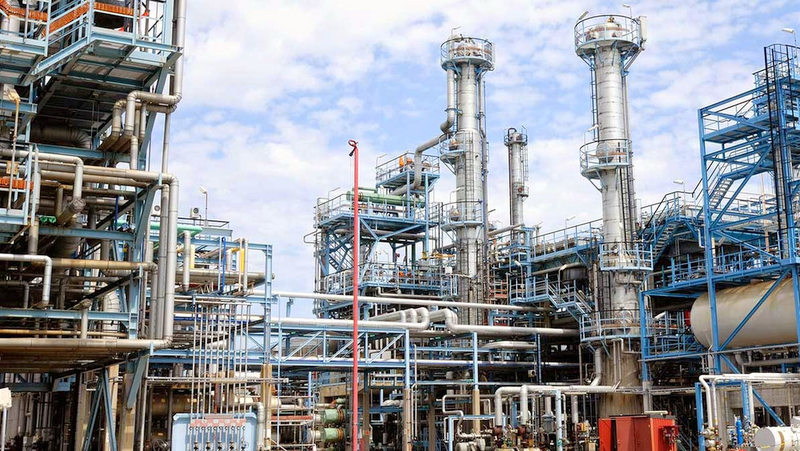
Figures presented at the briefing showed that domestic refineries now contribute more than 75 per cent of national petrol supply, while the country has recorded no supply shortfalls and has maintained more than 25 days of national sufficiency. Plans are underway to increase the strategic reserve to 90 days in 2027, the committee said.
The data point matters because it reframes a long-running policy debate. For much of the past decade, Nigeria relied on imported petrol even as private capital built refining capacity. A domestic share above three-quarters, if sustained through maintenance cycles and crude supply reliability, would mark a structural shift in the downstream balance of the market.
Pipeline surveillance and the three million barrel target
On crude oil production, the committee expressed confidence that Nigeria could achieve its target of three million barrels per day, attributing the recent increase in output partly to improved pipeline surveillance and security. Ugochinyere said better protection of oil infrastructure would reduce crude losses, increase feedstock availability for domestic refineries and boost government revenue.
"Fewer breaches mean less crude lost, more product for our refineries, and more revenue for the Federation," he said. The committee called on the Federal Government to increase funding for pipeline surveillance, enforce domestic crude supply obligations and strengthen legislation to protect local refineries from supply disruptions and unfair competition.
Why the briefing matters for investors
Downstream Week 2026 closed with a rare alignment of legislative, regulatory and industrial messaging on energy security. For refiners, the domestic crude supply obligation remains the operational hinge: without reliable feedstock, high domestic refining shares can fall quickly. For marketers, the committee's stance on protecting local refineries signals continued political support for the post-subsidy supply architecture even as price competition intensifies.
The confidence votes are political signals rather than binding instruments, but they indicate the direction of travel in a National Assembly that will shape downstream legislation in the coming session. Whether pipeline funding and crude supply enforcement follow the rhetoric will determine if the 75 per cent domestic supply share and the three million barrel target move from briefing-room figures to durable market facts.
Committee members also used the briefing to press for enforcement of the domestic crude supply obligation, the rule that requires producers to offer crude to domestic refineries before export where capacity exists. Without consistent enforcement, refineries — public or private — can face feedstock shortfalls that force them to compete with export markets for barrels, undermining the energy security arithmetic the committee celebrated.
Separately, the committee's reference to a 2027 strategic reserve target of 90 days signals an awareness that high domestic refining share does not eliminate the need for buffer stocks during refinery turnarounds, crude disruptions or logistics failures. Building that reserve will require procurement discipline and storage investment that outlasts any single political cycle, and will be a more durable measure of energy security than weekly supply sufficiency alone.
Investors in downstream infrastructure will note that the committee did not call for reversing deregulation or reimposing blanket subsidies; the thrust of the briefing was protective of the domestic refining investment case rather than redistributive on price. That distinction is significant for capital already committed to refining, storage and distribution assets, which has generally bet on market-based pricing with localisation support rather than on the return of administrative price regimes.
Up next
Brent Crude Rises on Tanker Attacks Near Strait of Hormuz
Brent crude climbed to its highest level since May after attacks on tankers near the Strait of Hormuz sparked renewed supply disruption concerns in global oil markets.
More in Business
See all
REA Boss Warns New NARE Structure Risks Derailing Nigeria's Electricity Momentum
Rural Electrification Agency CEO Dr. Abba Aliyu has warned that creating a new NARE structure risks derailing Nigeria's electricity momentum, arguing public intervention is still needed to bridge commercial viability gaps.
TotalEnergies Deepens Nigeria Bet With Two Gas Investment Decisions
TotalEnergies EP Nigeria has taken two gas investment decisions in just over a year, tying the Ubeta and Ima projects to Nigeria LNG expansion.

FG Backs Plan to Give Students 10 Dangote Refinery IPO Shares Each
FG hails Aliko Dangote Foundation plan to give eligible tertiary students 10 Dangote Refinery IPO shares each, potentially reaching four million students.
About the author
Kelechi Nwachukwu
Business Reporter
Kelechi Nwachukwu writes for BusinessPress.
More by Kelechi Nwachukwu