Nigeria's Eurobond Yields Fall as Global Bond Rally Lifts Prices
The three-year yield dropped 23 basis points to 6.45 per cent and the ten-year fell four basis points to 7.93 per cent as a record one-day rally in US Treasuries and a softer dollar lifted Nigerian dollar debt, with a $1.5 billion bond due in November 2027 in focus.

Nigeria's dollar-denominated bonds rallied on Thursday, with yields falling across the curve as a global bond-market rebound pushed prices higher — a welcome move for a government that will return to international debt markets before a $1.5 billion repayment falls due in November 2027.
According to AIICO Capital's daily market report, the three-year yield dropped 23 basis points to 6.45 per cent while the ten-year fell four basis points to 7.93 per cent. The Debt Management Office published its own daily eurobond closing prices and yields for 15 October on Friday morning, confirming the firmer tone.
The strength came despite — rather than because of — this week's inflation data in the United States, a counterintuitive turn that tells as much about global positioning as it does about Nigeria's own credit story.
A bullish session across the curve
The bid for Nigerian paper was broad rather than concentrated. Short-dated bonds moved most sharply: the three-year's 23-basis-point fall is a significant repricing in a single session, and earlier reporting by DMarket Forces put the ten-year's decline at six basis points on the same day.
Local fixed income has been moving in the opposite direction. Secondary-market Treasury bill yields rose to 17.86 per cent on 13 October from 17.64 per cent on 7 October, and the average FGN bond yield stood at about 16.1 per cent after a broad sell-off. The two markets are therefore diverging — foreign-currency paper cheapening for global investors while naira paper becomes more expensive for local ones.
The global backdrop
The immediate driver is in Washington, not Abuja. The yield on the 10-year US Treasury fell roughly 15 basis points on Thursday to about 5.04 per cent, its largest single-day decline in more than a year, as investors rotated out of AI-linked credit and equity positions and into safe-haven government bonds. The dollar index slipped toward 102, heading for its first weekly fall in five weeks.
That combination — lower benchmark yields and a weaker dollar — mechanically lifts emerging-market and frontier dollar bonds. When the global risk-free rate falls, the spread demanded over it can narrow, and Nigerian paper has benefited directly.
Crucially, this happened even as US producer prices jumped to 6.3 per cent year on year, which should ordinarily have pushed yields higher. The fact that they fell instead underscores how much of the current move is technical rather than fundamental.
Refinancing risk in 2027
The timing matters because of what is coming due. The DMO says Nigeria has a $1.5 billion eurobond maturing in November 2027 carrying a 6.5 per cent coupon, equivalent to roughly $97.5 million in annual interest. Eurobonds account for about $18.55 billion of the country's roughly $54.52 billion in external debt — around one-third of the external portfolio — so the 2027 maturity is a material slice of the stock.
Nigeria's own paper has not been immune to this year's turbulence. DMO daily figures show the September 2028 bond's yield rising from 6.371 per cent to 6.568 per cent between 6 and 7 October as global yields climbed, while the November 2027 bond barely moved, from 6.185 per cent to 6.204 per cent.
Every basis point matters at that scale. If global yields stay elevated when Nigeria goes to market, investors will demand a higher return; if conditions resemble this week's rally, refinancing could be materially cheaper.
What to watch
Exchange-rate risk compounds the calculation. Eurobonds are denominated in dollars, so a weaker naira raises the local-currency cost of servicing them even when the dollar amount is unchanged. With the naira trading near ₦1,331 to the dollar and external reserves at record levels, the fiscal exposure is manageable for now — but it makes foreign-exchange earnings, revenue collection and fiscal credibility central to the country's borrowing costs.
The next reads will be the DMO's daily yield publications, this week's FGN bond auction results and the direction of US Treasury yields into the Federal Reserve's 28 October decision. A sustained global rally would open a cheaper window for Nigeria; renewed inflation-driven selling would close it again.
Up next
Oil Heads for Weekly Gain as Brent Holds Above $105 on Supply Risks
Brent eased about 0.5 per cent to roughly $105.30 but was set for a weekly gain as Middle East shipping risk, Hurricane Isaias shut-ins and pressure for a 100 million barrel IEA reserve release kept the market unsettled.
More in Markets
See all
NGX Extends Recovery as Oil and Gas Rally Lifts Market Value to N160.83 Trillion
The All-Share Index edged up 0.01 per cent to 247,707.13 points for a second straight gain, but decliners outpaced gainers and the value of trades contracted sharply, leaving the rally resting on a narrow band of energy stocks.
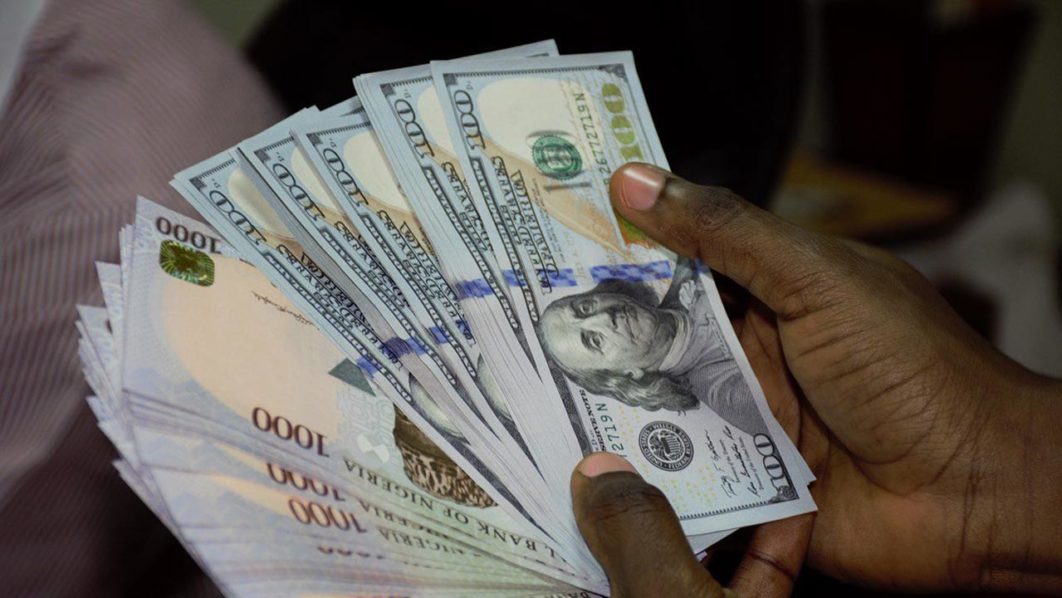
Naira Holds Near N1,331 as Parallel-Market Gap Narrows to 2.88 per Cent
The official NFEM rate firmed to N1,331.61 to the dollar while street quotes sat around N1,375 to N1,390, leaving a spread that has compressed sharply as reserves climb and central bank FX sales stay low.

Dollar Set for First Weekly Drop in Five Weeks as AI Jitters Cut Yields6th
The dollar index held near 102.07 and headed for its first weekly decline since mid-September as the 10-year Treasury yield fell about 15 basis points and the euro recovered from a 17-month low.
About the author
Adaeze Okonkwo
Markets Editor
Adaeze Okonkwo writes for BusinessPress.
More by Adaeze Okonkwo