
Nikkei Suffers Worst Day Since 2025 Tariff Shock
Tokyo falls about 6% on Friday — its biggest drop since April 2025 — as the global AI unwind reaches the chip supply chain, with Seoul also down 6%.
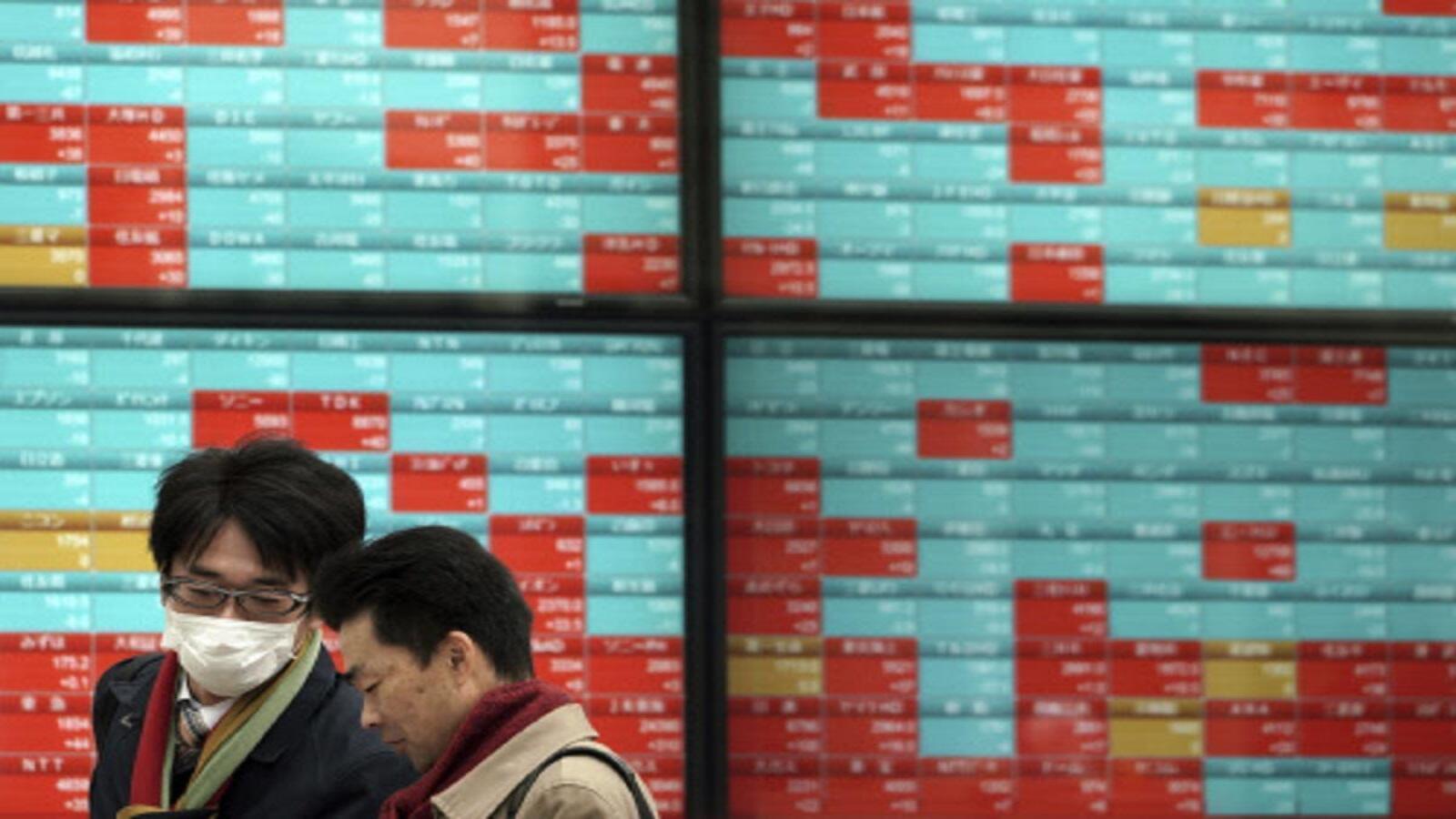
Tokyo's Nikkei 225 index plunged about six per cent on Friday, its steepest single-day drop since President Trump's April 2025 tariff shock, as the global AI-conviction unwind reached Japan with full force one session after Wall Street erased $3 trillion in a midterm-election-driven rout. Seoul's Kospi fell about six per cent in sympathy, extending Thursday's sidecar-triggered slide, leaving the two technology-heavy exchanges of Northeast Asia absorbing the largest losses in global equities.
The Asian session completed the week's global transmission chain: Democratic victories in the U.S. midterm elections sparked fears of slowed data-centre construction and tighter AI regulation on Wednesday and Thursday, Wall Street's technology complex slumped into correction territory Thursday, and by Friday morning the worry had circled the globe — hammering Tokyo's semiconductor and trading-house complex, Korea's memory giants, Taiwan's chip equipment names and finally Europe's indexes.
Why Japan was the global trade's biggest casualty
Japan sits at the deepest point of the AI supply-chain leverage. The Nikkei's weight is concentrated in the equipment suppliers, optical component makers, chip-materials houses and SoftBank's investment complex through which nearly every data-centre dollar eventually flows. When U.S. futures on tech wobble, Tokyo reprices the entire production chain rather than any single customer segment — hence index-level declines on the scale seen Friday.
The decline is the sharpest since the April 2025 "Liberation Day" tariff panic, a historical benchmark that matters because it locates the current correction in the same severity class as the year's earlier systemic shock. Unlike that episode — an external trade-policy surprise — the November rout arises from internal repricing of a theme that had driven Japanese indexes near all-time highs: when an index's largest gainers are also its largest risks, the unwind is mechanically violent.
The mechanics of a six per cent day
Three mechanisms amplified the move. First, momentum unwinding: quant funds and systematic strategies that have carried the AI trade all year are forced sellers when volatility breaks threshold levels, accelerating declines irrespective of fundamentals. Second, the yen's dynamics: the dollar's strength against the yen on Friday — the currency gained in the wake of the strong U.S. payrolls print — pressures Japanese exporters' earnings expectations while simultaneously revealing that the Bank of Japan's policy path has not yet normalised enough to cushion equity volatility. Third, cross-shareholding and margin structures in Tokyo that historically dampen index moves have thinned since last year's governance reforms increased free float, sharpening corrections.
Underneath the index, the damage spread through the electronics complex — equipment makers, memory-adjacent suppliers, the SoftBank investees — echoing Thursday's U.S. trading, where the Philadelphia Semiconductor Index had suffered its worst day since March 2020, dropping 12.3 per cent intraday before recovering Friday. Japan's equivalent exposures had nowhere to hide during Asian hours while Wall Street was closed.
Friday's salvage operation
The day ended better than it began, which matters for interpreting the session. Wall Street's Friday open was firm, with the S&P 500 rising 0.3 per cent and the Nasdaq composite climbing about 1 per cent on better-than-feared results in the equipment complex — including an 8.2 per cent jump by Lam Research after a $25 billion buyback announcement and a 20 per cent surge in data-centre developer IREN on strong results. Dip-buying in New York supported after-hours Asian futures sentiment, giving Tokyo reason to stabilise into next week.
That salvage leaves the Nikkei's weekly damage severe but not existential. For investors measuring the global AI position, the week's hierarchy of vulnerability is now established: Korea's memory pure-plays have absorbed the deepest falls, Tokyo's broad complex has repriced hard, the U.S. tech complex has corrected by single digits, and Europe's generalist indexes fell one to two per cent — a correlation chain that confirms AI exposure, not geography, is the true risk factor in this drawdown.
Readthrough for Africa and emerging markets
For African investors and policymakers, the Nikkei's plunge completes a longer transmission lesson. Frontier markets do not attract capital in a vacuum; allocations into Nigerian, Kenyan and Egyptian assets are funded marginally from the same global risk appetite that finances Japanese and Korean technology exposure. A six per cent day in Tokyo — or the S&P 500's worst week since June — tightens that funding pool at the margin, which is why African markets have spent the week mirroring the repricing with a lag: the NGX's own N3.28 trillion Thursday loss and blue-chip profit-taking occurred as the same unwind touched every risk asset.
Porcelain in the transmission chain also matters: African technology companies raising capital from U.S. and Asian venture funds face valuation resets when those funds' own balance-sheets fall, though the impact takes quarters, not hours, to arrive. In the near term, the currency channel is the prominence risk: dollar strength on Friday on strong payrolls and safe-haven demand pressures every frontier currency, including the naira, which closed near N1,349 per dollar after slipping through the week.
Whether Tokyo's six per cent day becomes the rout's climax or another chapter will be settled by the same questions that have driven all week: the sincerity of hyperscaler capital-spending guidance, the policy posture of a newly U.S. Congress on data-centre permitting, and whether earnings from the equipment complex confirm the demand that Lam Research's $25 billion bet announced. Tokyo's Friday told investors how violent the repricing can be when global conviction wavers; the next sessions will tell them whether the fundamentals that underwrote the AI trade are still there.
Up next
Nigeria Customs Rakes in N1.42tn in Two Months
Nigeria Customs collected N1.42trn in September and October as Q3 exports through Lilypond hit $752.8m, signalling stronger trade-based fiscal receipts.
More in Markets
See all
Nigerian Stocks Open November With Cautious Pullback
The NGX All-Share Index slipped 0.02 percent in November first session as heavyweight profit-taking offset gains after October record month.

China Halts Yuan Rally As Star 50 Index Slumps
China tightened FX rules to halt yuan strength while fresh market tools failed to stop equity declines, with the Star 50 Index down over four percent.

UBS Upgrade Sends Rivian Shares Up 10 Percent
Rivian climbed 10 percent after UBS upgraded the EV maker to buy, arguing the sell-off overdone ahead of a sales inflection for the R2 midsize SUV.
About the author
Kwame Mensah
Markets Correspondent
Kwame Mensah writes for BusinessPress.
More by Kwame Mensah


