
Gulf Equities Rally on Iran De-escalation Bets
Saudi Tadawul and Qatari stocks rose as investors bet the US midterm sweep reduces the risk of a wider Iran conflict.
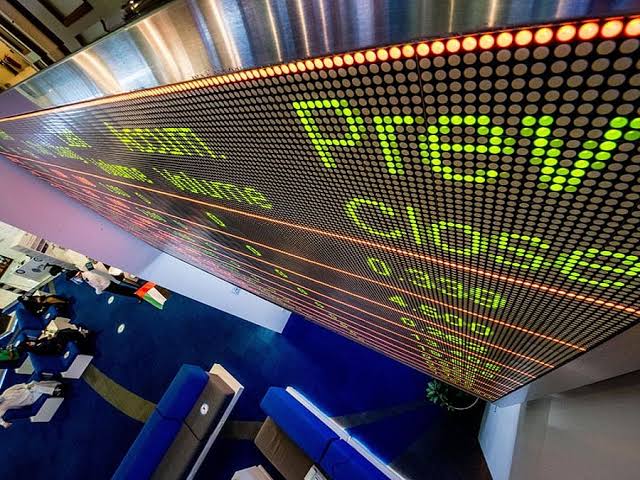
Gulf equity markets pushed higher on Thursday as investors bet the Democratic sweep in this week's US congressional elections will reduce the risk of a wider conflict with Iran, lifting risk appetite across the region even as Houthi threats kept parts of the air and sea security premium in place.
Saudi Arabia's benchmark Tadawul index gained 0.6 per cent to 10,095, led by a 1.6 per cent rise in the Kingdom's largest lender by assets, Saudi National Bank, and a 0.8 per cent advance in Al Rajhi Bank — the region's biggest Islamic lender. Qatar's index climbed 1.8 per cent to 10,066 with Qatar Islamic Bank up 2.9 per cent, Abu Dhabi's measure rose 0.6 per cent, Kuwait gained 0.8 per cent and Oman added 0.2 per cent. Egypt's EGX 30 advanced 1 per cent to 51,153, while Dubai finished flat at 6,043 and Bahrain eased fractionally.
How Washington travels into Gulf risk pricing
The political logic is direct. Iran policy has been the dominant drag on Gulf market sentiment since the war began eight months ago: a wider regional escalation threatens tanker transit, regional infrastructure and the capital-raising plans of the Gulf's sovereign-linked champions. Tuesday's US midterm results — which cost the President's party both chambers of Congress amid voter anger at fuel prices and the war — are read by Gulf strategists as constraining any further military escalation, because any such decision now requires a legislature the opposition controls.
The market's reaction reflects that arithmetic. Regional analysts note that easing escalation fears and mediation hopes outweighed the tanker disruptions that persist in the Strait of Hormuz, where attacks and checkpoints have continued to disrupt logistics. Solid third-quarter earnings regionally added to the confidence: the Gulf's banks — the dominant sector on most Gulf indexes — reported profit growth on higher rates during 2026, and investors rotated back into the financial heavyweights that had lagged during the escalation scares.
Earnings added their own direction
Post-session disclosures set the next day's tone in a region where sovereign-related companies dominate the indexes. Emaar Properties, Dubai's blue-chip developer, rose 1.8 per cent before reporting after the bell a steep rise in third-quarter profit — a print that will set the property story for the market's largest single weight. In Abu Dhabi, conglomerate International Holding Company closed 1.9 per cent higher before disclosing third-quarter net profit of 6.22 billion dirhams, about $1.69 billion, down from 8.70 billion dirhams a year earlier — a decline that complicates the market's narrative but reflects the accounting effects of pruning its sprawling portfolio rather than deteriorating operations, analysts said.
Not every board joined the advance. Sahara International Petrochemical, one of Saudi Arabia's chemicals giants, retreated 2.9 per cent after posting a bigger third-quarter loss — the petrochemical downcycle still biting despite the region's oil-price resilience. The divergence matters: the Gulf's equity story through 2026 has been less a crude-price story than a policy and financials story, with banks, telecoms and utilities absorbing the index weight while chemicals and consumer-makers struggle at the lower end.
The security premium has not disappeared
The optimistic read has limits. Yemen's Houthis claimed on Wednesday that they targeted Riyadh's King Khalid International Airport — an attack Saudi authorities did not confirm — and the group separately warned foreign airlines to stay out of Saudi airspace. Any direct hit on civilian aviation infrastructure would instantly import a new risk premium into Gulf markets that no earnings beat could offset, which is why the region's indexes have repeatedly traded more on security headlines than on fundamentals through the war period.
Shipping markets tell the same split story: product tanker rates remain hostage to checkpoints and transit restrictions in the Gulf's most sensitive corridor, and any month-end disruption can reverse the easing narrative within hours. Traders noted that the region's third-quarter earnings season — running through mid-November — provides a fundamental floor that protects indexes from the kind of pure-sentiment squeezes that have hammered AI-linked indexes elsewhere in the world this week.
What it says about the wider standoff
Gulf market behaviour over the past two days demonstrates how regional markets now trade the endgame of the Iran conflict rather than its continuation. The midterms have created a political structure in which an American escalation is more difficult to authorise and a diplomatic path easier to sell, and oil prices — which crashed below $100 per barrel this week on exactly that logic — and equities have moved in the same direction.
For the Gulf's finance ministries and sovereign funds, easing geopolitical risk has practical consequences beyond the tape: borrowing costs on the region's eurobond programmes, reinvestment appetite at the sovereign-development-fund level, and the pricing of the Gulf's growing equity-market inclusion flows all improve when the security premium compresses. If the new Congress turns out to accelerate a ceasefire, this week's 1 to 2 per cent index gains will look like the first installment of a much larger repricing; if the conflict grinds on, the region's next test will be the airlines, insurers and chemicals names that carry the escalation exposure.
Up next
Bank of Industry Secures 50 Million Dollar IFC Loan
BOI signed a $50 million seven-year IFC senior loan for Nigerian MSMEs, with at least 25% of proceeds for women-led businesses.
More in Markets
See all
Nigerian Stocks Open November With Cautious Pullback
The NGX All-Share Index slipped 0.02 percent in November first session as heavyweight profit-taking offset gains after October record month.

Oil Whiplash Tests Markets As US-Iran Talks Wobble
Oil prices swung violently around the 100 dollar mark after a US strike on Iran Qeshm Island revived escalation fears across the market.

China Halts Yuan Rally As Star 50 Index Slumps
China tightened FX rules to halt yuan strength while fresh market tools failed to stop equity declines, with the Star 50 Index down over four percent.
About the author
Kwame Mensah
Markets Correspondent
Kwame Mensah writes for BusinessPress.
More by Kwame Mensah


