
Airtel Africa Dividend Window Opens as Nov 13 Record Date Nears
Qualification falls on Nov 12 and the register closes Nov 13 for the 3.1c interim dividend, with NGX holders choosing between a naira rate fixed at N1,347.44 or dollars.
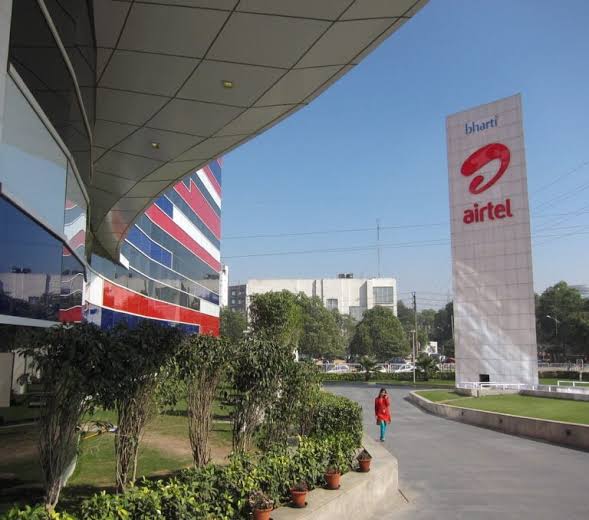
Airtel Africa's dividend window is now open, and the timetable running it is unusually tight: the qualification and last cum-dividend day on the Nigerian Exchange falls on Thursday, Nov 12, the shareholder register closes at end of business Friday Nov 13, and payments — 3.1 US cents per share, up 9.2 per cent year-on-year — land Dec 11 for shareholders who have declared whether they want the payout in naira or dollars.
The currency election is the operationally demanding part for Nigerian and international holders alike. The company fixed the naira exchange rate for the pay-out on Oct 30 at N1,347.44 per dollar, with the London side settling at 0.7464 GBP per dollar; NGX holders have until Nov 23 to file the election, giving institutional shareholders a two-week runway to decide whether a naira payout at a known rate beats holding dollar exposure through a currency facing its own uncertainties.
The dividend's inflation-adjusted claim
The 3.1 cents mark-up is, in local terms, a bigger raise than the 9.2 per cent headline. Airtel's African operations — Nigeria leading the group's service-revenue growth at double-digit quarterly rates, alongside Ghana's 35.7 per cent Q3 acceleration — have been growing nominal earnings through an elevated-priced currency environment, meaning the dividend's naira-equivalent value against last year's payment now scores considerably higher than its dollar-rate increase. For a Nigerian retail investor on the local dividend book, the payment effectively increases in both dollar and naira terms simultaneously.
For the parent group's major shareholders the maths runs the other direction: the London-listed payout is worth roughly $89 million to Sunil Mittal's Bharti block alone, per Nairametrics analysis, and the split between naira and dollar channels is essentially neutral to them. # The investors for whom the currency election genuinely matters is the local institutional base: Nigerian pension funds, asset managers and insurers whose reporting currency is the naira and whose dividend calendars are already structured around Nigerian cash-flow timing.
What the timetable says about settlement mechanics
The seven-day squeeze between qualification day and register close is a pattern Nigerian issuers have adopted to prevent yield-hunters from gaming the cum-dividend window: trade between Nov 12 and Nov 13 buys the qualification without the dividend, so short-horizon flows can't clip the payout. NGX rules require brokers to bequeath the full dividend to buyers whose transactions settle before the register closes, which effectively pins the market's cum-dividend trade to its earliest window — and guarantees the heaviest single trading days of Airtel's quarter will land in the next 48 hours.
The settlement mechanics matter to the secondary market too. Airtel Money's separate listing on the London Stock Exchange on Oct 14 — 270 million shares sold at £1.96 per share for 10 per cent of the money business, with the group retaining 77.85 per cent — has created a second angle for institutional positioning in the Airtel complex: index funds, trackers and the fintech-only funds can now hold the payment platform separately from the network parent, and the dividend election between naira and dollar routes is one of the few exposures that will transmit through to both books simultaneously.
Cash-flow context behind the payout
The dividend lands on a balance sheet that has just reset its capex peak and leverage trajectory. In H1 the group spent $657 million of capital expenditure — more than double the year-earlier level — adding roughly 4,200 mobile sites, while its net leverage moved from 2.1x to 1.6x. Under those conditions a dividend raise plus a concurrent share buyback (a further tranche of up to 12,033,748 shares is being executed by Citigroup through Dec 22) is a capital-returns signal that depends wholly on the group's free-cash-flow generation rather than on debt: Airtel Africa is paying a rising dividend while expanding rapidly, and funding both from its own operations.
Nigeria's role in that funding is now the dominant leg. The Nigerian operation has been the throughput engine of the group's revenue growth — service revenue climbing to double-digit rates with data traffic expanding 27.3 per cent in the latest group disclosure — and the currency election calendar gives Nigerian institutional holders a clean first-time experience of choosing between dollar and naira dividend routing, in a market where dollar-route dividend accessing through the NGX continues to be tested for liquidity depth.
What Nigerian investors should watch between now and Nov 13
Three data points will resolve the trade. First: the pace and size of buyback executions through the election window, since a strong Citi bid compresses the discount at which the market sells the stock through the cum-dividend days. Second: the two-week naira/dollar nudge before the Nov 23 election close — holders who delay gain optionality on the exchange rate but lose certainty, and if the CBN's official rate moves materially in either direction the election will freeze late. Third: the ultimate allocation of the payout — whether the biggest naira-routing bloc is local institutions or London-linked funds, a signal about who is actually building Nigerian dividend-book positions against the CBN's own FX regime.
The window closes Saturday at the last cum-dividend trade and thence through register close. Whatever the route-and-rate choices, Airtel Africa emerges from the week with a return-on-capital proof-point for African multinationals: a rising dividend executed on schedule, a concurrent buyback, and an FX-electable payout that has been set precisely to make the naira a first-class dividend currency on Nigeria's own exchange.
Up next
Pension Sector Braces for N20bn Recapitalisation Wave as PFAs Merge
PenCom has ruled out extending the June 2027 deadline: Category A PFAs must raise N20bn plus 1 per cent of excess and Premium Pension and Trustfund are merging to qualify.
More in Finance
See all
Nigeria FX Defences Firm At 55bn Reserves And 115 Oil
Nigeria holds about 55 billion dollars in gross reserves with a record 46 billion net position as Bonny Light trades near 115 dollars per barrel.

Nigeria's gross external reserves stand near a record $55.25 billion, the highest level in 18 years
Central Bank of Nigeria Governor Olayemi Cardoso reported gross external reserves of $55.25 billion as of 18 September 2026, the highest reading in 18 years, with cover for about 11.3 months of imports and net reserves above $45 billion.
Naira firms to N1,347 per dollar in the official market as the Fed's rate hold steady global conditions
The naira strengthened to about N1,347 per dollar in the official market on Thursday, 29 October 2026, having traded near N1,367 earlier in the week, while a CBN survey shows businesses expect continued stability and modest appreciation.
About the author
Kelechi Nwachukwu
Business Reporter
Kelechi Nwachukwu writes for BusinessPress.


