
Trump Halts 4 Billion Dollar Annual Israel Military Aid
Trump announced the US will halt $4 billion in annual military support to Israel, reshaping the Iran war security architecture.
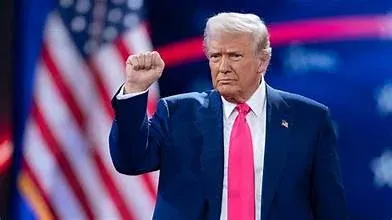
President Donald Trump announced that the United States will halt $4 billion in annual military support to Israel, a dramatic structural change to the region's security architecture that arrived in the aftermath of his party's midterm collapse and immediately reshaped expectations about the Iran war's trajectory.
The announcement accompanied Brent crude futures falling a further 1.06 per cent to $103.66 per barrel on Thursday morning, as traders processed a week in which American voters had removed the war's ambiguity about political cost. Market commentary stressed that uncertainty persists, however: reports of the US strike on Iran's Qeshm Island and an Iranian official's remarks that Washington and Tehran remain far from a ceasefire agreement continue to shadow the oil market even as the political wind shifts.
The largest single shift in an eight-month war
Four billion dollars in annual military support is a material share of the region's security budget — a commitment that has historically underwritten Israel's munitions stockpiles, missile-defence resupply and the industrial logistics of any sustained campaign. Halting it changes more than accounting: it changes what planners on all sides can credibly assume about how long a war of this kind can be sustained at scale, and it removes the US guarantee that has anchored alliance arithmetic throughout the eight-month-old conflict.
The announcement's political origin is as consequential as its content. Tuesday's midterms delivered both chambers of Congress to Democrats amid voter fury over fuel prices and the conflict itself, with Vice President JD Vance publicly attributing the defeat to the war's unpopularity. A President ignoring that signal would have faced funding battles in a legislature he no longer controls; ending the aid programme converts a looming congressional confrontation into a Presidential decision, and presumably required negotiations about sequencing even as it reduces Washington's direct exposure to the conflict.
How the oil market absorbed it
Oil's reaction told the market's true state of mind. Brent had already crashed nearly 9 per cent on Wednesday, breaking below $100 a barrel for the first time in two months and heading for the worst weekly loss since April 2020, as investors bet on the ceasefire scenario. Thursday's further slip to $103.66 — after the halt announcement merged with the Qeshm strike reports — produced the messier picture the ahead-of-it commentary had described: a market that prices peace partially but not wholly, still requiring sanctions-risk premiums and Hormuz-disruption allowances until a concrete agreement is signed.
The mixed signals are exactly what one would expect at this stage. Crude traders cannot fully discount a conflict's end on campaign rhetoric alone, particularly when the American military posture toward Iran's nuclear programme remains formally in place and the Qeshm operation demonstrated that tactical strikes continue regardless of the strategic weather. Until a signed settlement changes the physical flow of Gulf barrels and Iranian exports, part of the price premium belongs to ambiguity, not escalation.
Reverberations for allies and rivals
The halt transmits in different directions for different capitals. For Gulf states, an America less committed to armed conflict reduces the risk premiums on shipping, insurance and infrastructure — one of the reasons regional equity markets rallied on cues from Washington's opening — but it also raises the question of who guarantees maritime security in the Strait of Hormuz if the conflict re-escalates, an economic artery that carries approximately a fifth of the world's crude. For Tehran, the announcement removes one form of American pressure while leaving the sanctions wall and the nuclear file entirely intact.
For Israel, the fiscal consequence is real but manageable in the short term; the strategic consequence is dependency simplification, which successive Israeli governments have sought exactly for the swing risk of American politics. The momentum of the last eight months has pushed Israel's domestic defence industry, munitions production and multi-national procurement into higher gear precisely to hedge this dependence — making the shift less dramatic in practice than the headline implies, even as it changes the incentives surrounding every future escalation decision.
What investors should hold from the episode
For portfolios, the important metric remains the oil curve. Brent's discount to its October peak already prices a large probability of de-escalation; every subsequent signal — diplomatic rounds, the flight of tankers from Hormuz checkpoints, resumed Iranian exports — shifts that probability higher. Traders noted that a full reopening of the strait could even convert the Federal Reserve's hiking bias into an easing debate, which is why fixed-income markets have outperformed equities through this episode.
Nigeria sits on the receiving end of the same transmission. Manufacturing and services activity continued expanding in October, and the demand for petroleum-product imports falls when crude falls — but the government's dollar receipts, Federation Account allocations and 2027 budget assumptions all ride on where Brent settles. A world in which the war premium unwinds is a world of cheaper imports and softer headline inflation for Nigerian consumers, and a world of smaller oil revenue for the fiscal authorities — the same dual adjustment, viewed from both ends of the balance.
Thursday's announcement is therefore best read as the war's first formal retrenchment, not its end: finance ministries from Lagos to Riyadh will now war-game more scenarios in which the Middle East conflict's economic signature fades, and every one of those scenarios reprices the global economy around cheaper energy than the last year has assumed.
Up next
Bank of England Lifts Rates to 4 Percent
The Bank of England raised rates 25bp to 4%, the first hike in three years, as war-era energy costs pushed UK inflation back up.
More in Economy
See all
Korea Exports Double in October on Chip Demand
South Korea's October exports surged 93.7% to $115.28 billion, the second-highest month ever, as semiconductor shipments rose 259%.

Eurozone Growth Beats Forecasts at 0.4% in Q3
Euro area GDP grew 0.4% quarter on quarter in the third quarter, beating forecasts, though France contracted and Italy stalled.

German Inflation Eases to 2.8% After Four-Month Run
German CPI fell to 2.8% in October from 3.3%, easing faster than forecast, as energy inflation dropped to 12.2% and core slowed.
About the author
Fatima Bello
Analysis Editor
Fatima Bello writes for BusinessPress.
More by Fatima Bello
Analysis: Africa Faces Narrow 2027 Grain Risk Window
Opinion & Analysis
Analysis: What Record Nigeria Bank Profits Hide
Opinion & Analysis
Analysis: What the AI Wipeout Means for African Tech
Opinion & Analysis


