
US Layoff Plans Fall to Lowest Level Since 2023
October US layoff announcements fell to their lowest since 2023 ahead of Friday payrolls, strengthening the Fed December rate debate.
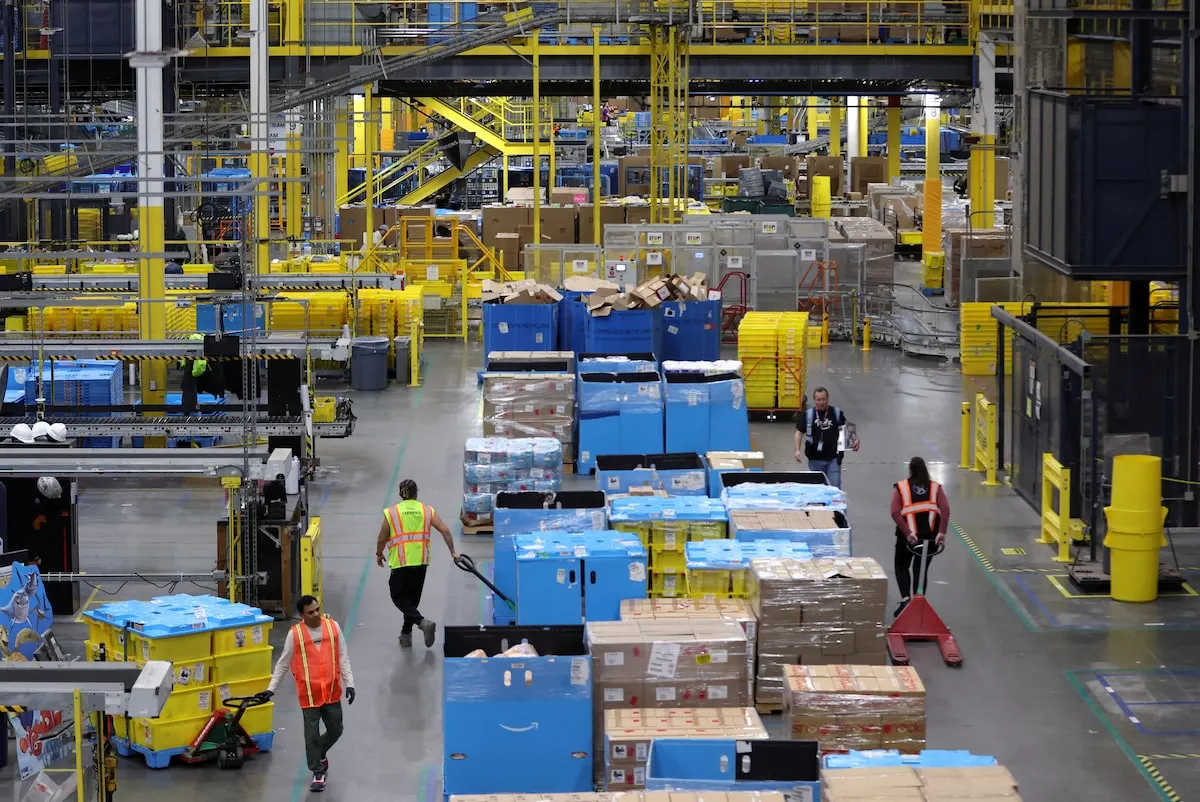
US employers announced in October the fewest layoff plans in more than two years, according to Challenger, Gray & Christmas data that lands the day before November's payrolls report — giving the labor market's improvement narrative a final favourable entry point before the government's numbers decide the Federal Reserve's December meeting.
The outplacement firm's monthly tally showed layoff announcements falling to their lowest level since 2023, with companies shifting their attention from workforce reductions toward retaining existing employees - a behavioural shift the firm attributed to the difficulty of hiring through the past two years and the cost of retraining replacement staff. The reading marks a reversal from the last months' pattern, in which AI-related restructuring announcements, war-driven cost pressure and tariff-exposed manufacturers had pushed planned cuts to multi-year highs.
Why the October print matters this month
The timing of the data is the story. The Challenger series is a survey of announced layoff intentions, not observed job losses, and its volatility makes single-month readings unreliable on their own; but landing 24 hours before the Bureau of Labor Statistics' November employment report, it functions as a sharply timed advance signal for one of the most consequential data prints of the US economic calendar. Money markets currently price a high probability of a further rate hike in December, and the employment report is the single variable capable of moving that assessment.
The labour market's condition has become the pivot of the entire financial narrative this quarter. Rate-hike expectations, bond yields, the dollar, and the AI-stock correction's bear case all reference the same question: whether the American economy — growing through the war's energy shock and its inflation consequences — can sustain employment without generating the wage pressure that would reignite inflation. October's layoff print says the answer so far is yes: firms are not shedding workers, and the Friday report will show whether hiring matched.
The AI restructuring wave pauses
The more distinctive aspect of the October data is what it says about the AI-restructuring narrative that dominated the middle of the year. Corporate announcements across technology, media and business-services had increasingly cited artificial-intelligence adoption as justification for workforce reductions, driving the layoff series to the elevated readings that made headlines through the summer. October's collapse in announced cuts suggests that wave — at least as measured by formal announcements — has temporarily subsided, with firms consolidating instead into retention mode amid an unusually tight market for the specialised skills that AI deployment itself requires.
The distinction between announced and actual layoffs remains important, though. Announcements lag execution, and category-specific announcements — particularly in retail, which typically reserves its largest cuts for the post-festive season, and government, which has been under fiscal pressure through the war's escalation in spending — can rebound sharply in future months. Analysts cautioning against extrapolation argue the more meaningful reading is directional: the labour market's resilience in the face of high borrowing costs, war-inflated energy prices and tariff friction continues to define this cycle as one of genuine expansion rather than a rally that hides underlying stress.
What Friday's report will decide
The payrolls report carries a triple function in the current environment. First, it settles the December policy question: an employment number consistent with hiring momentum, paired with wage growth that has cooled from the post-shock highs, lets the Federal Reserve defend its balance between inflation control and employment support. Second, it will colour the AI-stock debate: the bull case for data-centre spending partly rests on an American economy that can absorb the investment, and a weaker-than-expected jobs report would strengthen the argument that corporate borrowing costs have already done damage. Third, it sets the tone for the holiday retail season, where labour-intensive sectors have been the most sensitive to cost pressure.
The political layer is now inescapable as well. The midterm election that reshaped Congress was fought substantially on cost-of-living anger — inflation running hot through the year, fuel prices elevated by the war, and tariffs squeezing household purchasing power. Another strong employment print will feed incumbents' narrative that the economy recovered; a soft one would fortify the argument that the recovery has left too many households behind. Either way, the data is now a political instrument as much as an economic one.
The global reading for Nigeria and emerging markets
For overseas investors, the US labour market's momentum is the master variable on which every emerging-market allocation depends. A resilient American economy keeps global risk appetite constructive — the condition that supported emerging-market currencies and equity allocations this week, including the naira's own stability and the Nigerian Exchange's record year. A deteriorating one would transmit through portfolio flows, dollar strength and yield differentials, and no frontier market has enough of its own momentum to ignore the transmission.
The narrow takeaway for Nigeria's own investment committee is comparative. October's Challenger data — the lowest layoff announcements since 2023 — is the employment-market counterpart of the same story Nigeria's domestic numbers are telling: an economy growing through high rates and high energy costs without breaking. When the MPC meets this month with its own PMI at 55.7 and the FX market stabilised, the US data will confirm it is not tightening into a weakening global economy — an environment that historically permits the difficult domestic policy decisions of the kind the CBN has been making all year.
October's layoffs record will not win headlines on Friday; the payrolls report will. But as an advance indicator of how the American economy positioned itself for the November rate decision, the message is unusually clear: the layoffs wave of 2026 has receded, and the world's most consequential labour market chose retention over fear.
Up next
US Treasury Yields Fall to Eight-Week Lows
The 10-year Treasury yield eased to an eight-week low near 4.84% as bonds rallied on midterm sweep relief and ceasefire hopes.
More in Economy
See all
Korea Exports Double in October on Chip Demand
South Korea's October exports surged 93.7% to $115.28 billion, the second-highest month ever, as semiconductor shipments rose 259%.

Eurozone Growth Beats Forecasts at 0.4% in Q3
Euro area GDP grew 0.4% quarter on quarter in the third quarter, beating forecasts, though France contracted and Italy stalled.

German Inflation Eases to 2.8% After Four-Month Run
German CPI fell to 2.8% in October from 3.3%, easing faster than forecast, as energy inflation dropped to 12.2% and core slowed.
About the author
Tunde Balogun
Economics Correspondent
Tunde Balogun writes for BusinessPress.
More by Tunde Balogun


