
Analysis: The Narrowing Core of the NGX Record Year
The NGX rally is real but narrow: 28 gainers against 72 decliners in October show a concentration that will test the 2026 gains.
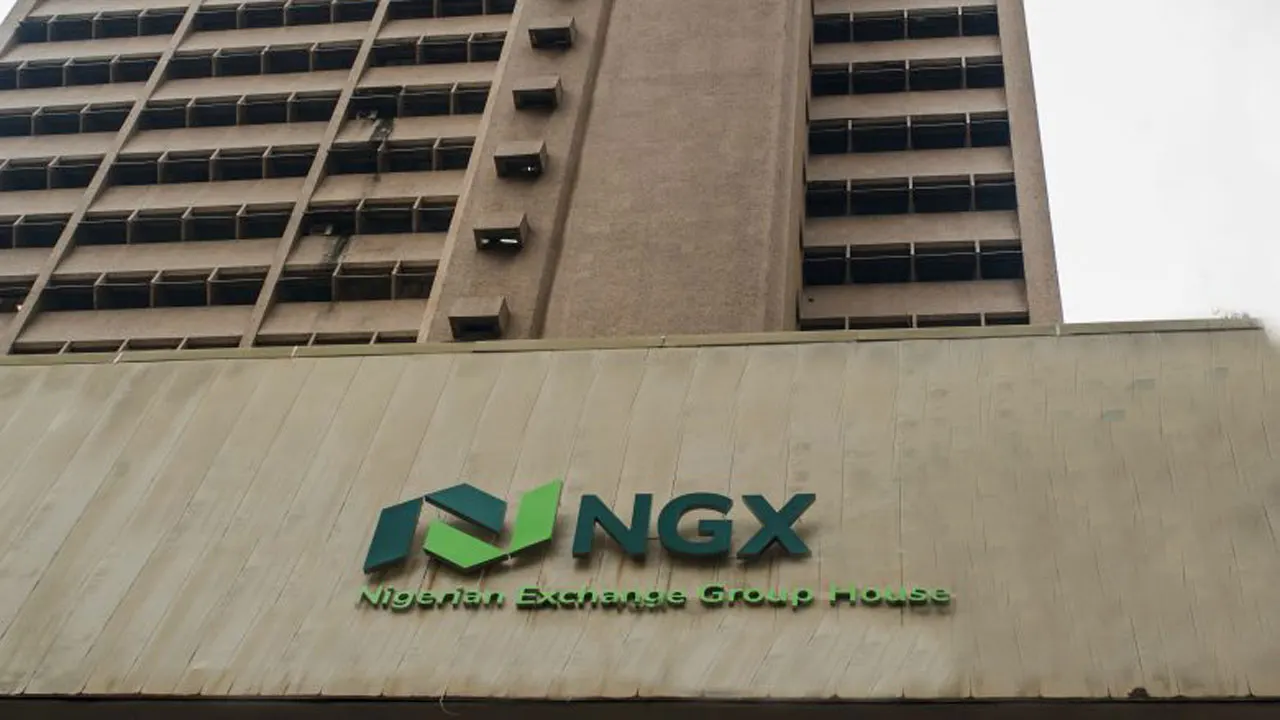
The Nigerian Exchange closed another record-setting stretch this week with the All-Share Index up more than 63 per cent year to date and market capitalisation above N165 trillion — but the October performance data underlying the headline reveals a more complicated picture: of 146 securities tracked through the month, 28 gained and 72 fell. The market's extraordinary year is narrowing, and the question of who is still riding it matters as much as the number itself.
The October tape that ran against the index told the abrasive story. Dangote Cement gained 33 per cent in October and Honeywell Flour Mills 25 per cent; Livestock Feeds rose 64 per cent; Multi-Trex doubled its share price. Against that, the broader market fell: 72 declining names against 28 advancers in the same month, insurance names losing 13.6 per cent on the sector's index through the year's first ten months — the worst major sector — while the oil and gas index advanced 127.9 per cent, Industrial Goods 114.9 per cent and Banking 60.3 per cent.
What is actually driving the rally
Strip the index to its drivers and the narrowness becomes explicit. A handful of large-cap industrial, banking and energy names — Dangote Cement's N24 trillion valuation, the banks' recapitalisation-driven earnings, the oil companies' crude-price windfall — supplied most of the index's rise, while the long tail of the market declined through October. That is not a criticism of the underlying corporate performance, which has been exceptional: profits across banking, cement and energy have delivered on the reforms' promise. It is, however, a description of a market in which the headline number increasingly measures the performance of a concentrated leadership rather than the average listed asset.
The participation data sharpens the point. Domestic investors have replaced foreign flows as the market's liquidity source — institutional commentary through the year recorded declining non-resident participation — which means the rally's depth depends on Nigeria's own savings system rather than on global risk appetite. Pension assets, whose allocations to equities have risen through the year, are the structural buyers; the retail cohort that opened accounts through the Dangote refinery IPO era is the momentum layer; and the high-rate money market — Treasury Bills yielding 15 to 18 per cent — is the competing asset those flows could retreat to at any yield-versus-earnings inflection.
The rate-cycle interaction nobody can ignore
That competitive asset is why the market's year-end story is really a rates story. The Central Bank has been mopping up trillions of naira through Open Market Operations, secondary-market T-bill yields have climbed above 17 per cent, and every rally in risk-free yields re-computes the equity market's attractiveness: at a 17 per cent carry, a stock must deliver earnings growth plus a risk premium just to keep pace with the bond market's option. Nigerian equities at 63 per cent gains carry high valuations relative to their history — the question the December positioning will ask is whether earnings momentum keeps outpacing the yields investors can earn risk-free.
Earnings momentum, to be fair, has been delivering. Nine-month results across banks, cement, brewing and palm oil have shown profit growth at rates that beat inflation by wide margins, the consumer-staple recovery confirms operating leverage, and the oil majors' earnings track the crude price environment the budget was never marked to. The market's leadership is composed exactly of the sectors whose fundamentals are strongest — a legitimate configuration, not a speculative distortion — but a concentrated one nonetheless, whose price action reflects the top decile of listed assets.
What foreign investors see — and why they still hesitate
The foreign participation decline is the structural puzzle of the year. By every conventional metric — currency stability, interest-rate attractiveness, corporate earnings, regulatory reform — Nigerian assets have improved dramatically since 2024: the naira has held its band, FX turnover has multiplied at the official window, external reserves sit at multi-year highs, and the exchange's year has outperformed most global markets. Yet foreign investors, who set valuations at the margin in most markets, have remained cautious participants rather than committed allocators — a behaviour that reveals their diagnosis of the year's resilience rather than its returns.
Their reasons are consistent: embassy-grade concerns about the quality of corporate disclosure in the newly popular sectors, uncertainty over the durability of FX stability beyond the current reform cycle, and the simple fact that a 63 per cent rally in nine months leaves less upside than uncertainty. The market's interior conflict is therefore a credibility arbitration — whether to reward domestic-led momentum at global-investor-tested valuations, or to wait for the foreign confirmation that would validate the rally at institutional scale.
The December report card
The Q4 remains decisive for the whole 2026 story. Banks' full-year guidance, cementers' price pass-through success, the Dangote refinery listing's after-market performance and the state oil company IPO's progress all land in the market's final quarter, and each is a catalyst capable of widening the rally — or confirming that the leadership has exhausted its near-term repricing. The NGX's 63.4 per cent annual record will be defended on the basis of earnings delivery rather than momentum, which is a healthier test than the market has faced in most of its previous rallies.
Whatever the final answer, the structural achievement of 2026 is beyond dispute: a market that has priced Nigeria's reform era into its largest assets, funded its largest private listing domestically, and demonstrated — in 72 declining securities against 28 gainers in a single month — that it is now a mature market capable of falling as well as rising. The year's lesson may be that Nigerian equities have stopped being a one-way bet; the price of that maturity is the scrutiny the concentrated rally will now have to survive.
Up next
Baagrilink Puts an AI Agronomist to Work for Smallholders
Nigerian startup Baagrilink is testing an AI agronomist with soil testing and a produce marketplace ahead of its launch.
More in Opinion & Analysis
See all
Analysis: What the AI Wipeout Means for African Tech
The US AI stock rout transmits to African tech through venture budgets, corporate spending and risk premia, but also opens doors.
Nigeria's Petrol Subsidy Debate: What the IMF's Warning Really Says
The IMF used its fiscal monitor briefing to warn against restoring broad fuel subsidies. This analysis examines the fiscal arithmetic, the politics and the realistic path for Nigeria.
Nigeria's Equity Market Is Booming Without the Foreigners
Nigeria's stock market has surged about 66% this year on domestic money alone, raising the question of how durable a rally can be without foreign investors.
About the author
Fatima Bello
Analysis Editor
Fatima Bello writes for BusinessPress.
More by Fatima Bello


