
Analysis: Nigeria Rebalances Debt from Dollars to Naira
Tinubu smaller $7.7bn external loan request signals a deliberate rebalancing of Nigeria debt toward domestic, naira-denominated finance.
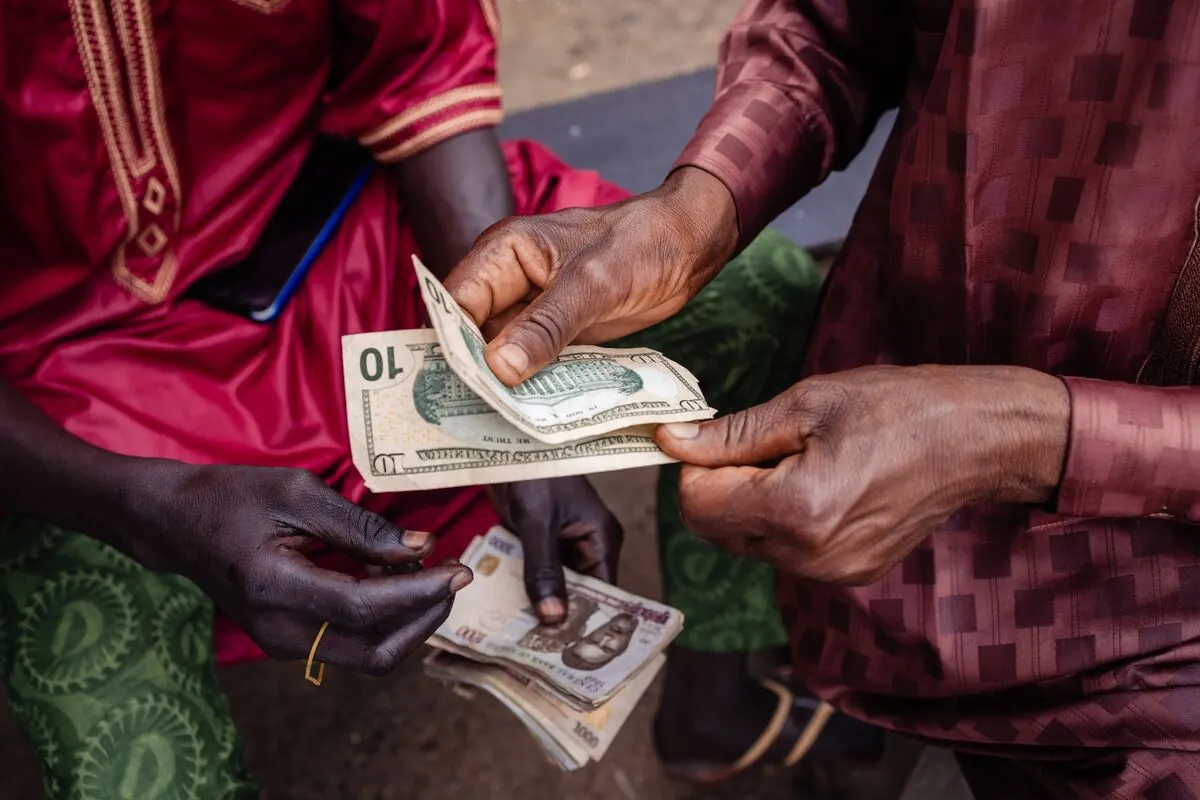
President Tinubu's revision of Nigeria's external borrowing programme — cutting a planned $20.52 billion package to $7.7 billion and leaning harder on domestic financing for a N31.4 trillion deficit — is the clearest fiscal-policy signal the reform government has sent about how it intends to manage the country's debt architecture through the rest of its first term. The move deserves analysis on its own terms, because its consequences are more interesting than its arithmetic.
The budget arithmetic anchors the numbers: the 2026 budget provides for N29.2 trillion in total borrowing to fund a N31.4 trillion deficit, including N18.4 trillion from domestic markets and N10.79 trillion externally. Replacing a $20.52 billion request with a $7.7 billion one therefore shifts the external share of the financing plan downward by meaningful amounts — the withdrawn dollars represent the difference between heavy reliance on international markets and a structure that treats external borrowing as a supplement rather than a pillar.
The currency-risk calculation underneath
The core economic argument for the reduction is currency risk — the balance-sheet weapon that has quietly dominated Nigerian public finance debates since 2023. Every dollar borrowed externally is a dollar that must be serviced from n revenues converted at prevailing rates: when the naira traded at N1,500 and beyond to the dollar, the local-currency cost of each dollar of debt service multiplied, pushing debt-service ratios toward the levels that prompted successive finance ministers to warn federal revenue could not cover repayments without borrowing. With the naira holding near N1,347, each 2027 dollar of debt service costs the Federation roughly N1,347 — a figure that will move with whatever currency level the reform era finally survives at.
Borrowing domestically, by contrast, denominates the state's obligations in the currency it collects taxes in — shifting the repayment burden from foreign exchange risk onto interest-rate risk. That conversion is why disinflation credibility has become a debt-strategy input: the CBN's success in anchoring inflation expectations is the condition that makes the domestic financing alternative affordable, and the government's willingness to shift borrowing domestically is effectively a vote of fiscal confidence in the monetary experiment. The two policy arms are now officially linked.
What $7.7 billion signals about market access
The withdrawal of the larger request also reads as a market-access judgment. Nigeria's most recent dollar offerings were received, but at spreads that priced the country's fiscal pathway as middle-rated rather than emerging-market-darling; a $20 billion programme would have required either heavy Eurobond supply — pressuring Nigeria's existing paper — or reliance on financing windows whose terms the budget was not drafted to assume. Scaling the request to $7.7 billion matches the plan to the sources most likely to deliver it: multilateral programmes with concessional features, bilateral facilities, and a smaller market tranche priced off an oversubscribed base.
The legislative politics compound the analysis. The threshold change lands in a National Assembly freshly elected with a cost-of-living mandate, and the smaller headline number is easier to pass than the larger one — but the deeper accountability test remains: which projects the borrowing funds, what the concessional sources are, and whether the external plan carries debt-service assumptions that future budgets can absorb without crowding out development spending. Senate approval processes that once moved borrowing requests through on executive authority will face these questions with a civil-society budget community that has grown far more technical.
The domestic consequences of a domestic-financing pivot
The shift's heaviest consequence falls on domestic markets. A N18.4 trillion domestic borrowing programme, on top of the trillions the CBN has already absorbed through OMO operations, competes with the same institutional capital that bankrolled this year's equity rally and the Dangote refinery listing. Short-term instruments have dominated because the yield curve's long end is expensive; the auction data for the fourth quarter show Treasury Bills oversubscribed multiples over while allotments are rationed — evidence of demand exceeding the state's willingness to issue at market-clearing rates.
The interest-rate arithmetic in that pivot is where the policy trade-off sharpens. Every naira of additional domestic issuance at 15 to 18 per cent yields adds a compounding obligation to future budgets — domestic debt service costs are already among federal spending's fastest-growing lines. The government is therefore buying currency safety with rate exposure, a defensible exchange in a year the naira's stability is a reform achievement, but one whose cost structure in 2028-29 depends almost entirely on whether disinflation holds and the yield curve can flatten as inflation premiums recede.
Reading the signal out loud
The strategic message international lenders and rating agencies will draw is twofold. First, the administration is willing to constrain its own borrowing ambition when market conditions are unfavourable — a discipline signal that improves the terms on the borrowing it does request. Second, the fiscal plan increasingly treats debt management as an integrated portfolio of currency and rate risks rather than a mechanical financing exercise — a sophistication that genuinely differentiates Nigeria's public financial management from the pattern of a decade ago.
The risks to the interpretation are equally explicit. If oil revenue disappoints — the same week's crude collapse has already trimmed Federation Account projections — the deficit's financing gap reopens and the temptation to fill it through domestic issuance or CBN-linked channels returns. If the national assembly blocks even the reduced request, infrastructure programmes lose the concessional funding attached to them. And if inflation resurges through a festive-season squeeze, the domestic-debt strategy's cost advantage erodes precisely when the government cannot afford it to. The borrowing revision, in short, is the reform government's clearest statement of financial philosophy yet — and its first self-imposed constraint that November's revenue data will immediately test.
Up next
Analysis: What the AI Wipeout Means for African Tech
The US AI stock rout transmits to African tech through venture budgets, corporate spending and risk premia, but also opens doors.
More in Opinion & Analysis
See all
Analysis: What Record Nigeria Bank Profits Hide
A 65% profit surge at First HoldCo and record results across Nigerian banks mask three earnings-quality questions: rate-cycle rent, impairment timing and crowding out.
Nigeria's Debt Maths: Why Interest Is Eating the Budget
Federal interest payments consumed 124.2% of federal revenue in the first half of 2026, a stark illustration of how debt service is squeezing out investment.

Analysis: What the Democrats' Midterm Sweep Actually Means for Nigeria
Analysis: the Democrats' House takeover and seven Senate seats narrow US trade, tariff and rates risk. Here is what it means for Nigeria's exports, debt and policy strategy.
About the author
Amaka Obi
Senior Business Reporter
Amaka Obi writes for BusinessPress.
More by Amaka Obi


