
ArcelorMittal Beats Profit Estimates But Records Ukraine Charges
ArcelorMittal EBITDA of $2.02bn beat consensus, but $852m impairments and a $293m Ukraine charge weighed on the steel group.
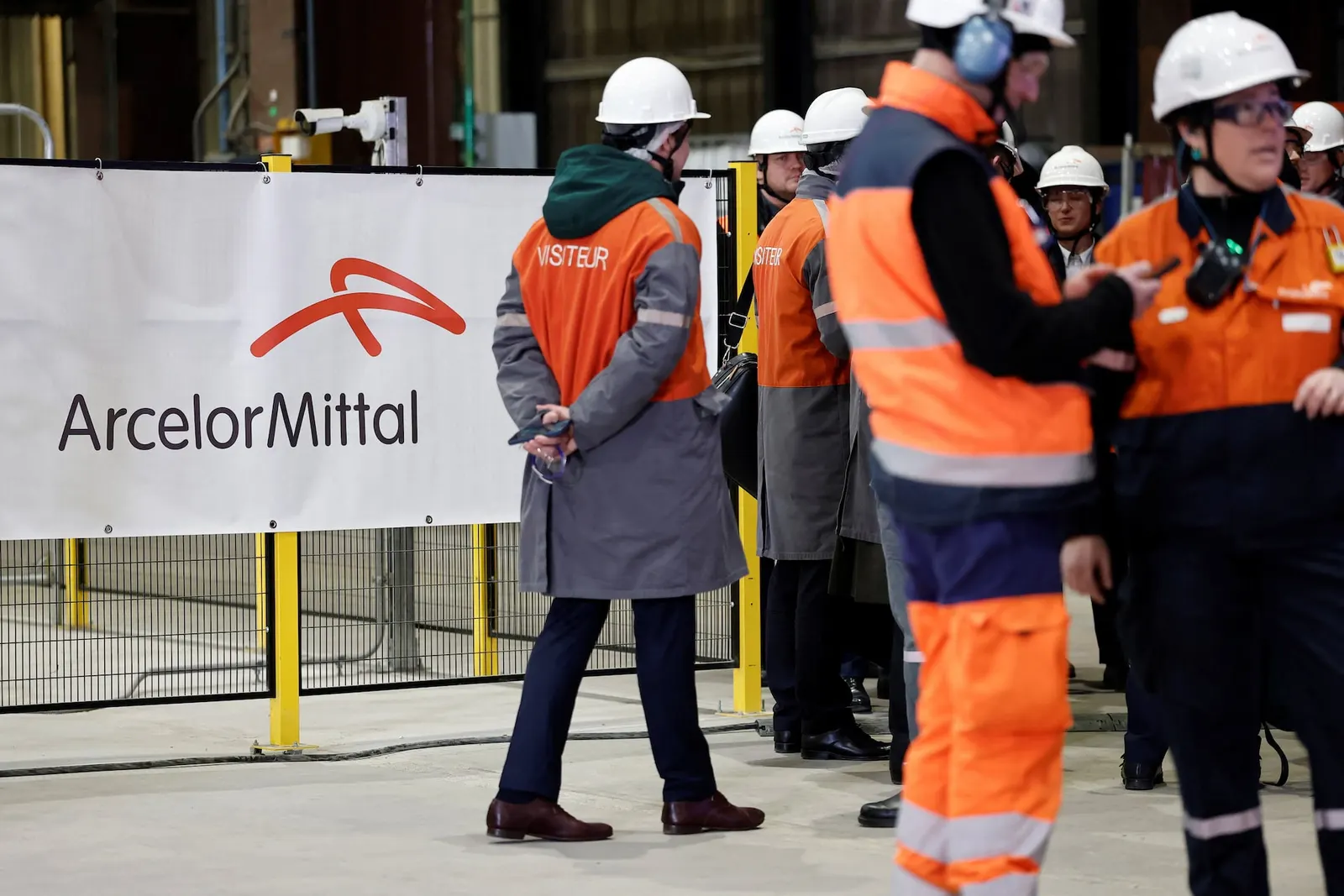
ArcelorMittal, the world's largest steelmaker outside China, reported third-quarter results that beat expectations on profitability but disclosed the heavy cost of its war exposure, with $852 million in impairments and a separate one-off $293 million charge linked to its operations in Ukraine weighing down an otherwise firm set of numbers.
The group's revenue came in at $16.47 billion, below the $17.1 billion analysts had pencilled in, but EBITDA of $2.02 billion exceeded the $1.89 billion consensus — the combination of a sales shortfall and a profit beat that describes a company managing costs through a soft demand environment while absorbing the write-downs its war-adjacent portfolio now requires.
The Ukraine position explains the charges
ArcelorMittal is now the largest private foreign industrial investor remaining in Ukraine, a position it has defended through four years of full-scale war, sustaining steelmaking at Kryvyi Rih and other facilities amid strikes, power losses and logistical paralysis. The charges disclosed this quarter are the accounting expression of that exposure: impairment of assets and a one-off charge reflecting the deteriorated economics of the Ukrainian operation — where energy costs, logistics and security premiums rewrite the plant's cost base every quarter that the war extends.
The corporate logic for staying is both strategic and reputational: the company holds positions it considers strategically essential to post-war reconstruction, and European policymakers have treated the Ukrainian industrial base as a matter of continental security, not just portfolio. But the price of that conviction now shows up quarterly, and the marginal cost of each extension of the war is being written directly into the books of Europe's industrial champions — a transmission of conflict economics that no commodity cycle fully captures.
The steel market underneath the beat
The operational beat sits inside a steel market that has been softening through 2026 — global demand growth decelerating under high interest rates, Chinese exports flooding third markets at aggressive pricing, and European construction demand still depressed. ArcelorMittal's strategy through the environment has been capacity discipline: closures and idling of higher-cost European sites, capital returns calibrated to cash flow, and an increased tilt toward higher-value segments — automotive, electrical steels, infrastructure — where pricing is less commodity-driven.
India remains the group's growth engine, with its joint venture delivering volume growth that the developed markets' stagnation cannot match, and Brazil and the North American positions providing the diversified earnings that make the European write-down survivable. Analysts' reaction to the quarter focuses on exactly that geography: a company whose European earnings are flat-to-weak, whose Ukrainian assets are war-impaired, but whose Asian and mixed-market franchises are delivering enough cash flow to fund buybacks and decarbonisation capital simultaneously.
What it means for Africa's steel story
The results matter for African industrial planners for the structural reason that steel is upstream of everything a continent builds. ArcelorMittal operates West Africa's largest steel assets, including Liberia's mining restart and Nigerian operations through its portfolio, and the group's capacity decisions — where it invests, closures or expands — shape the raw-material economics of every forthcoming construction, energy and infrastructure programme on the continent.
The company's African strategy through the results cycle has been mixed: expansion of iron ore mining assets where grades justify investment, and continued operation of the flat-steel footprint that supplies construction and automotive sectors — with the Liberian expansion among the assets treated as strategic rather than merely cyclical. African steel demand growth remains among the fastest globally, but the continent's import dependence persists because local capacity is thin, and the group's next capital cycle will influence whether Africa's infrastructure boom is supplied onshore or continues to import European and Asian tonnage at freight premiums.
Reading the quarter's signal
The quarter's forward signal is less in the beat itself than in what management did not reverse. Capital returns continued; the decarbonisation programme proceeded; and no guidance about divesting Ukrainian assets appeared despite the charges — all of which read as conviction that the war's endgame, however long delayed, delivers value that today's write-downs discount too severely. Steelmaking in a war zone is the rare industrial exposure that markets price as permanent and management prices as temporary; the difference between those two valuations is currently visible as a $1.1 billion quarterly adjustment.
For metals and mining investors, the quarter's template travels: companies with concentrated geopolitical exposures — energy, mining, infrastructure — are being asked to carry conflict costs on their balance sheets while their strategic assets' eventual value depends on political outcomes no analyst can model. ArcelorMittal's Ukrainian charges are the industrial world's most explicit example; the lesson for every portfolio holding war-adjacent assets from the Gulf to the Sahel is that the war's economics are now a recurring earnings line, not a tail risk.
Up next
Rice, Pepper and Egg Prices Climb into the Festive Season
Rice, pepper and egg prices rose as fuel costs and festive demand built, and fortification rules add cost to processed staples.
More in Business
See all
Dangote Refinery Lifts Petrol Price to N1,300 a Litre
Dangote Refinery raises its petrol gantry price to N1,300 per litre from N1,215 on November 3, with local pump prices rising to about N1,360 as crude costs bite.

Digital Africa Backs Ethiopian Group-Buying App ChipChip
Digital Africa makes its first Ethiopian commitment with funding for ChipChip, a social-buying app aggregating smallholder farm orders into bulk purchases.

IFC Injects First Investment into Ethiopian Fintech Kifiya
IFC makes its first investment in Kifiya Financial Technology at AFIS in Luanda, scaling AI risk-decisioning that has enabled $1bn-plus in credit for 1.1 million MSMEs and farmers.
About the author
Amaka Obi
Senior Business Reporter
Amaka Obi writes for BusinessPress.
More by Amaka Obi
Beta Glass Q3 Profit Signals Margin-Expansion Run
Corporate
Analysis: What $100 Brent Means for Nigeria 2027
Opinion & Analysis
Analysis: Nigeria Rebalances Debt from Dollars to Naira
Opinion & Analysis


