Brazil Stocks and Real Tumble as Lula Wins Fourth Term
Brazil’s Bovespa fell 13.9% on Monday, October 26, in one of its sharpest one-day declines on record, while the real tumbled over 11% intraday before trimming losses to about 8%, after Luiz Inácio Lula da Silva clinched a surprise runoff win for a fourth presidential term.

Brazilian assets sold off violently on Monday, October 26, 2026, after President Luiz Inácio Lula da Silva won re-election in Sunday’s runoff — capturing an unprecedented fourth term and beating the right-wing Senator Flávio Bolsonaro, who had held an unexpected first-round lead, Reuters reported. The iShares MSCI Brazil ETF (EWZ) dropped more than 20% overnight and as much as 24% in early US trade, a swing that, if sustained through the close, would rank among its largest single-day moves since it began trading in July 2000.
Domestically, the benchmark Bovespa stock index closed down 13.88%, in one of its sharpest declines in decades, and the real tumbled more than 11% against the dollar in early spot trading before finishing the session about 8.1% lower. November futures for the Brazilian real — implied roughly 5.5 to 5.6 reais per dollar at their worst — plunge profusely from the 5.01 reais seen at the October 23 close, obscured while the spot market in São Paulo introduced its cash-only real late. US-listed shares of Brazilian companies also fell, with Petrobras down more than 20%.
Trading desks in São Paulo had warned ahead of the open that selling could be so intense that circuit breakers might trigger. The Reuters/Bloomberg-sourced coverage also noted Tokyo-listed exposure: the Nomura NF Bovespa-linked ETF fell as much as 16% in the Asian session, Seoul Economic Daily reported.
[irp][irp][irp][irp][irp]
A Bet That Unwound
The selloff was less about policy pronouncements than about positioning. Brazil’s markets had rallied in the weeks before the run-off on the expectation that the first-round results would resolve in a market-friendlier direction, a view built largely on the Senator’s unexpected first-round lead. Monday’s outcome reversed those bets at speed, with traders re-strategizing from tail risk hedges they had unwound over the past fortnight, Reuters reported.
Luis Felipe Vital, an equities specialist, told Reuters he expected “a sharp market reaction on Monday, with aggressive repricing, a selloff in assets and interest rate futures likely to hit their upper limit shortly after the open.” That forecast proved conservative in equities direction, and roughly accurate in currency futures, where limit moves forced desks to transact at awkward gaps rather than orderly levels.
The Fiscal Question Investors Now Ask
Brazil enters the new term with its federal debt at roughly 82% of GDP and without a credible medium-term fiscal anchor, according to market commentary reviewed across the session. The president has pledged expanded social spending and stronger growth, but investors have struggled to see the corresponding revenue path. Monday’s move to about 5.6 reais per dollar implied a bond and currency reaction consistent with a materially higher risk premium.
The real question for the next few weeks is institutional: can the administration’s incoming policy team assemble a credible framework that reassures bond investors without freezing the spending agenda that powered the re-election? Early signals suggested policy continuity around existing expansion priorities, which — as the session demonstrated — carries a price markets have now stamped.
Spillovers Beyond Brazil
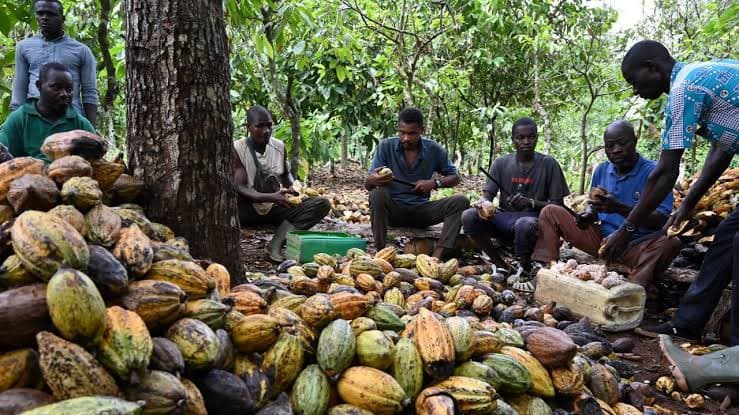
Brazil is the world’s largest source of several critical soft and mineral commodities, and the BRL’s depreciation changes relative costs for competitors on the continent, including Ghana and Cote d’Ivoire in cocoa, through currency-adjusted comparisons. Commodity desks spent the session quantifying shipping, refinery and fertilizer flows for knock-on effects. The other watch item is rate policy: Brazil’s central bank has held rates historically high, and a sharp currency slide argues for either patience on cuts or fresh hawkish messages that expand its credibility — with each path carrying growth trade-offs.
Emerging market desks also flagged second-order portfolio flows: funds that cut Brazil risk will rebalance among frontier assets. For Nigerian investors, the direction is far from uniform, but the Ibovespa rout narrows one of the cross-market comparisons asset allocators have used when assessing which emerging markets can still sustain the pace of domestic re-rating Nigeria itself has enjoyed this year.
Up next
Wall Street Rebounds Monday as Anthropic IPO Filing Lifts Nasdaq Ahead of Fed Week
US equities snapped a two-day slide on Monday, October 26, with the S&P 500 up 0.70% to 7,676.77, the Dow higher by 0.28% and the Nasdaq up 0.82%, after reports that Anthropic had filed for a Nasdaq IPO under the ticker ANT.
More in Markets
See all
Naira Recovers to ₦1,331 on NFEM Monday After Friday’s ₦27 Slump
The naira rebounded to about ₦1,331.28 per dollar on the official Nigerian Foreign Exchange Market on Monday, October 26, recovering most of the ₦27.12 loss it suffered over Thursday and Friday, while parallel-market rates ranged around ₦1,370–₦1,385.

Oil Slides Toward $101 a Barrel as Diplomacy Raises De-escalation Hopes
West Texas Intermediate fell for a second straight day on Monday, October 26, dropping toward $101 a barrel, while Brent settled below $116, as stepped-up diplomatic missions to Tehran raised hopes the US-Iran conflict may not escalate further.
NGX Market Cap Hits Record ₦163.16 Trillion as All-Share Index Jumps 1.65%
Nigerian equities extended Monday’s recovery on the Nigerian Exchange, with the market capitalisation reaching ₦163.16 trillion and the All-Share Index closing at a record 251,290.54 points, powered by a 10% limit-up day for Dangote Cement.
About the author
Adaeze Okonkwo
Markets Editor
Adaeze Okonkwo writes for BusinessPress.