Cocoa Farmers Push Value-Chain Reforms, Warn Against Commodity Board Bill
Cocoa farmers’ associations are intensifying pressure for value-chain reforms, warning through their representatives that proposed federal commodity board legislation must not recreate the rent-seeking structures that impoverished farmers under Nigeria’s old marketing boards, BusinessDay reported on Monday, October 26.
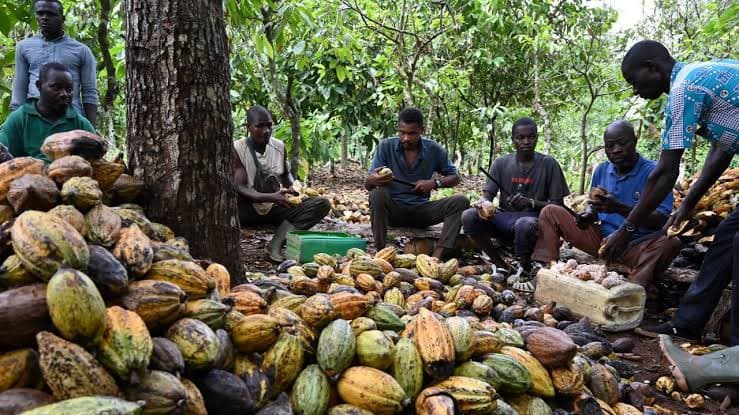
Nigeria’s cocoa farmers are intensifying pressure for value-chain reforms, with their representative associations warning that proposed federal legislation to re-establish commodity marketing structures must not recreate the rent-seeking systems that impoverished farmers under Nigeria’s original marketing boards, BusinessDay reported in industry coverage published Monday, October 26, 2026. The farmer advocacy is the human-weight dimension of a cocoa reform debate that has been quietly running through Nigeria’s agricultural policy circles for months, as the country’s export surge has turned the commodity into a fiscal and political priority.
The history farmers are invoking is specific and unresolved. Nigeria’s original Cocoa Marketing Board, dismantled in the 1986 liberalisation, controlled purchasing prices, export licenses and the commodity’s entire marketing chain — and became a case study in how state intermediation can capture farmer surplus. Farmers received a fraction of world prices while the boards financed parastatal overheads and state expenditure. The liberalised era restored direct market access, and farmers are explicit that a return to centralised marketing — whatever its stated purpose — risks reversing the only structural gains the sector has had.
The reform proposals themselves sit awkwardly on that history. Nigeria has debated re-establishing a national cocoa board in various forms — principally to coordinate quality grading, enforce international export standards, and capture processing investment — but the farmer associations through the Cocoa Farmers Association of Nigeria have drawn a hard line: standards coordination, yes; purchasing monopoly and price-setting, no.
[irp][irp][irp][irp][irp]
What Farmers Actually Want
The associations’ value-chain agenda runs across three concrete asks. First, processing investment — the grinding capacity that would retain more of the value-added margin domestically, a goal the state governments are already courting with specific incentives. Second, input financing at farmer-friendly rates, the binding constraint on replanting and yield improvement given how old Nigeria’s tree stock has become. Third, transparent price discovery at the farmgate — the mechanism that ensures the 3,000% naira-driven export value surge actually reaches the farmer’s hand rather than pooling at the intermediaries who dominate the buying chain.
The mobilisation has political texture too. The reform debate has pitted the Ministry of Agriculture’s administrative draft against the farmer associations’ market-plus-standards position, and the fallout is playing out through the National Assembly’s agriculture committee as the bill’s details are finalised.
The Stakes in the Governance Design
Nigeria’s cocoa future is one of the few agricultural sectors where the country has both scale and current commercial momentum — 3,000% value growth and West African price records compounding. The governance structure chosen now will shape whether that momentum develops the processing capacity and farmer incomes that make it durable, or whether the cycle repeats the historical pattern of commodity booms captured by intermediaries and administrative rent.
The farmer associations’ warning is therefore both a policy position and a leverage play: with export receipts at records, farmers have more economic power than they have held in four decades, and they are using it to define the terms on which the industry’s institutions get rebuilt.
Up next
Cross River Exports Over 80,000 Metric Tons of Cocoa Annually, Association Says
Cross River State exports more than 80,000 metric tons of cocoa annually, the Cocoa Association of Nigeria said, positioning the state as a leading supplier in Nigeria’s resurgent cocoa trade as it pushes for direct export channels from its southern port, BusinessDay reported.
More in Agriculture
See all
NSIA Prize for Agriculture crowns Come Again Foods, Protein Kapital, Tryctor as winners
The NSIA Prize for Agriculture has named Come Again Foods, Protein Kapital and Tryctor as winners, with $277,000 in cash awards and a Pula Xcelerator pathway worth about $1.5m in growth support.
El Niño report projects 31,400 heat deaths in Nigeria in six months
Extreme heat threatens public health, farm output and energy supply, exposing Nigeria’s weak adaptation and climate-finance gaps.
NEC approves 90-day plan to cut food costs and ease living crisis
The short-term plan targets production, transport and market bottlenecks, but structural food insecurity will require longer-term investment.
About the author
Abena Ofori
Agribusiness Correspondent
Abena Ofori writes for BusinessPress.