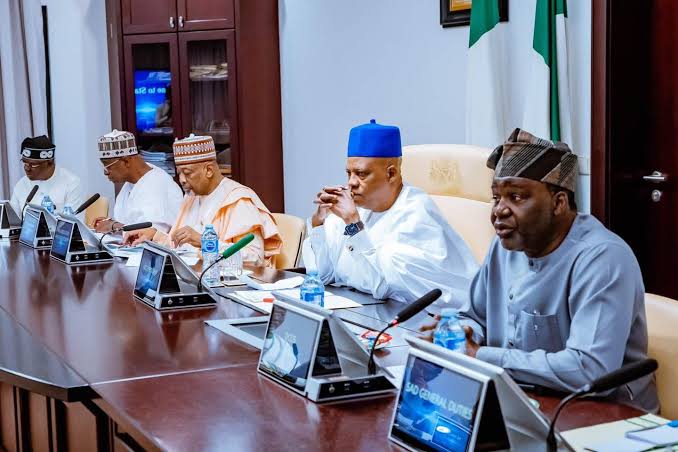
Cardoso courts Chinese investment in naira assets after ICBC talks
CBN Governor Olayemi Cardoso has urged Chinese financial institutions to invest in naira-denominated instruments after meetings with ICBC in Beijing.
Central Bank of Nigeria Governor Olayemi Cardoso has called for greater Chinese investment in naira-denominated financial instruments, using meetings with the Industrial and Commercial Bank of China to push for deeper financial links between the two countries.
Cardoso made the case during discussions with ICBC’s chairman and senior management in Beijing, according to a CBN account reported by The Guardian Nigeria on October 22. The meetings also included the Nigeria-China Cross-Border Finance Roundtable, a specialist session on trade settlement, payments and business operations.
The proposal matters because Nigeria’s economic relationship with China is heavily weighted toward trade payments. Nigerian importers pay for machinery, electronics, textiles and other goods in dollars, while Chinese investment in Nigerian manufacturing and infrastructure remains smaller than the trade flows would suggest. Cardoso wants to add an investment dimension to that relationship.
From trade payments to portfolio flows
CBN data cited in the report show significant trade-related payments from Nigeria to China, alongside comparatively limited export proceeds and investment flows into Nigeria. That imbalance means Nigerian businesses bear the currency and settlement costs of the relationship, while Chinese financial institutions have relatively little exposure to naira assets.
Cardoso argued that greater participation by Chinese financial institutions in Nigerian markets could help correct the imbalance. He identified investment in naira-denominated instruments as a practical opportunity, alongside deeper cooperation on trade settlement and payments.
The logic is straightforward. If Chinese banks and their corporate clients hold naira bonds, Treasury bills or other local securities, they gain a stake in Nigeria’s financial stability and a reason to support two-way flows. That could lower transaction costs, improve liquidity and create a more balanced relationship than one based mainly on import payments.
What ICBC could bring
ICBC is the world’s largest bank by assets and has extensive corporate relationships across Asia. Cardoso outlined a role for the bank in connecting those relationships, institutional networks and international reach with Nigerian investment opportunities. He said those channels could help identify barriers to participation and translate commercial interest into financial activity.
That is easier said than done. Chinese banks are conservative about credit and currency risk. They would need to understand Nigeria’s regulatory framework, tax treatment, custody arrangements and foreign-exchange rules before committing capital. They would also need reliable hedging instruments, which are limited in Nigeria’s shallow derivatives market.
Cardoso acknowledged those constraints indirectly. He said the CBN would work with counterparts to address regulatory and institutional barriers where appropriate, and proposed that the discussions identify practical priorities and designate teams to carry cooperation forward. Success, he said, would be measured by greater transaction volumes, broader market participation and a more balanced financial relationship.
The reform backdrop
The pitch rests on Nigeria’s reforms over the past three years. Cardoso said those changes had strengthened confidence in the financial system and created a more predictable environment for investment and enterprise. The central bank has unified exchange rates, cleared a backlog of foreign-exchange obligations and tightened monetary policy, although inflation remains above target.
Those reforms have improved Nigeria’s standing with international investors. Foreign portfolio inflows have returned to the local bond market, and the naira has been relatively stable against the dollar in recent months. But Nigeria still carries a high risk premium. Yields on 10-year FGN bonds were around 17 per cent in mid-October, reflecting inflation, fiscal deficits and currency risk.
For Chinese investors, those yields are attractive in nominal terms. The question is whether the real return, after inflation and expected currency depreciation, compensates for the risk. That calculation depends on Nigeria’s fiscal trajectory, oil revenue and the credibility of the central bank’s policy framework.
Naira instruments and the liquidity question
Nigeria’s domestic debt market has deepened in recent years, but liquidity remains uneven. Treasury bills and FGN bonds trade actively at the short end, while longer-dated bonds and corporate securities are less liquid. Investors who buy naira paper need confidence that they can exit without a significant price concession.
The government has acknowledged the problem. Finance Minister Taiwo Oyedele said at the IMF-World Bank meetings in Bangkok that Nigeria is working with monetary authorities to improve liquidity and price discovery so that investors can exit naira paper without additional risk. That message complements Cardoso’s pitch to China.
A more liquid market would benefit both sides. Chinese banks could hold naira assets with greater confidence, while Nigerian issuers could tap a wider investor base. But liquidity cannot be decreed. It requires consistent issuance, transparent rules, reliable settlement infrastructure and a diverse pool of buyers and sellers.
The political and strategic dimension
Nigeria’s relationship with China extends beyond finance. Chinese companies are major contractors in Nigerian infrastructure, and China is one of Nigeria’s largest import sources. Closer financial ties could support those commercial relationships, but they also raise questions about dependency and influence.
Cardoso’s framing is economic rather than political. He wants Chinese institutions to participate in Nigerian markets on commercial terms, not to substitute for private capital or multilateral lenders. That distinction matters. A deepening of portfolio flows is different from a new wave of state-backed loans, which have contributed to Nigeria’s debt-service burden in the past.
What happens next
The immediate outcome is likely to be technical engagement rather than a large capital inflow. Teams from the CBN and ICBC will need to discuss custody, settlement, tax and regulatory approvals. Chinese banks may start with trade-finance facilities and small holdings of short-dated securities before considering longer-dated bonds.
For Nigeria, the test is whether the outreach produces concrete investment or remains a diplomatic talking point. The central bank has opened a channel. The next step is to show that naira assets can be bought, held and sold within a predictable framework. Without that, the pitch to China will struggle to move beyond symbolism.
[irp] [irp] [irp] [irp] [irp]
Up next
Naira holds at N1,497 per euro as French debt stress weighs on currency
The naira traded at N1,497 per euro, falling below N1,500 for the first time since April 2024, as French bond stress weakened the euro rather than reflecting a domestic naira rally.
More in Markets
See all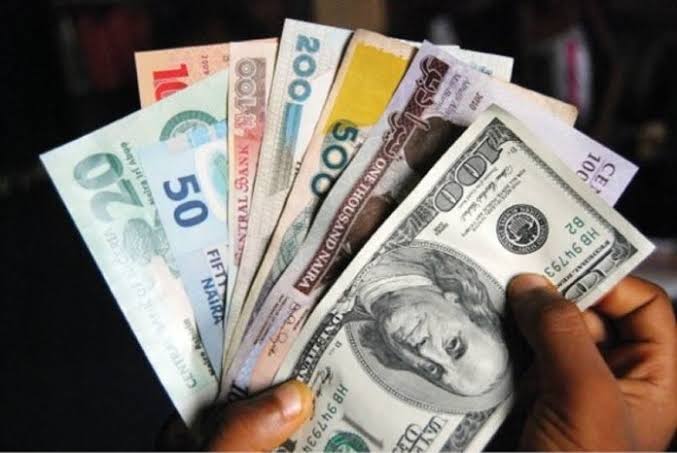
Naira Holds Near N1,370/$ as Reforms Steady the Foreign Exchange Market
The naira held broadly steady around N1,370 to the dollar as stronger reserves, tighter policy and returning portfolio inflows kept the currency within a narrow range.

CBN introduces NOFR as transaction-based benchmark for naira markets
The secured overnight reference rate is intended to improve pricing transparency and give financial contracts a more reliable base rate.
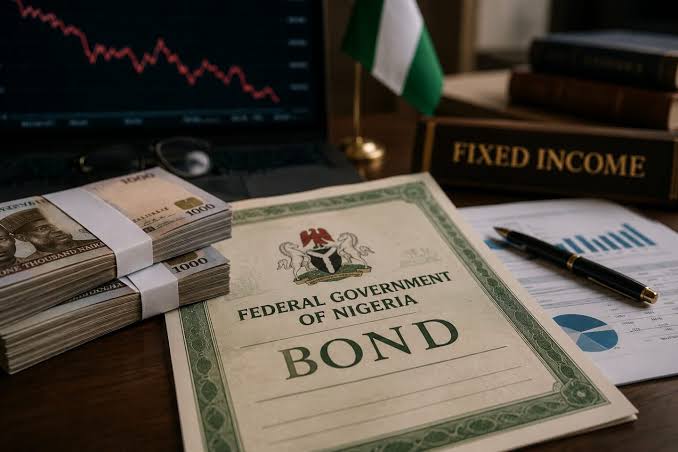
FGN bonds, Eurobonds rally as Treasury bill yields edge higher
FGN bond and Eurobond yields fell modestly while Treasury bill yields rose, leaving Nigeria's fixed-income market mixed as liquidity stayed ample.
About the author
Musa Abdullahi
Finance Correspondent
Musa Abdullahi writes for BusinessPress.
More by Musa Abdullahi