EIB Global, FCMB Stake €85m to Support Nigeria's Agricultural Value Chains
EIB Global and FCMB have committed €85 million in financing to support companies across Nigeria's agricultural value chains, targeting production, processing and distribution businesses that struggle to access long-term capital.
EIB Global, the European Investment Bank's development arm, and First City Monument Bank (FCMB) have committed €85 million to support companies operating across Nigeria's agricultural value chains, in a financing package aimed at businesses that struggle to access long-term capital for production, processing and distribution.
The transaction, highlighted on Monday, forms part of a broader push by European development finance institutions to channel private-sector credit into Nigerian agriculture, where commercial banks have been selective about tenor, collateral and sector risk even as the government campaigns for food self-sufficiency.
Why agricultural value chains need dedicated finance
Agricultural businesses sit between seasonal production cycles and year-round operating costs. A processor needs working capital to buy harvest volumes, energy to run plants through lean months, and investment in storage and transport that pays back over years — profiles that short-dated commercial credit handles poorly.
By structuring a dedicated facility with FCMB, EIB Global is effectively importing longer-tenor, development-priced capital into a market where prime lending rates near 30 per cent have priced many agribusinesses out of bank credit.
FCMB as the local channel
FCMB's role as the on-lending partner matters as much as the headline euro figure. Local banks with existing agricultural portfolios understand seasonal cash-flow patterns, warehouse dynamics and the regulatory environment for commodity handling — knowledge that foreign lenders alone cannot replicate.
The structure also leverages FCMB's customer base among mid-sized agribusinesses, giving the facility a distribution channel that does not require building a new book from scratch.
What success looks like
The €85 million will matter less as a disbursement total than as a signal that development finance can price Nigerian agricultural risk at terms private capital will follow. If the portfolio performs — with low non-performing loan ratios and visible expansion in processing capacity and farmer linkage — it becomes a template for scaling. If it does not, it remains a one-off facility in a market still waiting for durable agricultural credit at scale.
Up next
The Bigger Business of Feeding Africa: Farmers, Buyers and Processors
Africa's food system still fails to match farmers with fair buyers and processors with reliable supply, making the business of feeding the continent as much a market-design problem as a production one.
More in Agriculture
See all
Afreximbank Calabar Conference Targets Sub-Sovereign Investment Pipeline
Afreximbank, Cross River State, the Nigeria Governors' Forum and Nigerian state investment agencies will convene the sixth AfSNET investment conference in Calabar from November 12 to 14, with the network having facilitated over $3.2 billion since 2021.
Nigeria Loses $2 Billion Yearly as Cocoa Processing Capacity Sits Idle
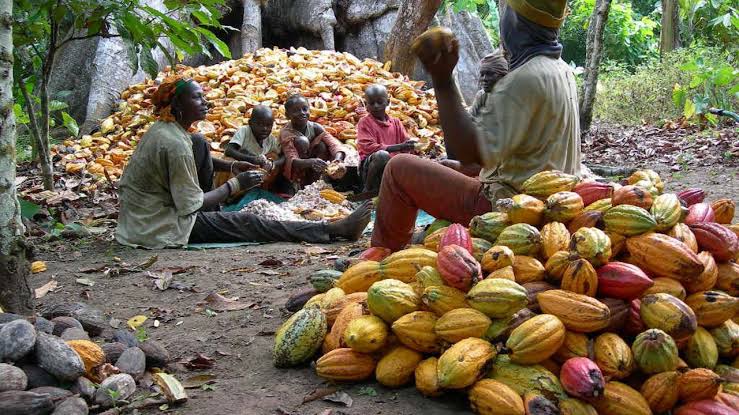
Nigeria uses only about 30% of its installed cocoa processing capacity, losing an estimated $2 billion a year in potential value addition, the Agriculture Ministry disclosed at a Lagos cocoa conference.
FG Reports 4.39% Agriculture Growth, Targets Lower Food Prices
Nigeria's agriculture sector grew 4.39% in the second quarter of 2026, its strongest momentum since 2021, the Federal Government said at World Food Day.
About the author
Kwame Mensah
Markets Correspondent
Kwame Mensah writes for BusinessPress.