FCMB Commits N20 Billion to Private Healthcare as Health Minister Presses Blended Finance
The bank announced an N20 billion facility for private healthcare providers, with eye-care businesses a named priority, at an Abuja roundtable where the minister of state for health pushed blended finance and impact bonds.
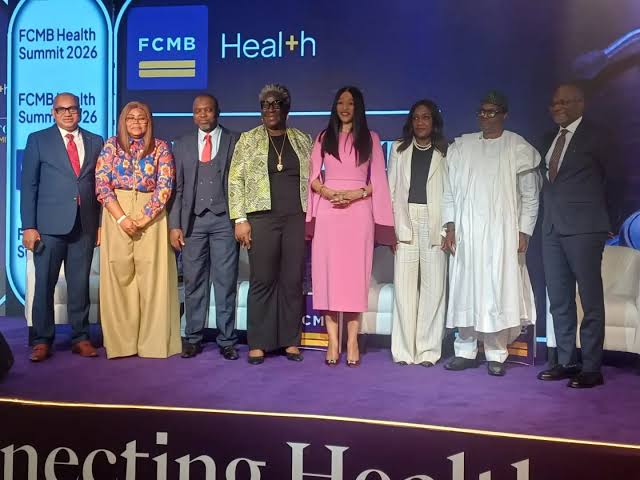
First City Monument Bank has committed N20 billion to financing private healthcare businesses in Nigeria, covering expansion, equipment, infrastructure, working capital and technology investments for eligible providers, with a specific callout for businesses across the eye-care value chain.
The commitment was announced at a public-private partnership roundtable organised by FCMB in Abuja, where the bank urged healthcare providers to explore the available financing options. Yemisi Edun, FCMB's Managing Director and Chief Executive Officer, said the bank's financing solutions could help viable healthcare businesses invest in their operations and extend services to more Nigerians. The Guardian Nigeria reported the disclosure on October 20, 2026.
The announcement comes against a policy push for more private capital in the health sector. The Minister of State for Health and Social Welfare, Dr Iziaq Salako, used the same platform to argue for blended finance, social impact bonds and corporate co-funding as the mechanisms that could strengthen healthcare infrastructure and widen access to services. He also commended the partnership between FCMB and the Tulsi Chanrai Foundation in eye care, urging more businesses to adopt similar approaches to healthcare delivery.
What N20 billion buys, and what it does not
The scale needs to be read against the asset base it is meant to support. A private hospital bed, a diagnostic centre or an optical clinic is a capital-intensive proposition: imaging equipment, operating theatres and specialised staff all have to be funded before a single patient is treated, and much of the equipment is imported, which exposes the borrower to naira-dollar moves between approval and disbursement. N20 billion is meaningful for the mid-sized providers that dominate the private market and negligible for the flagship hospital projects that the sector's capacity debate usually focuses on.
That is not a criticism of the commitment; it is the reason the structure of it matters more than the headline. Five product lines, from working capital to technology investment, serve very different risk profiles. Working capital facilities are short-dated and priced off turnover, so they recycle quickly and can reach more businesses than the headline suggests. Expansion and infrastructure loans are longer, collateral-heavy and slow to approve. A commitment covering all five is only as good as the underwriting behind each, and none of the pricing, tenor or allocation split between eye care and general providers has been published.
Why eye care is the useful test case
The eye-care focus is the most credible part of the announcement because it is the segment where FCMB has already built a delivery record rather than a plan. Since 2009, the bank and the Tulsi Chanrai Foundation have delivered free eye-care services through the Priceless Gift of Sight initiative, reaching more than 400,000 people with eye testing, optical services, surgeries and disease management, according to the bank.
Eye care also happens to be the right segment to test blended structures, because its economics are unusually legible. A procedure has a defined cost, a defined beneficiary and a measurable outcome, and the partner that funds treatment and the partner that trains staff are not the same institution. That is precisely the configuration that social impact bonds and corporate co-funding require: an investor paying for outcomes, a provider delivering them, and an evaluator able to confirm that the outcomes occurred. If the blended-finance model Salako advocated is to work anywhere in Nigerian healthcare, a high-volume, procedure-based speciality with an existing delivery partner is a more honest place to test it than a tertiary hospital with capital costs in the tens of billions.
Blended finance needs someone to absorb the first loss
The unresolved question in the roundtable's discussion is who takes the first loss on facilities that serve low-margin, cash-constrained providers. Commercial lenders cannot price clinical risk they cannot measure, and philanthropic capital is rarely patient enough to carry a multi-year position. Blended structures work by stacking a concessional or impact tranche under a commercial one, so that the commercial layer absorbs ordinary credit risk while the concessional layer absorbs more than it would on its own, with the gap funded by a grant, a guarantee or a concession from a development institution.
That third ingredient is the piece not present in the room, and its absence is the reason N20 billion from a commercial bank will not, on its own, move the sector's capacity. A guarantee facility from a development finance institution, or an interest-rate subsidy tied to service volume, would change the economics of lending to a clinic in a state with weak payer infrastructure. Without it, the same borrower that cannot service a 20 per cent loan on a diagnostic machine will remain unserved, and the funds will concentrate in the providers that already have bank relationships and audited accounts. That is not a criticism of the bank. It is the standard pattern of commercial lending, and it is precisely the pattern blended finance was designed to break.
What the commitment leaves open
Several questions will determine whether N20 billion changes private healthcare capacity or simply relabels existing lending. There is no published split between eye-care lending and the wider provider pool, no disclosure of how many borrowers have already been approached, no stated pricing or tenor, and no indication of whether the facility is drawn down by existing bank clients or opened to providers without a current relationship. The eye-care partnership with the Tulsi Chanrai Foundation is also not presented as the vehicle for the new money.
Nor does the announcement say what happens to the equipment import exposure that makes up much of the cost of private healthcare capacity, nor does it address the payment side, where out-of-pocket spending still determines which providers survive. Banks finance the assets; the sector's real constraint is often the price list. The measure of this commitment will not be the announcement but the number of providers that can install a machine, fill a theatre and stay open, and whether the structures Salako advocated become contracts rather than proposals in the next budget cycle.
Up next
NBTI Says It Has Assembled a $600 Million Investment Pipeline for Nigerian Startups
The technology incubation board disclosed a pipeline of more than $600 million at the NextGen Innovation Challenge, led by a proposed $500 million solar partnership with Gigawatt Global and a $100 million financing MoU with Cambridge Investors.
More in Finance
See all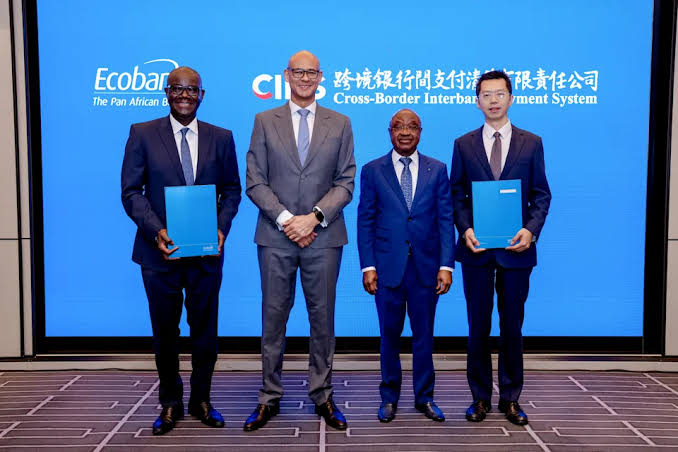
Ecobank Signs CIPS MoU to Deepen Renminbi Settlement Across 34 African Markets
Ecobank Group's memorandum with China's CIPS aims to strengthen renminbi payment connectivity between China and Africa, though operational rollout details remain undisclosed.

Banks Lend More to Traders as Manufacturing's Share of Credit Shrinks
Nigerian banks increased lending to traders in the first half of 2026 while manufacturing saw a sharp drop in outstanding credit, according to a Nairametrics Research analysis of Central Bank sectoral data.
Coronation Merchant Bank Named Nigeria's Best Sales and Trading Team at Euromoney Markets Awards 2026
Coronation Merchant Bank has been named Nigeria's Best Sales and Trading Team at the Euromoney Markets Awards 2026, recognising its client franchise and execution across fixed income, currencies and equities.
About the author
Amina Suleiman
Finance Correspondent
Amina Suleiman writes for BusinessPress.