Nigeria's Gas Boom Faces a Bankability Test Beyond LNG Exports
TotalEnergies and AMNI's Ima gas field will feed Nigeria LNG rather than domestic power, as executives warn that export economics keep outpacing gas-to-power and industrial demand.
Nigeria has just committed fresh capital to a new gas field, but the gas is headed for the export plant rather than the power stations and factories that have waited years for reliable supply. Industry executives say the next test is whether the country can make more than one gas market financeable.
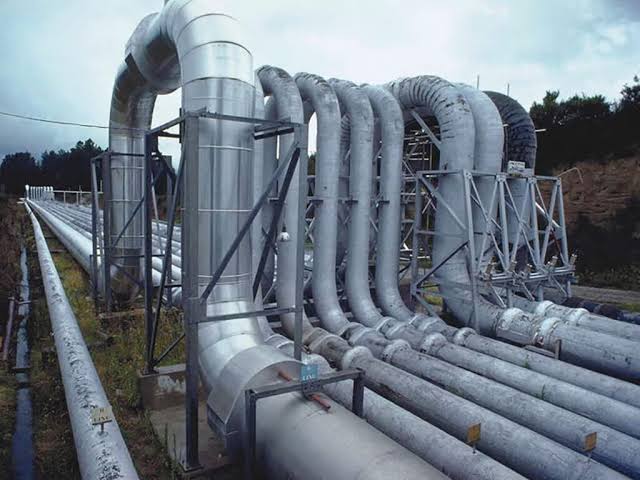
TotalEnergies, the operator with a 40 per cent stake, and AMNI, which holds 60 per cent, took a final investment decision on the Ima project on September 23. TotalEnergies said the shallow-water field will connect to Nigeria LNG through a 22-kilometre pipeline, start production in 2028 and plateau at 350 million cubic feet a day. That would cover about one-third of the feedgas needed for NLNG's Train 7 expansion.
Where the gas actually goes
Sola Adebawo, an energy executive and chief executive of advisory firm Hyphen Partners, argues that Ima should not be counted as new supply for domestic power plants or manufacturers. Export gas earns foreign exchange and adds to government revenue, he said, so the real issue is which market Nigeria is making bankable.
Data from the Nigerian Upstream Petroleum Regulatory Commission showed Nigeria produced about 7.45 billion standard cubic feet a day in 2025. Roughly 30 per cent went to field and plant use, including reinjection and fuel, and about 8 per cent was flared. Domestic and export sales together made up only 62 to 63 per cent of output, or about 4.6 to 4.7 billion cubic feet a day.
The midstream regulator, NMDPRA, reported in its August 2026 factsheet that total gas supply averaged 4.963 billion cubic feet a day from January to August. Domestic deliveries averaged 2.030 billion, while feedgas to NLNG averaged 2.933 billion, or about 59 per cent of the total.
Three destinations, three risk profiles
Adebawo said Nigeria has three destinations for marketable gas, and each needs different infrastructure, contracts, credit support and risk allocation. LNG has an established export plant, dollar-linked revenue and buyers operating within international commercial structures. Gas-to-power is harder: generators depend on dispatch, tariffs and collections in an electricity market with persistent liquidity problems, so gas can be available yet commercially stranded. Industrial users such as fertiliser and petrochemical makers may offer stronger credit, but they need dependable pipelines and sustainable prices, and many sit beyond existing infrastructure.
"Capital will follow the destination that offers the clearest route from production to payment," Adebawo wrote. That logic explains why export projects keep reaching financial close while domestic gas ambitions lag.
The pricing and payment problem
Chichi Emenike, acting managing director and gas asset manager, said investors are not seeking windfalls but reasonable, predictable returns — and without them the capital for the government's "Decade of Gas" agenda will not arrive. "No investor is doing Red Cross. No investor is doing charity," she said. "Everybody doing investment expects to recover principal plus X."
Payback periods stretch when buyers don't pay. "If you do your economics and expect payback in 5 years, you should be protected to get it in 5 years plus X. If you don't have a bankable paying market, that 5 years becomes 7 years, then 10 years," she said. The biggest shortfall, she added, is infrastructure: "There are not enough pipelines, and the market is not well-catalogued."
Gas production is dollar-denominated at every stage, from deep wells to pipelines and processing plants, yet authorities still try to dictate what producers can charge, she said, exposing producers to currency and loan-repayment pressure that regulated prices do not reflect. NUPRC data showed producers delivered 2.05 billion cubic feet a day to the domestic market in the first half of 2026 against obligations of 3.16 billion — about 65 per cent performance. A proposed gas-swap framework could let operators with stranded supply meet obligations through producers with infrastructure access, but Adebawo called it useful rather than a substitute for pipelines, processing, solvent buyers and enforceable payments.
In August alone, domestic supply reached 2.214 billion cubic feet a day and NLNG feedgas was 2.716 billion, with deliveries of 0.537 billion to power, 0.633 billion to commercial users and 0.590 billion to gas-based industries. Those figures underline how small the power and industrial segments remain relative to export volumes, even though they are the segments most directly linked to domestic electricity reliability and manufacturing competitiveness.
Emenike credited the Petroleum Industry Act with moving investors in the right direction but said the market still needs full liberalisation. "What has been done so far helps investors start behaving like business people, not like people running away because they are scared," she said. Her point is that partial reform can raise investor confidence without yet making domestic gas commercially bankable.
Adebawo rejected framing the issue as exports versus local use. Nigeria needs LNG to earn foreign exchange, power-sector gas for reliability and industrial gas for manufacturing and jobs, he said, with each destination carrying its real infrastructure and credit costs. Suppressing domestic prices discourages supply; letting export economics dominate without building local demand leaves the economy short of energy.
The Ima final investment decision shows investors will still back Nigerian gas. It also shows where the money is going, and why closing the gap between available molecules and delivered power requires solving the commercial design of the domestic market, not merely producing more gas.
Up next
Nigeria Needs 0 Billion for Energy Infrastructure as Investors Demand Policy Consistency
HBSAN energy conference chairman Mayowa Afe says Nigeria needs about 0bn in energy infrastructure investment over five years, warning that capital follows confidence and confidence follows consistency.
More in Economy
See all
FHFL, Police Trust Fund Break Ground on 257-Unit Housing Estate in Nasarawa
Family Homes Funds Limited and the Nigeria Police Trust Fund have broken ground on a 257-unit affordable housing estate in Nasarawa State, kickstarting construction of units aimed at police personnel and other eligible buyers.
Nigeria's Portfolio Investment Rises 45% to $6.51 Billion in Q2 2026
Nigeria's portfolio investment rose 45 per cent to $6.51 billion in the second quarter of 2026, Central Bank data show, with debt securities driving most of the increase as the government courts more foreign capital.

Oyedele Says 'Nigeria Rising' Reforms Are Changing How the World Sees the Economy
Finance Minister Taiwo Oyedele says the "Nigeria Rising" framing of the country's reform programme is changing international perceptions of the economy as fiscal, tax and monetary adjustments begin to show results.
About the author
Amina Suleiman
Finance Correspondent
Amina Suleiman writes for BusinessPress.