
Wall Street AI Wipeout Erases Midterm Rally
The S&P 500 fell more than 3 percent as chip earnings triggered a global AI selloff, erasing Wall Street post-election gains.
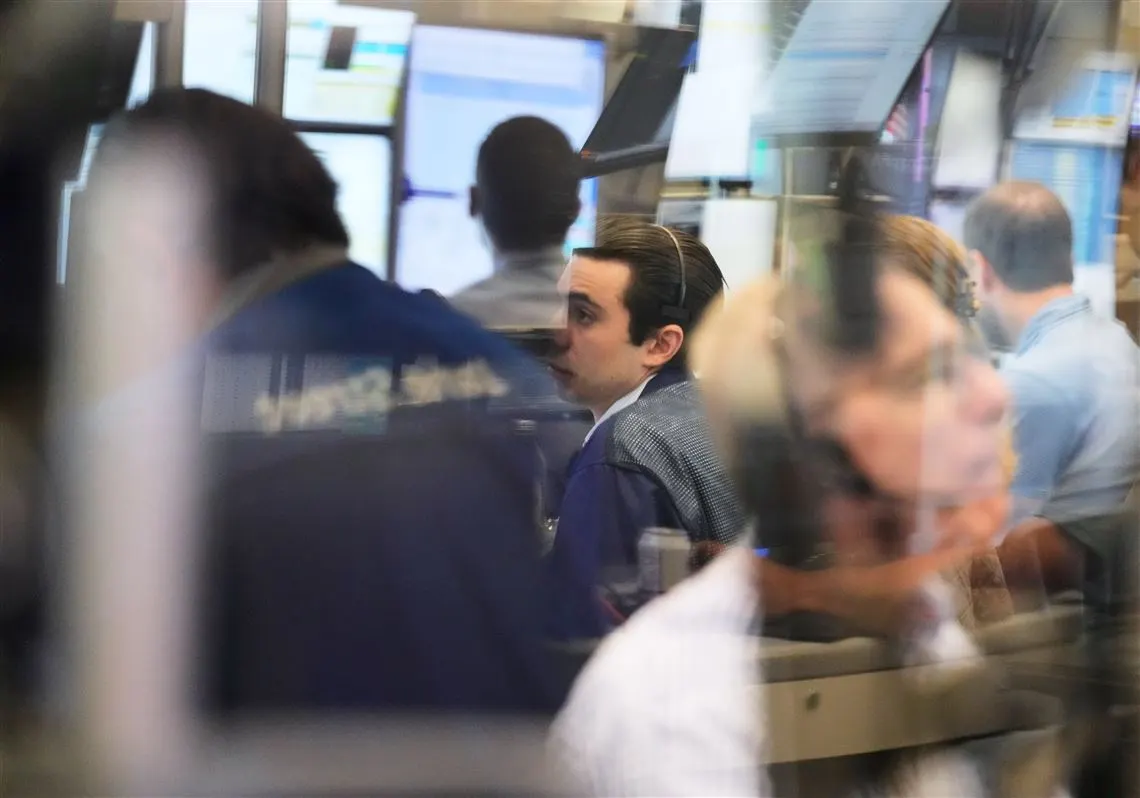
Wall Street's post-election celebration did not survive a full trading day. Artificial-intelligence and semiconductor stocks sold off sharply on Thursday, more than erasing Wednesday's rally and pushing the S&P 500 down more than 3 per cent — on track for its worst day since April 2025 — while the Nasdaq composite entered correction territory for the first time in seven months.
The S&P 500 fell around 3.2 per cent in morning trade, after opening lower and accelerating downward as reports circulated from major chipmakers. The Dow lost roughly 1,146 points, about 2.1 per cent, and the tech-heavy Nasdaq was down 5 per cent in midmorning, with the Nasdaq 100 sinking more than 6 per cent to its lowest level in five months. Estimates circulating through the financial press put the value erased from the S&P 500 at close to $2.5 trillion in .
Chip earnings set off the chain reaction
The trigger was earnings. Qualcomm released fourth-quarter results after the close on Wednesday that were, by most standards, respectable: revenue of $10.44 billion beating the $10.11 billion analysts expected, and adjusted earnings per share of $2.17 meeting consensus. But revenue was down 7 per cent year on year, and the midpoint of next-quarter guidance at $2.15 to $2.35 came in below expectations. The stock fell roughly 9 per cent on Thursday morning. Arm Holdings slipped around 15 per cent on its own mixed report, and the two became the fulcrum for a rout of everything attached to the AI chip buildout.
Beyond those two names, the damage spread immediately. SanDisk, Western Digital, AMD, Seagate and Micron all fell about 10 per cent in early trade. Nvidia sank 7 to 8 per cent, standing as the single heaviest weight on the S&P 500 during the declines, and the Philadelphia Semiconductor index dived as much as 11 per cent, having lost roughly a quarter of its value in a month. Data-centre leasing and power-supply names followed the same path, with CoreWeave down almost 15 per cent, and GE Vernova — the utility-equipment contractor that has become the buildout's energy bellwether — off 9 per cent. Analysts cited by media outlets attributed the move partly to investors betting that newly Democratic-controlled committees in Washington would slow the pace of data-centre approvals and tighten oversight of the electricity and land requirements the buildout has absorbed.
Not everything joined the rout
The rotation was selective. Roughly two out of every five stocks in the S&P 500 rose on Thursday, with consumer-staples, health-care and utilities groups leading — AppLovin surging more than 30 per cent after a revenue and profit beat paired with an expanded multi-billion dollar buyback, and Tapestry up almost 7 per cent on raised full-year forecasts. European indexes climbed into the morning on banking strength, with the STOXX 600 rallying to within a whisker of August's record. Treasuries gained, pushing the 10-year yield to eight-week lows near 4.84 per cent, and oil recovered 2 per cent to around $97 per barrel after Wednesday's plunge.
That bifurcation matters analytically. It was not a collapse in risk appetite by any conventional definition — credit yields fell, commodities stabilised, and defensive sectors advanced on schedule — but a repricing concentrated precisely in the assets that have carried US equity performance for a year. Investors are being forced to weigh whether hundreds of billions of dollars in data-centre capital expenditure can keep compounding when the marginal buyer of AI infrastructure is borrowing through a bond market already crowded by tech issuers, and when Washington is now controlled by politicians who campaigned on the electricity bills those data centres generate.
The election layer to the sell-off
The timing is no accident. Tuesday's midterm results were a historic night for Democrats, who captured both chambers of Congress in a wave driven by cost-of-living anger, war fatigue and tariff frustration. Investors spent Wednesday buying the winners of that story — industrials, consumer names, autos, small caps — while hammering corporate AI constructs. The sentiment reflected two concerns at once: that congressional investigations and state-level moratorium campaigns could slow permit approvals and interconnect queues for AI data centres, and that a more oversight-minded Washington is less likely to wink at the aggressive depreciation schedules and inter-company financing that underpin many AI-linked income statements.
What it transmits to the world
The sell-off transmitted globally within hours. South Korea's Kospi plunged more than 5 per cent, with chipmaker names down 6 to 9 per cent, and trading was halted briefly during the worst of the move. Japan's Nikkei shed almost 2 per cent, Taipei lost 3 per cent, and memory-heavy European names from ASML to Infineon dropped 1 to 4 per cent. Hong Kong, Shanghai, Mumbai and Sydney gained, because Asian index weightings omitted the most AI-leveraged conglomerates — showing how dependent global equity stories have become on tracking the same few hundred stocks.
For Nigerian and African investors, the direct exposure is limited but the signal is not. Pension funds, sovereign wealth vehicles and frontier-market debt investors size allocations by benchmark returns, and a US equity correction compresses the risk budgets out of which African allocations are funded.
The MSCI all-country gauge still managed a fractional gain thanks to non-US strength.
Up next
Naira Steadies at N1,347 as Traders See Rally
Nigeria naira held near N1,347 as traders polled by Reuters expect appreciation next week on post-midterm risk-on flows.
More in Markets
See all
Nigerian Stocks Open November With Cautious Pullback
The NGX All-Share Index slipped 0.02 percent in November first session as heavyweight profit-taking offset gains after October record month.

China Halts Yuan Rally As Star 50 Index Slumps
China tightened FX rules to halt yuan strength while fresh market tools failed to stop equity declines, with the Star 50 Index down over four percent.

UBS Upgrade Sends Rivian Shares Up 10 Percent
Rivian climbed 10 percent after UBS upgraded the EV maker to buy, arguing the sell-off overdone ahead of a sales inflection for the R2 midsize SUV.
About the author
Adaeze Okonkwo
Markets Editor
Adaeze Okonkwo writes for BusinessPress.
More by Adaeze Okonkwo


