
Gold Jumps to $4,053 as Metals Surge Reshapes Reserve and Mining Economics
Gold jumped 2.87% to about $4,053, silver surged 4.91% to $52.02 and platinum gained 2.16% as markets repriced risk after the US midterm sweep.
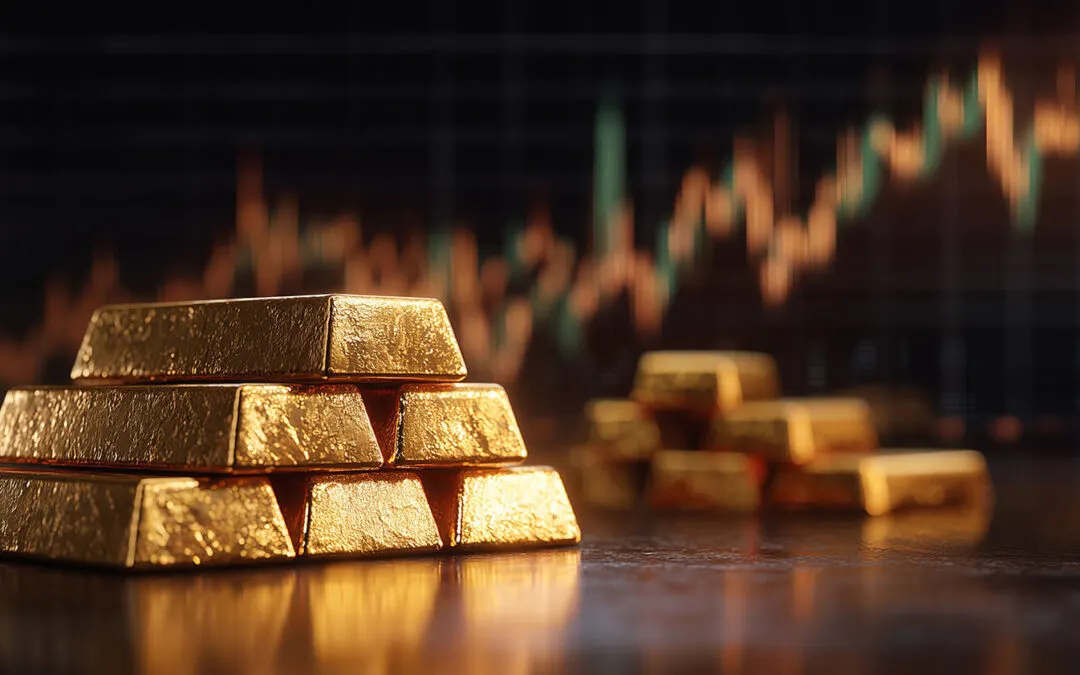
Precious metals delivered the loudest statement in Wednesday's post-midterm session. Gold jumped 2.87 percent to around $4,053 per ounce, silver surged 4.91 percent to $52.02, and platinum gained 2.16 percent — a coordinated move across the metals complex that traders read as the market pricing a friendlier macro backdrop after the Democrats swept the US midterm elections, taking the House 228 seats to 139 and adding seven Senate seats.
The move matters beyond the trading screen. Gold's latest surge extends a multi-year bull market that has repeatedly rewarded the metal as the hedge against the defining risks of the era: tariff escalation, fiscal deficits, central-bank reserve diversification, and the slow erosion of dollar dominance in global payments. Wednesday's jump is the latest repricing of exactly those bets by markets facing a Congress that, while divided, now checks the executive's more aggressive trade impulses.
Why gold is winning this cycle
Three forces have driven gold's extraordinary run. The first is central-bank buying: reserve managers from Asia to the Gulf and Africa have been steadily rotating out of dollar assets, and their purchases — largely price-insensitive and strategically motivated — have created a demand floor under the metal through every correction. The second is the fiscal and rate picture: government debt trajectories across advanced economies, and the eventual path of policy easing, keep real-yield hedges in demand. The third is geopolitics: every escalation in trade friction or conflict has pushed a portion of institutional and sovereign portfolios deeper into the one asset that no counterparty can freeze by policy alone — or at least not without cost.
Silver's outperformance tells its own story. The metal moves with gold on monetary demand but adds industrial consumption — solar panels, electronics, electrification hardware — that has been expanding with the global energy transition. A 4.91 percent single-session gain to $52 confirms that silver is trading as a supply-constrained industrial metal with a monetary kicker, a combination that leaves it historically volatile in both directions.
What $4,000 gold means for Nigeria
For Nigeria, the precious-metals surge is not an abstraction — it is a reserve-strategy and mining-economics story. On the reserve side, the CBN has joined the global central-bank rotation, growing gold holdings as a diversification of its reserves away from dollar concentration. Every surge in the gold price revalues that allocation and validates the strategy, at least on paper; it also raises the question of the appropriate pace at which the bank builds the position going forward, buying into strength versus waiting for pullbacks.
On the mining side, Nigeria's largely artisanal gold production — concentrated in Zamfara, Osun, Oyo, Kebbi and several other states — becomes incrementally more valuable as world prices rise. Higher prices increase the temptation both for legitimate formalisation and for the smuggling that has drained hundreds of millions of dollars in export earnings from the country through unofficial channels. Nigeria's gold policy response — formalisation programmes, buy-back centres, designated trading hubs — is now operating in a much richer price environment, which raises the stakes of getting the incentives right: if the legal route pays, artisanal output moves onshore; if it does not, higher prices simply enrich the smuggling routes more.
The investor math
For Nigerian institutional and retail investors, the rally poses the standard late-cycle question: at $4,000 an ounce, is the future return worth the entry? Gold's role in any portfolio — African or global — is not as a return engine but as a hedge whose value appears precisely when equities and currencies misbehave. That role has been performed with rare drama through 2026. The naira's depreciation adds another layer: gold priced in naira has outperformed gold priced in dollars for Nigerian investors by the size of the currency's slide, making the metal function as both a global commodity bet and a local currency hedge simultaneously.
Wednesday's session adds one more data point to the metals complex' strongest stretch of the decade. Whether the rally extends depends on the variables that have driven it all along — central-bank accumulation, fiscal trajectories, trade policy risk. What the midterm sweep does is reframe the risk mix rather than eliminate it: less tariff risk, but continuing fiscal expansion. For gold, that has consistently been a net positive. For the economies and central banks that own it, Wednesday was another confirmation that the 2020s belong, so far, to the yellow metal.
Up next
Bayer Raises 2026 Profit Forecast as Agriculture and Health Demand Hold Firm
Bayer raised its full-year 2026 profit forecast, with shares up about 3.6%, as crop-science and healthcare demand prove resilient across markets.
More in Markets
See all
Asian Chip Stocks Whipsaw As Democrats Sweep Raises AI Regulation Risk
Samsung and SK Hynix fell more than 4.5 percent before recovering as the Democratic US midterm sweep raised, then moderated, fears of binding AI and data-centre regulation.

Global Stocks Rally, Dollar Dips After Democrats Sweep US Midterms
Democrats won both chambers of Congress in the US midterms, sending markets on an overnight whipsaw before stocks and the dollar recovered as investors priced in veto limits.

Nigerian Stocks Open November With Cautious Pullback
The NGX All-Share Index slipped 0.02 percent in November first session as heavyweight profit-taking offset gains after October record month.
About the author
Abiodun Abdullahi
Author / Business and Markets Writer
Abiodun Abdullahi writes for BusinessPress.
More by Abiodun Abdullahi


