LincRide Launches WhatsApp Ride-Hailing in Lagos With 3,000 Drivers
Nigerian mobility company LincRide launched an on-demand ride-hailing service in Lagos bookable entirely through WhatsApp, with more than 3,000 verified drivers.
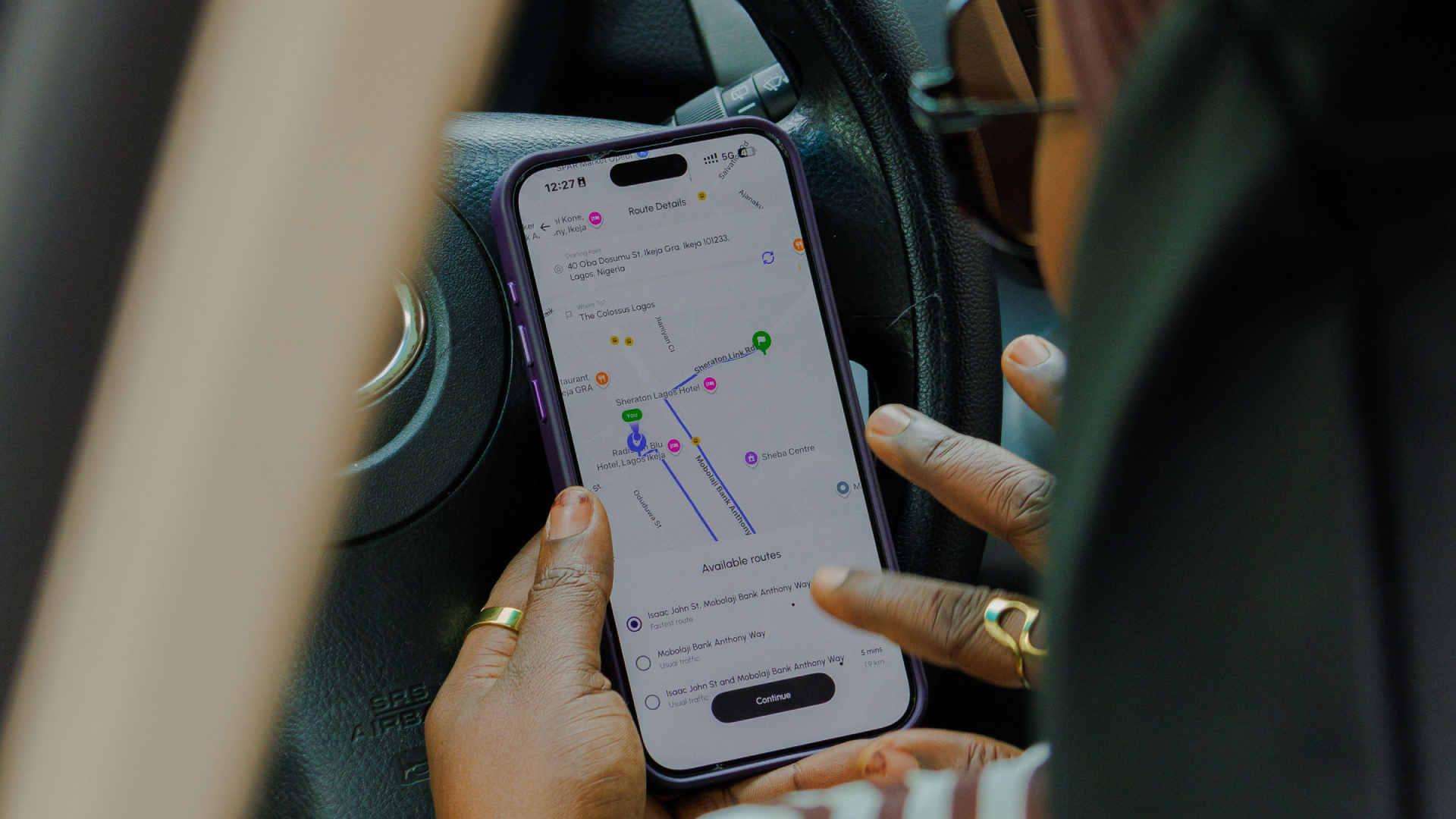
Nigerian mobility technology company LincRide has launched an on-demand ride-hailing service in Lagos that passengers can book entirely through WhatsApp, without downloading a dedicated rider app, starting with more than 3,000 verified drivers.
The launch, on October 15, expands the company beyond its existing carpooling product and comes weeks after Uber's exit from the Nigerian market, leaving a gap that local operators are racing to fill.
How it works
Riders send a message to LincRide on WhatsApp, share a pickup point and destination, and are matched automatically with a verified driver, receiving the driver's details and an estimated arrival time in the same chat. Drivers manage requests, navigation and earnings through a separate partner app.
The choice of WhatsApp as the booking channel is deliberate. The messaging app is among the most widely used in Lagos, so many prospective riders can book a trip from software already on their phone, avoiding the storage and data cost of another app.
The commission economics
LincRide is competing on driver economics as much as rider convenience. Drivers pay a 7.5% commission on their first five completed rides each day, after which the rate drops to 2.5% for the rest of the day. Total deductions per trip are the commission plus regulatory charges, including 7.5% value-added tax.
For a two-sided market, driver supply underpins the rider experience, and commissions are the main lever for attracting and retaining drivers. Rivals have faced driver disquiet over take rates, so a structure that rewards higher daily activity is a direct bid for loyalty.
Why it matters
Nigeria's ride-hailing market has churned through international operators. Uber's exit left riders and drivers looking for alternatives, and several domestic platforms have moved to capture demand. LincRide's WhatsApp-only front end is a low-friction bet that convenience and a familiar interface can win users who were put off by app downloads.
The model also lowers the company's customer-acquisition and app-retention costs, freeing capital for driver supply and operations. But a chat-based channel must handle reliability during peak traffic, when matching speed and driver availability are tested most.
What to watch
Whether the initial 3,000-driver pool grows enough to keep pickup times short across Lagos, how the WhatsApp channel performs in heavy traffic, and whether the commission structure proves sustainable once regulatory charges are added. The company's ability to retain drivers after the discounted-commission curve resets each day will be a key indicator.
Up next
World Bank Plans Fivefold Rise in Metals and Minerals Support to $19 Billion
The World Bank Group plans to increase its metals and minerals support fivefold to $19 billion over FY26-FY30, with eight countries signing partnership compacts.
More in Technology
See all
NCC Survey Finds AI Adoption Outpacing Governance in Nigeria's Telecom Sector
A Nigerian Communications Commission survey found that 73% of surveyed licensees use or pilot artificial intelligence in live operations, yet a third have no governance arrangements in place, raising questions about accountability and consumer protection.
MAX Raises Series B3 to $29 Million as Nithio Backs EV Financing
Nigerian electric mobility company MAX has extended its Series B3 round to $29 million after an investment from US climate fintech Nithio, funding expansion of electric vehicle financing and battery swapping across West and Central Africa.

Nigeria, EU and EBRD Sign €14m Grant for 90,000km Fibre Project
The Federal Government, the European Union and the European Bank for Reconstruction and Development signed a €14 million grant in Abuja to fund preparation of a planned 90,000-kilometre national fibre-optic backbone, though the money covers design and capacity building, not deployment.
About the author
Chinedu Nwosu
Technology Editor
Chinedu Nwosu writes for BusinessPress.
More by Chinedu Nwosu