
Borgu Forest Belt Emerges As New Threat To Nigeria Food Security
Armed groups are expanding into the Borgu forest belt, opening a new threat frontier that could spread violence into North-Central food corridors and deepen Nigeria's farm insecurity.
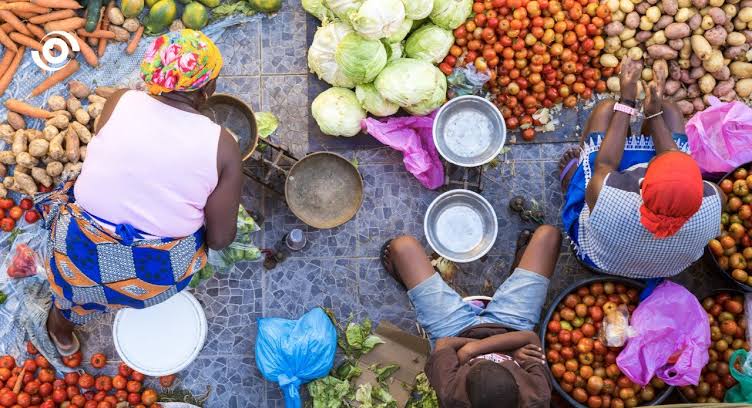
Armed groups are expanding their operations into the Borgu forest belt, one of Nigeria's most important ecological and agricultural corridors, in an encroachment that security analysts and farm-sector voices say could push violence deeper into the North-Central and threaten the country's food-supply strategy from a direction it has not had to defend before.
Borgu is not a name that enters Nigeria's food policy conversation often, and that is precisely the problem. The forest belt, which extends across parts of Niger, Kwara and Kogi states on the Nigeria-Benin borderland, has historically been better known to the drafters of game-reserve maps and cross-border livestock corridors than to the architects of national security strategy. It is dense, sparsely policed territory — the kind of geography Nigerian emergency services, and Nigerian food policy, have repeatedly ceded by default to whoever is willing to operate there for months at a time.
An emerging battlefield at the food frontier
The expanded threat profile is documented in a comprehensive BusinessDay investigation published this week, which assembled reporting from contributors in Minna, Lokoja, Ilorin and Jos. Nigeria's food-security ambitions, the investigation reported, are "facing a new and increasingly complex threat as armed groups expand their operations into some of the country's most important food corridors" — and the Borgu belt is among the geographies now functioning as a staging area rather than a transit route. In the analysis of security sources, the new geography matters less for what is happening there today than for where it connects: from Borgu, armed groups can reach the Niger river food chain, rural Kwara, and the agricultural districts of the North-Central through routes that have never had to accommodate a military response.
The mechanics of the gap that armed groups are filling are structural. Nigeria's rural economy has expanded for the past half-decade into exactly the forest-belt geographies that lack, by design, any heavy security presence — the grazing reserves, the new cassava and cashew plantations, the fish-farming investments along the riverine districts. Those are the investments whose expansion the government has celebrated as agricultural diversification, and they are the ones most exposed to a threat model that lives in the forest between them. A storage facility cannot solve food shortages if insecurity prevents farmers from bringing produce to it, the investigation notes. And improved roads cannot strengthen agricultural markets if armed groups control the routes.
The farm-and-battlefield problem
The central thrust of the analysis is that the farm and the battlefield can no longer be treated as separate policy questions — a formulation that sounds abstract until its consequences are played through. Nigeria's federal agriculture ministry plans, its anchor-borrower programmes and its fertiliser distribution campaigns all assume that farmers will plant, nurture and harvest in a de facto secure environment, with interventions designed to shift economics rather than to compensate for the absence of security. What the latest wave of encroachments demonstrates is that in the corridors now exposed, security is the binding constraint — the factor that determines whether a N20 billion input programme has any measurable effect on output.
The government's own new instrument for this problem is the 90-day national threat assessment ordered by the presidency to address emerging security hotspots. Whether that exercise picks up the biological-economic signal — farms being abandoned, harvests being destroyed or looted, farmers migrating out of productive districts — rather than only the traditional metrics of armed-groups presence will determine whether the exercise is worth its cost, the investigation observes. The danger is asymmetry: armed groups move into new territory faster than security agencies can restore confidence, meaning that by the time an assessment is completed, its findings may describe a theatre that has changed shape.
What is at stake for Nigeria's food economy
It is worth being explicit about what Nigeria loses when a food corridor falls to rural insecurity, because the macroeconomic numbers of the year conceal it. The North-Central and North-West combine for the bulk of the country's output growth in staple grains, and the rural economy there underwrites the poultry-industry feed chain that turns Nigeria's largest domestic protein source into commercially scaled agricultural output. The Borgu corridor, larger than the areas that have absorbed the biggest military operations of the past decade, is exactly the kind of geography from which Nigeria's agricultural growth potential launches — and from which it has already retreated in places such as the Lake Chad basin.
The pattern is the same that reshaped Nigerian food politics at scale: bandits and insurgents have disrupted cultivation in several food-producing regions, and the loss is not a casualty count but an output count. Farmers who cannot safely access their land either stop producing at all, abandon their farms or pay armed groups for access — the last of which turns the farm economy into a regular funding source for the very groups that are destroying it. Reporting from the investigation catalogues the imposts that Nigerian food policy has quietly absorbed: bandit levies and kidnapping ransoms have become an integrated cost of producing food in several states.
The policy conclusion the 90-day window should reach
A generation of Nigerian security doctrine has treated farmland protection as a below-the-line concern of the services of space and infrastructure. The latest geography makes that doctrine unsustainable, because the threat now travels through exactly the corridors the country has planned the next fifteen years of food expansion into. The central test for the government's new 90-day national threat assessment, as the investigation frames it, will be whether it recognises that protecting Nigeria's food supply begins with protecting the communities, farms, roads, forests and markets through which that food is produced and transported.
That protection, in Nigeria's budgetary tradition, has meant force deployments, checkpoints and emergency packages. What the Borgu-Benin frontier shows is that at the current scale of the threat, those instruments are playing a game Nigerian anti-terror budgets cannot win: armed groups are mobile, the geography is permissive, and the information environment — rural, offline and under-reported — does not support the rapid-response model that urban technology investments assume. The workable alternative is the one agricultural economists have advocated for years: treat critical farming communities, major food corridors, rural markets and irrigation schemes as national economic assets requiring sustained protection, and fund their security as part of the agricultural budget's return calculus, not apart from it.
If farmers are driven from their land faster than security agencies can restore confidence, Nigeria may discover that its food-security crisis is not simply a question of how much it can produce — but of how much of what it already planned to produce it can now defend.
Up next
United Nigeria Airlines Raises N22bn In First Airline CP
United Nigeria Airlines raised N22bn in Nigeria's first airline commercial paper issuance, an oversubscribed debut tranche of a N100bn programme backed by investment-grade ratings.
More in Agriculture
See all
Cocoa Exports Surge 3,000% in Five Years as Weaker Naira Transforms Farm Trade
Nigeria’s cocoa exports have surged by roughly 3,000% in value over the last five years, driven by the naira’s depreciation multiplying the naira proceeds of dollar-priced beans even before production growth, BusinessDay reported on Monday, October 26.
Cocoa prices collapse as producers push Abuja Declaration raw-export strategy
Global cocoa prices have fallen sharply, prompting renewed focus on value addition under the Abuja Declaration.

Tourba And ThriveAgric Scale Conservation Farming Push
Tourba and ThriveAgric agreed to scale conservation agriculture across Nigerian farmland, pairing climate finance with the country largest smallholder network.
About the author
Abena Ofori
Agribusiness Correspondent
Abena Ofori writes for BusinessPress.
More by Abena Ofori


