
Jaiz Bank Assets Rise to N1.69 Trillion
Jaiz Bank reported total assets of N1.69 trillion and deposits of N1.52 trillion at September 30, up 31.6% in nine months.
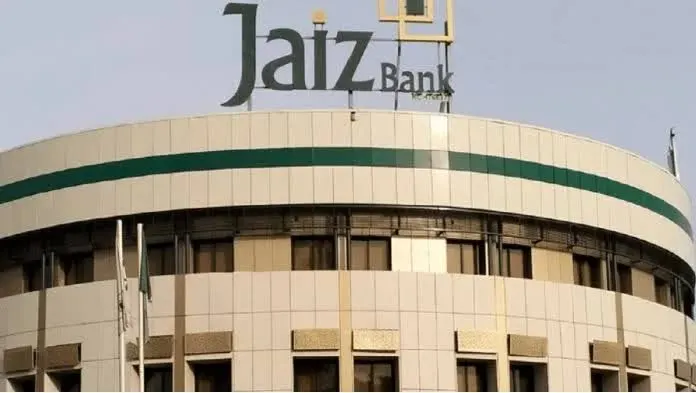
Non-interest banking consolidated its place in Nigeria's financial sector this week as Jaiz Bank reported total assets of N1.69 trillion and customer deposits of roughly N1.52 trillion at September 30, 2026 — a balance sheet that has grown 31.6 per cent in nine months and now sits within trillion-naira range of some of the country's conventional mid-tier lenders.
The unaudited numbers showed total assets rising from N1.29 trillion at the end of December 2025 to N1.69 trillion at the end of September, a 31.6 per cent expansion in a single reporting year. Customer deposits of approximately N1.52 trillion give the bank a funding base that some heritage commercial banks would regard as respectable, and they position Jaiz — the pioneer of Nigeria's non-interest banking model — as more than a niche player in a market once dismissive of Sharia-compliant lending.
What the growth is made of
Double-digit asset growth of this kind in the Nigerian banking context usually reflects two working parts at once: rising deposit franchise strength and expanding financing book activity. For Jaiz, the deposits figure is the more significant marker, because non-interest banking deliberately diverts depositors away from interest-bearing instruments toward profit-sharing investment accounts and fee-based services — a model that depends on public trust and payment infrastructure rather than on the deposit-rate bidding war that conventional lenders use.
The timing matters. The Central Bank's sustained liquidity mop-up has drained the banking system of trillions of naira this year, and conventional banks have responded by competing harder for deposits. Non-interest banks compete on a different axis: their customer base includes large portions of Northern Nigeria's commercial economy, Islamic endowments and institutions that were never going to chase Treasury Bills yields, and the model's stability through the liquidity squeeze is emerging as a competitive advantage rather than a constraint.
Non-interest banking's macro moment
Nigeria's non-interest banking framework has grown steadily since 2011, when the Central Bank formally licensed the model to broaden financial inclusion in religiously sensitive segments of the population. Today the tier comprises Jaiz Bank, TAJ Bank, Lotus Bank and a segment of other institutions offering Islamic-compliant instruments — along with a sovereign non-interest instrument programme that has issued sukuk to finance road infrastructure at scale.
The segment also occupies an interesting policy position in a high-rate environment. With Treasury Bills and OMO paper yielding 15 to 18 per cent, conventional lenders park idle funds in government paper; non-interest institutions cannot route customer money there, so their financing books work harder in the real economy — agriculture, trade, manufacturing and asset financing. Analysts following the sector have repeatedly argued that this discipline makes non-interest banks more real-sector-linked than their conventional peers, and the nine-month asset growth suggests depositors are responding to exactly that distinction.
The balance-sheet growth also has investment-market implications. Jaiz Bank's shares have been among the more actively traded on the exchange's alternative listing board, and a deposit base this large raises the question the market has asked for years: whether the bank will convert its listing to the main board and pursue the equity capital growth that conventional banks raised in their historic recapitalisation cycle. Module institutions meeting N500 billion minimum capital requirements are already recapitalising; Jaiz reported capital comfortably above the national minimum for its licence tier, giving management room to expand rather than merely comply.
Reading the numbers in context
The bank's nine-month figures remain unaudited and unaudited growth rates should be read cautiously, but the structural story is hard to dispute. Nigeria's formal financial inclusion rate has been climbing for a decade, and the segments the non-interest model serves — traders, farmers, and religious-conservative depositors historically outside the banking system — are precisely where the growth frontier lies. Asset growth of nearly a third in nine months implies the bank is not just retaining customers but capturing new ones at scale.
For the wider system, the significance is competitive: Nigeria's banking hierarchy has long been dominated by a dozen conventional giants, and a non-interest challenger approaching a two-trillion naira asset base changes the pricing of deposits, the availability of asset-backed financing in Northern markets, and the credibility of the model that Ghana, Kenya and other African regulators have been studying for their own frameworks. As the Central Bank continues normalising liquidity this quarter, Jaiz Bank's model — built for a world where money is not merely a rental income stream — is testing whether Nigeria's banking market has room for more than one way of doing finance.
Up next
GTCO and Transcorp Power Lift Nigerian Stocks
GTCO, Transcorp Power and Zenith Bank lifted the NGX All-Share Index 0.2% on Wednesday as Nigerian equities opened November at 63.4% YTD.
More in Finance
See all
Access Holdings Profit Rebounds To N667.4 Billion
Access Holdings posts N667.4bn nine-month pre-tax profit as Q3 earnings rebound 78.4%, leading Nigerian bank earnings season delivery.

Fidelity Bank Repays 400m Eurobond At Maturity
Fidelity Bank redeemed its 400 million dollar Eurobond at maturity, underscoring the Nigerian banking sector restored external balance-sheet strength.

CBN Purges 46 Microfinance Banks In Licence Sweep
The Central Bank of Nigeria revoked the licences of 46 microfinance banks in the sector biggest clean-up protecting depositors and4 disciplining the register.
About the author
Musa Abdullahi
Finance Correspondent
Musa Abdullahi writes for BusinessPress.
More by Musa Abdullahi


