
GTCO and Transcorp Power Lift Nigerian Stocks
GTCO, Transcorp Power and Zenith Bank lifted the NGX All-Share Index 0.2% on Wednesday as Nigerian equities opened November at 63.4% YTD.
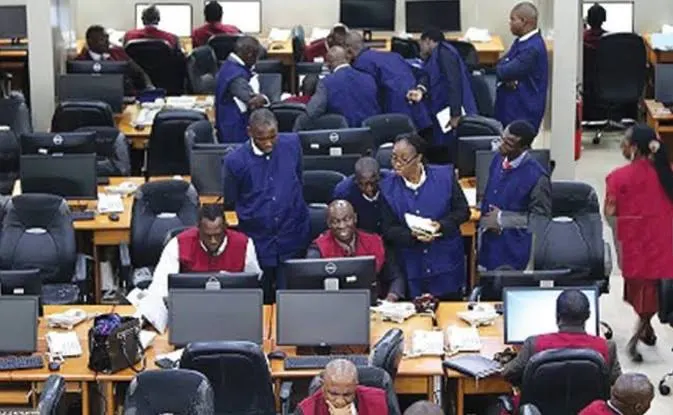
The Nigerian Exchange opened November exactly where it ended October's rally, with banking and power heavyweights lifting the All-Share Index 0.2 per cent to 254,762.81 points on Wednesday, extending a year-to-date run that has now carried Nigerian equities up 63.4 per cent — one of the strongest large-market showings anywhere in the world.
Gains came from the tickers institutional money actually trades. Guaranty Trust Holding Company advanced 5.1 per cent as the session's standout large-cap, Transcorp Power hit the day's maximum gain of 10.0 per cent, and Zenith Bank and United Bank for Africa each added 2.7 per cent, consolidating support for the benchmark index while the broader consumer and oil-lending names lagged. Market capitalisation rose to N165.41 trillion, and month-to-date returns settled at 0.2 per cent on the first trading days of November.
Banking power brokers return to the tape
Trading activity strengthened alongside sentiment, with volume rising 5.1 per cent to 552.29 million units valued at N37.45 billion across 32,815 deals. First HoldCo led turnover by value at N12.67 billion while Zichis Agro Allied led by volume with 127.48 million units. Sectoral positioning diverged underneath the headline: the Banking index gained 0.7 per cent, Insurance and Consumer Goods slipped fractionally, and Oil & Gas eased as energy investors held back ahead of a volatile global crude tape.
Breadth remained positive at 1.2 times, with 27 advancing counters against 23 decliners — a much healthier participation profile than the narrow, heavyweight-driven sessions that dominated late October, when the ASI recorded a string of fractional moves on thin leadership. String of individual movers ranged across the market's middle tier, with Transpower and Caverton Offshore Support Group posting maximum gains and South Trusted Insurance and another insurer taking the session's sharpest cuts.
The 63.4 per cent year and what is funding it
The year's returns deserve more scrutiny than the headline implies. Market capitalisation has climbed from roughly N99.4 trillion at the start of January to N165.1 trillion by October's close, an increase of about N65.7 trillion — and the engine room has been the Oil & Gas index, up 127.9 per cent year to date, ahead of Industrial Goods at 114.9 per cent and Banking at 60.3 per cent. The Insurance index, by contrast, has fallen 13.6 per cent, the worst of the majors over the same window, making the sectoral divergence one of the year's defining features.
Participation has changed at least as much as returns. Foreign flows have retreated through 2026 — institutional commentary through October noted declining non-resident participation — leaving domestic pension funds, high-net-worth retail andNow the domestic institutional bloc to provide most of the liquidity that has kept the rally advancing month after month. That shift changes the structure of the market: turnover is steadier, the float of listed vehicles is denser, and the marginal price-setter is a domestic allocator with its own liquidity and risk constraints.
Why the opening week matters
November's opening behaviour will provide the first market signal of whether the 2026 rally can extend into the December positioning window. The index's October gain of 1.23 per cent was relatively subdued by this year's standards, but resilience is the operative point: the ASI has now climbed through three consecutive months of global AI-market noise without a correction of its own, because Nigerian equities are priced on naira rates, earnings recovery and reform progress rather than on the discount that determines Wall Street's volatility.
That insulation also has a limit. Nigerian banks carry local-currency rate exposure; consumer names face inflation-driven cost pressure at every margin point; and the market still tracks global risk appetite at the margin through portfolio flows and FX conditions. With the Nasdaq in what Wall Street describes as correction territory on Thursday and global chip stocks unwinding, the exchange's ability to hold the sector's own gains without imported volatility becomes the week's real test.
What investors will watch next
Two intersections dominate the local calendar. Banks and financial names carry the burden of the banking index's 60.3 per cent yearly gain into a rate environment where the CBN's open-market operations continue to reprice short-term money. Meanwhile, the results calendar fills with quarterly and nine-month reports — Conoil, Presco, Nigerian Breweries, Access Holdings and Dangote Cement among the tickers due to publish — meaning November's tape is set to be succession of earnings-driven rather than flow-driven sessions.
For the moment, bargain-hunters have the upper hand: banking and power heavyweights moved up on Wednesday exactly when the domestic-dependent investor base needed reassurance after Monday's early losses, and the session ended with more than N304 billion added to market value. If December fundamentals land on schedule, November could extend a record year into what would be one of the strongest calendar outcomes in the exchange's history.
Up next
Kospi Triggers Sidecar as Chip Rout Hits Seoul
South Korea Kospi plunged more than 5 percent and temporarily halted program trading as the global AI chip rout reached Seoul.
More in Finance
See all
CBN Mops Up N3.46 Trillion as Liquidity Balloons
The CBN allotted about N3.46 trillion across November OMO and Treasury Bills auctions, holding stop rates unchanged while rationing N5.57 trillion of bids.

Nigerias Top Firms Lift Nine-Month Profits To N12.1tn
Twenty-two large Nigerian listed companies reported N12.1tn nine-month pre-tax profit, up 35.4 percent on the year as banks and cement groups led delivery.

Access Holdings Profit Rebounds To N667.4 Billion
Access Holdings posts N667.4bn nine-month pre-tax profit as Q3 earnings rebound 78.4%, leading Nigerian bank earnings season delivery.
About the author
Amina Suleiman
Finance Correspondent
Amina Suleiman writes for BusinessPress.
More by Amina Suleiman


