
Bank of Industry Secures 50 Million Dollar IFC Loan
BOI signed a $50 million seven-year IFC senior loan for Nigerian MSMEs, with at least 25% of proceeds for women-led businesses.
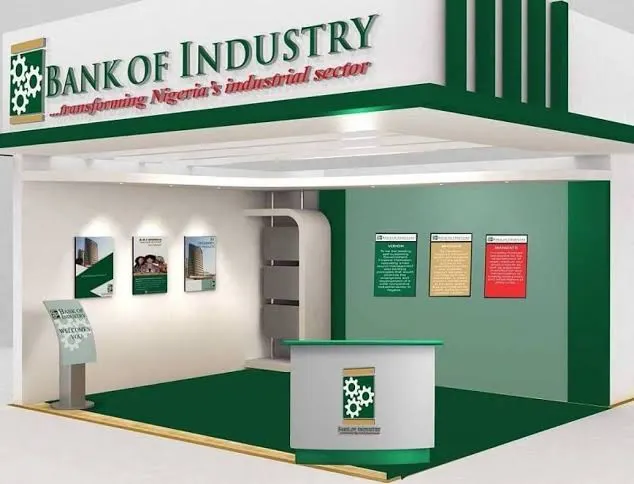
The Bank of Industry has signed a $50 million senior loan agreement with the International Finance Corporation to expand longer-tenor financing for Nigerian small and medium-sized enterprises, in a deal announced at the Africa Financial Industry Summit in Luanda that bundles lending with an anchor investment in the development bank's domestic bond programme.
The facility runs for up to seven years, an unusually long horizon for a development institution lending in naira-linked sectors, and directs at least a quarter of its proceeds to women-owned or women-led businesses. IFC's project disclosure places the loan within an investment package of up to $100 million, the second component being an anchor investment of up to $50 million in BOI's domestic bond issuance — a structure designed to pull other Nigerian institutional investors into the bond behind IFC's balance-sheet commitment rather than rely on government allocations alone.
The MSME financing gap in hard numbers
Nigerian micro, small and medium enterprises employ the overwhelming majority of the country's non-farm workforce, yet they remain chronically under-banked. Commercial banks' liquidity management has pushed them toward government securities for years — Treasury Bills and OMO paper yielding 15 to 18 per cent leave little incentive to originate seven-year term loans to small manufacturers — leaving development finance institutions as the practical conduit for term capital to the productive economy. BOI, as Nigeria's largest development finance institution in industrial lending, has been that conduit through a loan book spanning agro-processing, manufacturing, garments and creative industries.
The structural problem this deal attacks is tenor mismatch. Nigeria's domestic markets are deep in short-dated paper but thin in long-dated instruments, so a development bank raising Naira funds at five-to-seven-year tenor pays a scarcity premium — or borrows short and lends long, converting small fluctuations in rates into balance-sheet strain. IFC's dollar-denominated senior loan, with an up-to-seven-year term and onlending flexibilities, re-equips BOI to write the sort of long-tenor, moderate-rate facilities that small industrial borrowers need but commercial banks cannot economically provide.
The bond anchor is the more interesting half
The anchor investment in BOI's domestic bond issuance may ultimately matter more than the loan itself. Domestic capital-market mobilisation is the persistent weakness of Nigerian development finance: state institutions depend on budget provisions, donor windows and the CBN's balance sheet, all of which are volatile in reform cycles. An IFC anchor ticket gives other investors — pension funds, insurers, family offices — both a signal and a benchmark pricing from which to participate in a development finance bond at scale.
It also fits the direction of the wider interest-rate environment. With the CBN's disinflation drive holding yields in double digits, Nigerian institutional investors are actively searching for higher-yielding instruments with social impact profiles to diversify risk, and a rated, IFC-anchored development bank bond offers exactly that combination. The package thus reads less as development charity than as market-making: demonstrating that Nigerian development paper can clear at institutional scale without sovereign guarantees beneath every tranche.
Officials at the summit framed the facility as part of a broader global rearmament of development finance for job-creating sectors, and IFC has been scaling similar structures across African markets. The disclosure makes clear the money is contractual rather than disbursed: the agreement establishes the terms; actual flows to small businesses follow BOI's onlending cycle, which historically takes quarters to deploy. Analysts will watch disbursement pace as the practical test of whether the facility changes outcomes on factory floors rather than merely on balance sheets.
What it means for the real economy
For Nigerian small manufacturers, the practical consequence is access to term funding at rates and tenors that make plant, machinery and working-capital investments financeable — the difference between expanding production and merely surviving inventory cycles. The women-owned business carve-out is more than symbolic: financing data across African markets consistently shows women entrepreneurs receive a small fraction of formal credit, and hard allocation targets inside the facility are how development lenders convert policy language into disbursement checks.
For the development finance system, BOI's ability to raise $100 million of blended international and domestic capital in a reform year is a signal of institutional credibility — the same credibility that underpinned the bank's recent trillion-naira-scale industrial programme and its borrowing on the domestic market. If the bond anchor succeeds in pulling private Nigerian capital into development lending, the model could become the template for recapitalising the country's other development finance institutions at a moment when the federal budget cannot shoulder the full cost of industrial expansion alone.
Up next
Interbank FX Turnover Jumps 445 Percent in a Session
NFEM interbank turnover jumped 445 percent in one session even as the naira eased under two naira, signalling deeper official FX liquidity.
More in Finance
See all
Africa Energy Bank Launches in Abuja to Close $200bn Gap
The Africa Energy Bank, launched in Abuja by Afreximbank and APPO, opens with $5 billion of authorised capital and a mandate to fund energy.

Aradel Declares N7 Interim Dividend for Q3 2026
Aradel Holdings declared a N7.00 interim dividend for Q3 2026, payable on 7 December, after a N10.00 interim payout last November.

Cornerstone Revenue Grows as Reinsurance Costs Climb
Cornerstone reports higher insurance revenue, while increased reinsurance and insurance finance costs limit the benefit.
About the author
Amaka Obi
Senior Business Reporter
Amaka Obi writes for BusinessPress.
More by Amaka Obi


