
CBN Mops Up N3.46 Trillion as Liquidity Balloons
The CBN allotted about N3.46 trillion across November OMO and Treasury Bills auctions, holding stop rates unchanged while rationing N5.57 trillion of bids.
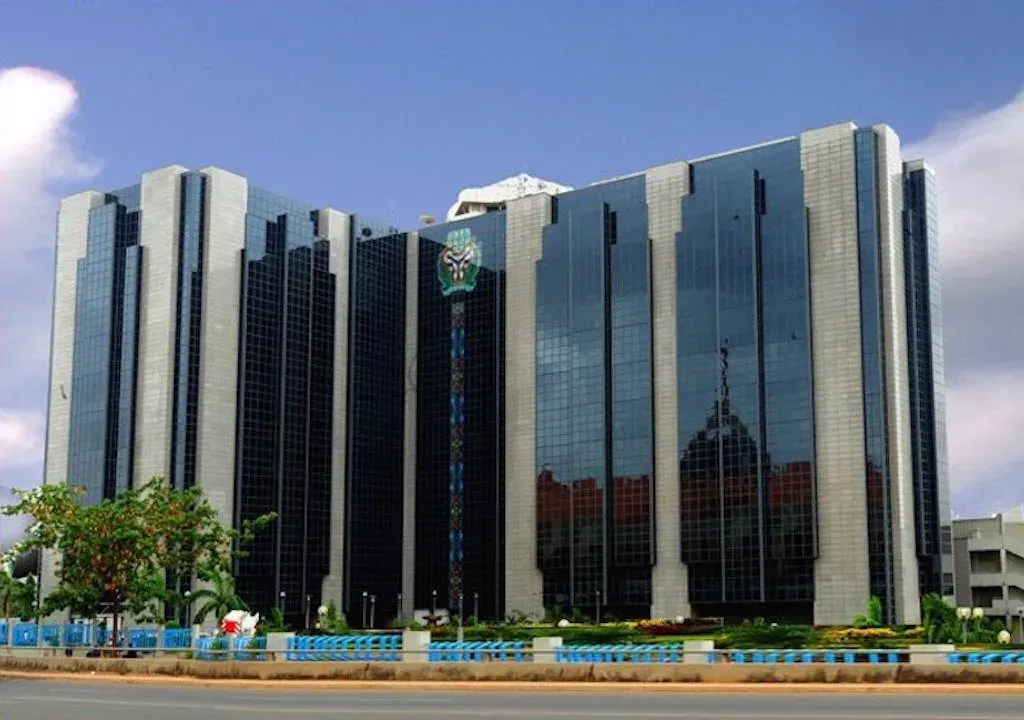
The Central Bank of Nigeria has tightened its grip on the country's excess liquidity, allotting approximately N3.46 trillion across its Open Market Operations and Treasury Bills auctions held this week while deliberately holding Treasury Bills stop rates unchanged despite demand that far exceeded the amounts offered.
Auction results published by the apex bank show investors submitted about N5.57 trillion in combined bids against offers of N2.30 trillion, a subscription rate of roughly 2.42 times. The scale of demand — and the bank's decision to allot only part of it — offers a clear window into how Nigeria's monetary authority is managing a banking system that has been flooded with cash in recent weeks.
OMO sales carry the mop-up burden
The heaviest lifting came through the Open Market Operations auction on November 3, where the CBN allotted about N2.95 trillion, roughly 85.3 per cent of the combined raise. That sale attracted N3.52 trillion in subscriptions against a N1.50 trillion offer across the 119-day, 126-day and 133-day tenors, a bid-to-cover ratio of about 2.35 times. Demand was overwhelmingly concentrated at the shorter tenors: the 133-day bill alone drew N2.36 trillion in subscriptions, accounting for around two-thirds of total OMO demand. OMO stop rates stood at 17.77 per cent for the 119-day paper, 17.71 per cent for the 126-day and 17.67 per cent for the 133-day.
The Treasury Bills auction held a day later told a more restrained story. Subscriptions reached N2.045 trillion against an N800 billion offer — 2.56 times oversubscribed — yet the central bank allotted only N509.41 billion, about 63.7 per cent of the advertised amount, leaving roughly N1.54 trillion in investor bids unallotted. Stop rates were left where they were: 15.40 per cent for the 91-day bill, 15.79 per cent for the 182-day and 15.80 per cent for the 364-day, matching the previous auction. The mismatch bites hardest at the long end of the Bills curve: the 364-day instrument attracted N1.994 trillion in bids but cleared just N461.84 billion, and some bids reached as high as 18.18 per cent, well above the 15.80 per cent the bank was prepared to accept.
The contrast between the two windows is itself the message. In the OMO room the bank is willing to take nearly everything the market will give it, while in the Treasury Bills tender it rations allotments with a firm hand, signalling it sees no reason to reward excess demand with extra issue at unchanged rates.
Why the bank is absorbing so much cash
The aggressiveness of this week's mop-up follows a period of unusual liquidity abundance. CBN balance data showed above N7.72 trillion parked at the Standing Deposit Facility on November 3, a figure swollen partly by the settlement of about N2.016 trillion in OMO maturities. The broader quarterly pattern points the same way: in September the bank sold N17.51 trillion of OMO securities against N10.89 trillion of maturities, a net withdrawal of approximately N6.62 trillion from the system. The Financial Markets Dealers Association reported that banking-system liquidity rose 56.75 per cent to N7.373 trillion in October as absorption moderated, and projects a further N13.79 trillion of inflows during November, driven mainly by OMO maturities, government allocations and bill repayments.
Investors watching the primary market have also noticed that the state is taking less of their money than they are offering. The Debt Management Office has raised roughly N1.82 trillion against N2.95 trillion offered across four Treasury Bills auctions held so far this quarter, meaning outright rejections have become a structural feature of the system rather than a one-off tightening.
A widening pricing gap between markets
The more consequential signal, however, is the pricing architecture now emerging across Nigeria's short-term fixed-income space. Secondary-market Treasury Bills yields rose approximately 43 basis points to 17.70 per cent on November 3, while primary-market stops were held well below that level. The 126-day OMO stop of 17.71 per cent exceeds the 182-day Treasury Bills stop of 15.79 per cent by 192 basis points, and the 91-day bill's 15.40 per cent stop sits some 200 basis points below the three-month secondary-market benchmark of 17.40 per cent.
Functionally, investors who cannot get primary allotments are being routed into the costlier secondary market or into the bank's higher-yielding OMO paper. That design rations cheap government funding while keeping official stops from ratcheting upward. It also reshapes institutional strategy: fund managers flush with cash must either chase scarce national allotments or accept low primary fills and park liquidity in OMO windows — effectively pricing the segmentation that has quietly become a defining feature of the naira money market.
What it means for banks, borrowers and the MPC
For banks, the environment is double-edged. Absorbing trillions of naira in short paper cushions deposits but compresses the yields their own trading books can earn on new tender issues, pushing analysts to look instead to OMO placements and secondary-market positions. For the federal government, the mop-up protects the CBN's disinflation drive but raises the effective cost of financing the deficit at the short end. For the Monetary Policy Committee, which meets again this month, the sharp rise in secondary-market benchmarks alongside heavily rationed primary bids sets up an uncomfortable question: whether to validate the market's higher pricing, deepen OMO issuance, or tolerate a wider spread between official stops and free-market yields.
So far the answer has been clear. The bank is refusing to concede to the market's upward pricing, preferring instead to ration allotments and route excess liquidity through instruments whose rates are administratively held — a stance that is defensible inflation management, but one whose effectiveness will be stress-tested by November's heavy maturity calendar and an MPC meeting whose outcome will determine whether those stop rates can hold through the last month of the year.
Up next
Toyota Smashes Forecasts, Raises Profit Guidance
Toyota reported Q2 operating profit of 1.13 trillion yen, beat expectations and raised full-year guidance to 3.90 trillion yen.
More in Finance
See all
Bank of Industry Secures 50 Million Dollar IFC Loan
BOI signed a $50 million seven-year IFC senior loan for Nigerian MSMEs, with at least 25% of proceeds for women-led businesses.

Jaiz Bank Assets Rise to N1.69 Trillion
Jaiz Bank reported total assets of N1.69 trillion and deposits of N1.52 trillion at September 30, up 31.6% in nine months.

GTCO and Transcorp Power Lift Nigerian Stocks
GTCO, Transcorp Power and Zenith Bank lifted the NGX All-Share Index 0.2% on Wednesday as Nigerian equities opened November at 63.4% YTD.
About the author
Musa Abdullahi
Finance Correspondent
Musa Abdullahi writes for BusinessPress.
More by Musa Abdullahi


