
FG, JICA and NSIA Plan Six Funds to Bankroll Nigeria’s Startups
NITDA said the government, Japan’s development agency and the sovereign wealth fund intend to set up six vehicles to co-finance innovative Nigerian startups.
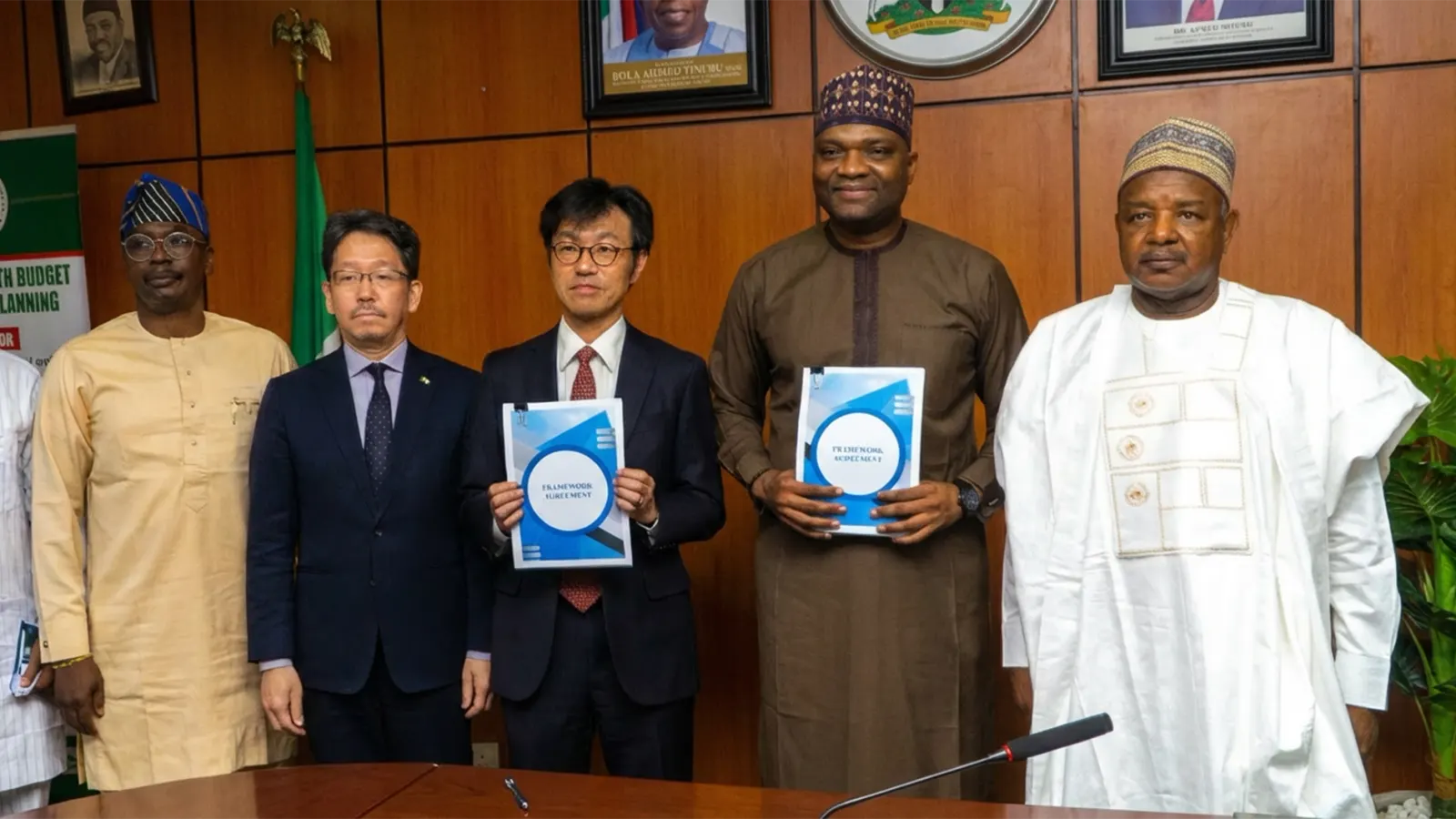
The federal government, the Japan International Cooperation Agency and the Nigeria Sovereign Investment Authority are working together to establish six dedicated funds to finance Nigerian startups, the National Information Technology Development Agency's Director-General, Kashifu Inuwa Abdullahi, has disclosed — an attempt to plug a funding gap that September had just laid bare with brutal clarity.
The plan was outlined at the Global Tech Africa event in Kano, and its context is stark: Nigerian startups raised only $11.3 million across nine deals in September, down 96.9 per cent from August's $364.1 million, a withdrawal of venture flow that left the ecosystem's early-stage machinery idling. Inuwa positioned the scheme as a counterweight funded through public channels but connected to private capital. "Private investors can provide not only capital but also equity partnerships, corporate governance, business expertise and leadership to help startups grow," he told the audience.
Why the public-sector structure matters at this moment
Public money alone has never solved a venture drought — Nigerian history through the Bank of Industry is instructive on this point. What Inuwa is proposing acknowledges that: BOI and other development finance institutions are "important startup funders," he said, "but public money alone cannot sustain the ecosystem." The JICA-NSIA structure is the pathway to scale the impact: sovereign-wealth capital lowers the entry risk for each co-investing private fund, and Japanese development agency participation brings both patient capital and the investor-relations discipline that distinguishes venture financing from grants.
For founders, the difference is operational. A public fund that leads equity rounds with traditional venture-style governance sends a portfolio signal, not just a cheque: diligence standards, board seats, milestone accountability and follow-on conditionalities that build a real venture track record into Nigerian technology companies. The 96.9 per cent drop in September funding was a signal about risk appetite rather than company quality — a co-investment structure that de-risks private co-channel financing addresses exactly that problem.
The bigger agenda the DG put alongside the funds
Inuwa laid out a digital-infrastructure vision that frames the fund plan. He sketched a programme to cover fibre more broadly across all 774 local government areas and said that a National Sovereign Cloud Initiative would treat data centres "as the refineries of the digital economy" — an infrastructure layer that startup investments would be able to ride. Training and literacy programmes — 3MTT and the DL4ALL initiative targeting 95 per cent digital literacy by 2030 — were included as the demand-side input to the talent pipeline.
His sharpest systemic critique though, was of Nigeria's absence from the world's AI data map: Africa supplies under 2 per cent of data used to train AI models. Local development of large language models that reflect Nigerian languages and local realities — Yoruba, Hausa, Igbo and the Pidgin-majority internet that actually carries Nigerian digital commerce — requires exactly the kind of patient, structural investment the JICA-NSIA joint vehicle would produce: compute access, local data partnerships and technical grant finance that global venture capital has not been willing to supply in volume.
The relevance to Nigeria's funding arithmetic
The startup-economy mathematics is unforgiving. If the six funds raise and deploy $50-to-$100 million each in individual vehicles — the range institutional funds typically mobilise for this market — the structure would inject $300-to-$600 million of follow-on investment capacity; that would absorb Nigeria's full-year 2025 venture volumes in multiples and could rebuild deal flow over a couple of filling cycles. It would not alone match the $364 million spent in August 2026 on a single month of Nigerian funding, but the financing boost is enough to offset the starting point of the VC drought that Nigerian technology was trying to ride out.
The funds' quicker impact will come from the confidence channel: a leading public-allocated liquidity basket that closes other investors' risk concerns, particularly where private funds are reluctant to bid during a global venture down-cycle. If the structure can attract interest from Japanese family offices, Gulf sovereign concentric funds or European development finance institutions as co-investors, the public-private multiplier effect would far exceed the flow from the six funds themselves.
The delivery challenges the plan must navigate
Execution is the risk, as in Nigeria's other public-led financial initiatives. Fund structures must set clean due diligence standards to avoid legacy reputational traps from politically connected early-stage deals. Follow-on requirements must be written to respect the local valuation cycle rather than repeat the over-rounded term sheets of past government-adjacent programmes. And the reporting should measure venture-standard results — rounds closed, follow-on rates, jobs created — not disbursement ratios alone, for efficacy analysis in the tech-economy investment channel.
Japan's development-finance footprint in Nigeria is substantial and the sovereign wealth fund's existing startup venture track gives the scheme a head start. If operationalisation happens in the first quarter of 2027 — plausibility hinges on how quickly the offer documents are countersigned and the first co-investment structure in each of the six fund vehicles passes its own capital-security checks — the pipeline could arrive into a market whose September funding trough is deep enough to make the intervention look precisely timed.
The NITDA plan will make or break on one term: whether it can attract private-venture-grade deal flow rather than grant-managed deployment of public money. What Nigeria's startup funding collapse showed about the country's structural weakness — dependence on external funding waves rather than permanent domestic capital pools — is exactly the problem six properly structured funds, half government-funded and half private, can solve.
Up next
Cocoa Exporters Lose N10-12bn to Lagos Port Delays, COPAN Warns
Six months of NPA approval bottlenecks plus Ondo labour costs doubling to N5,000-N6,000 a day have squeezed Nigeria’s second-biggest non-oil export earner.
More in Business
See allMAX Extends Series B3 to $29m as Nithio Backs Nigeria's Electric Mobility Push
Nigerian electric mobility firm MAX has extended its Series B3 round to $29 million after new financing from Nithio, with proceeds earmarked for vehicle financing and solar-powered battery swapping.
Cascador and Sterling Bank Launch $200 Million Fund to Unlock Credit for Nigerian SMEs
Cascador and Sterling Bank have launched a $200 million SME Credit Backstop Fund designed to unlock credit for startups and small businesses that struggle to borrow.

Pipeline Outages Deferred 42.55 Million Barrels and $2.97bn of Output in 2025, NUPRC Data Show
The upstream regulator’s figures turn Nigeria’s chronic evacuation losses into a hard number — weeks of national production that never reached a buyer or the federation account.
About the author
Amaka Obi
Senior Business Reporter
Amaka Obi writes for BusinessPress.
More by Amaka Obi


