
Afreximbank Targets $1bn in Deals at CANEX WKND Lagos as Creative Finance Grows Up
The pan-African bank is framing the creative-economy gathering as an origination platform, with film, music and fashion deal categories designed to turn cultural output into bankable cash flow.
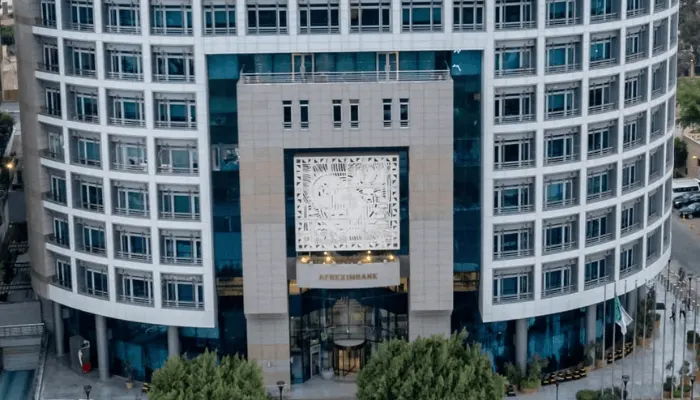
Afreximbank is targeting US$1 billion in deals at CANEX WKND in Lagos, with the pan-African trade finance institution framing the creative-industry gathering as a deal-making platform intended to connect African businesses with finance, markets and commercial partnerships, according to Nairametrics' report from the bank.
The target gives a hard number to an event category — the creative economy — that African finance has historically treated as cultural programming rather than an asset class. CANEX, the bank's Creative Africa Nexus programme, has spent recent years building instruments for film, music, fashion, design and digital content businesses; a $1 billion deal pipeline attached to a single weekend signals the programme's shift from showcase to origination.
Why the creative economy graduated to the balance sheet
The scale argument is straightforward. Nigeria's film industry, music sector and fashion economy rank among the largest in the world by output and cultural reach, yet they finance themselves disproportionately from personal capital and informal lenders because traditional banks cannot collateralise a script, a catalogue or a brand. Afreximbank's intervention — guarantees, production finance, distribution facilities and market-access support — substitutes institutional balance sheets for the missing collateral, and Lagos is where most of the underlying assets sit.
The economic logic extends beyond the artists. A financed film employs crews, rents equipment, books locations and sells distribution rights; a financed fashion house buys textiles, employs tailors and opens export channels. Creative-sector lending is, in balance-sheet terms, manufacturing finance for goods the world demonstrably wants — which is why the bank routes it through its trade-finance machinery rather than a cultural endowment.
What a $1 billion weekend buys
The pipeline target is credible to the extent that the instruments behind it are real. CANEX's existing toolkit — from film-production finance to the fund positions that have backed African creative ventures — converts the weekend's networking into signed term sheets; the bank's practice of announcing committed facilities at its flagship events has historically produced figures that later appear on the balance sheet. For Lagos, hosting the gathering concentrates the continent's creative intermediaries, financiers and distributors in the city that produces most of the continent's commercial content.
The timing aligns with a wider institutional push. Nigeria's government has spent the reform era courting non-oil export earnings, and the president's own scoreboard — non-oil exports above $6.1 billion in 2025, capital importation near $21 billion — has a creative-economy column that CANEX's finance is designed to grow.
The deal categories that matter
Watch three categories of transaction. Distribution and rights-backed facilities, which monetise film and music catalogues as assets — the closest the creative economy has to receivables finance. Production finance at industrial scale, which converts Nigerian output capacity into contracted export product for streaming platforms and global buyers. And market-access infrastructure — venues, equipment, post-production — which lowers the cost base for every subsequent project.
Each category converts cultural capacity into bankable cash flow, which is the missing step between Nigeria's creative exports being admired and being financed.
The read for African finance
The hosting also carries a Lagos-specific dividend. Hotels, venues, production crews and the professional-services layer around deal-making — lawyers, valuers, rights auditors — earn the weekend's commerce directly, and the city's claim as the sector's operating hub is reinforced every time the continent's financiers fly in to do business here rather than remotely. Deal-flow geography tends to follow deal-flow history, which is precisely what the week consolidates.
Afreximbank's $1 billion target is also a statement about where African trade finance sees its next growth frontier. Commodities and infrastructure dominated the last two decades of African deal-making; the next decade's differentiator is sectors whose value is intellectual and whose assets are immaterial. If the Lagos weekend produces its billion dollars of commitments, the creative economy will have crossed from the culture pages to the credit committee — and every other African economy with a music, film or fashion base will be drafting its own pipeline.
Up next
Indorama Lines Up $261m Fourth Fertiliser Train to Expand Nigeria’s Urea Export Base
The proposed fourth production line extends the company’s position among the world’s largest urea exporters — and pushes Nigeria’s gas-value-addition agenda further from rhetoric to capacity.
More in Business
See all
Nigeria Startups Raise 635m As Access Drive Begins
Nigerian startups raised 635 million dollars in nine months as Magna Collective organised an investor connection drive pairing 26 founders with 16 funds.
FT: Africa's Fastest-Growing Cities to Add 19 Million People a Year
The Financial Times' Big Read on the world's fastest-growing cities reports that Africa's urban centres are set to expand by 19 million people a year, nearly two Londons annually, with growth concentrating in a handful of hubs and spreading in unfamiliar patterns.
MAX Extends Series B3 to $29m as Nithio Backs Nigeria's Electric Mobility Push
Nigerian electric mobility firm MAX has extended its Series B3 round to $29 million after new financing from Nithio, with proceeds earmarked for vehicle financing and solar-powered battery swapping.
About the author
Amaka Obi
Senior Business Reporter
Amaka Obi writes for BusinessPress.


