
Côte d’Ivoire Powers 1.7 Million People From Cocoa Waste With West Africa’s Largest Biomass Plant
The 46 MW Biovéa plant at Ayébo will generate about 348 GWh a year from agricultural residues — the first Ivorian biomass facility to feed the national grid.
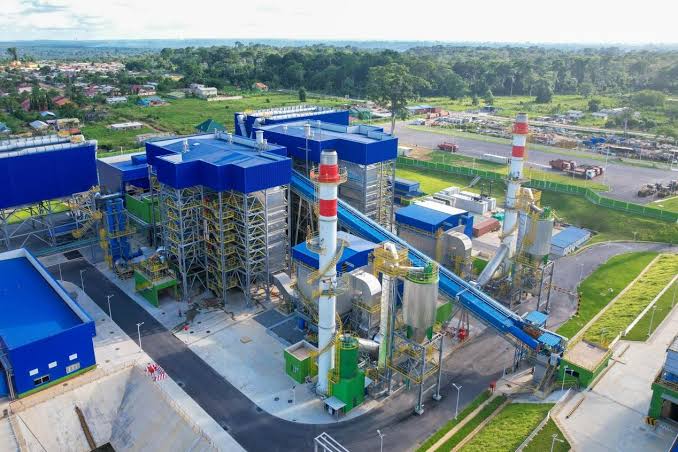
Côte d'Ivoire has inaugurated the Biovéa biomass power plant at Ayébo near Aboisso — a 46-megawatt facility that is the largest biomass plant in West Africa and the first in the country to feed the national grid using electricity generated entirely from agricultural residues.
The plant is expected to produce about 348 gigawatt-hours a year, enough to supply power to roughly 1.7 million people, and its fuel is the by-product of the country's dominant industry: the stalks, husks and residues left behind by the cocoa, palm oil and rubber harvests that make Côte d'Ivoire the world's largest cocoa producer. Waste that planters previously burned or abandoned now enters the national accounts as firm, dispatchable power.
Why biomass fits West Africa's power problem
Sizing is the practical advantage. A 46 MW plant is small enough to finance, build and commission inside a normal project window — no decade of negotiation — while still large enough to matter regionally, supplying a mid-sized city's worth of demand and displacing the thermal units utilities dispatch most expensively during evening peaks.
West Africa's electricity challenge is two-fold: insufficient capacity and dependence on imported fossil fuel or expensive thermal generation. Biomass addresses both at once. The fuel is domestic, agricultural and renewable; the plants are dispatchable — unlike solar, they run at night and through the harmattan cloud season; and the feedstock economics anchor rural supply chains, turning plantation residues into a paid commodity delivered to the plant gate.
The 348 GWh annual output is modest against national demand, but the technology's significance is the template. Côte d'Ivoire's agricultural residue base — cocoa alone generates millions of tonnes of pod husks annually — is large enough to replicate Biovéa at scale, and every replication displaces thermal generation that burns imported fuel against the country's import bill.
The economics of residue power
Biomass projects live or die on fuel logistics, and Biovéa's siting near Aboisso — in the middle of the plantation belt — minimises the haulage distances that make or break the fuel cost curve. The agricultural-residue model also creates a second income line for smallholder farmers, who sell what was previously waste, and a rural industrial base around collection, storage and transport.
For the national utility, the power purchase economics compare favourably against diesel-fired peaking: fuel costs are local and partially hedged against the dollar by their agricultural nature, and the capacity is firm enough to count toward baseload planning rather than the intermittent quotas renewables attract.
The continental context
The inauguration lands in a quarter of African energy milestones that share a theme: using what the continent already produces. Nigeria's grid constraints have pushed industrial users toward captive gas and solar; Kenya's geothermal programme continues to anchor East African supply; and now francophone West Africa has a biomass flagship. Each project answers the same question — how to add firm capacity without adding fuel imports — with a different local resource.
The climate-finance angle compounds the case. Residue-based biomass counts as renewable capacity under most international frameworks, making projects like Biovéa candidates for concessional funding and carbon-linked revenue that coal-and-diesel competitors cannot access.
What to watch as it ramps
The employment and skills effect is the least quantified but most durable benefit. A biomass complex trains plant operators, fuel-logistics managers and maintenance technicians in a region whose industrial base is plantation agriculture; those skills stay in the local economy whether the plant runs at 60 or 100 per cent capacity, and they are the human infrastructure the successor projects would draw on.
Three execution risks will decide whether Biovéa becomes a template or a one-off: fuel-supply reliability through the agricultural calendar, grid-evacuation stability from a plant sited in plantation country, and the tariff performance of the power purchase agreement as the plant settles into operation. If the plant delivers its 348 GWh reliably, expect announcements of successor projects across Côte d'Ivoire's plantation belt — and across a West African neighbourhood watching to see whether its own residue streams can be converted into the same firm, rural-anchored power.
Up next
Afreximbank Targets $1bn in Deals at CANEX WKND Lagos as Creative Finance Grows Up
The pan-African bank is framing the creative-economy gathering as an origination platform, with film, music and fashion deal categories designed to turn cultural output into bankable cash flow.
More in Business
See all
Dangote Refinery Petrol Exports Surpass Nigeria’s Daily Consumption
NMDPRA data show 54.63 million litres a day exported in September, up 37.3 per cent and above the 44.4 million litres of average domestic consumption.

Houthi Strike Reaches Riyadh Financial District as Oil Bets Split Two Ways
A landmark tower with Aramco offices was damaged just as Brent fell toward $96 on Iran-talk hope, while physical Murban crude jumped 3 per cent above Brent.

Egypt’s enza Raises $6m to Scale Bank-Payment Rails Across Africa
The 4DX-led round with BII, Quona and Algebra will push the payments-infrastructure platform into new markets and licence territories beyond its twelve-country base.
About the author
Amaka Obi
Senior Business Reporter
Amaka Obi writes for BusinessPress.


