Petrol imports fall 30% as Nigeria’s daily demand hits 44.4 million litres
Domestic refining is reducing petrol imports even as demand rises, but data gaps and supply risks could still trigger shortages.
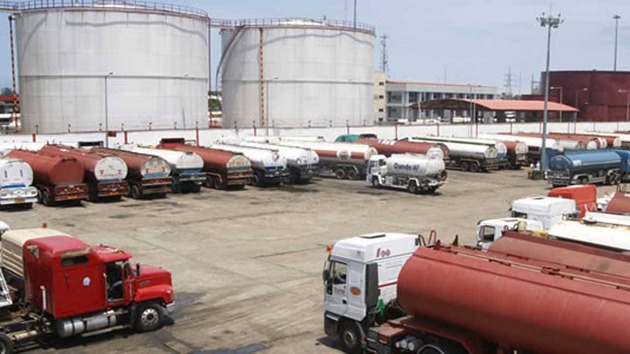
Nigeria’s petrol imports fell 30 per cent even as daily demand rose to 44.4 million litres, according to Nairametrics, a divergence that points to a changing domestic supply chain and raises questions about the accuracy of consumption data. The decline in imports does not mean Nigerians are using less fuel. It means more of the fuel they use is coming from domestic sources.
The Dangote Refinery and a growing number of modular refineries have begun to supply a larger share of the national market. That has reduced the volume of refined product arriving from international traders, easing pressure on foreign exchange and changing the economics of the downstream sector.
The shift is strategically important. For decades, Nigeria exported crude oil and imported almost all of its refined products, capturing little of the value added between the wellhead and the pump. A larger domestic refining base keeps more of that value in the country, creates jobs and reduces exposure to international shipping and product-price shocks.
Why demand is still rising
Daily consumption of 44.4 million litres reflects a transport system that remains heavily dependent on road vehicles, generators and small businesses. Despite the removal of petrol subsidies and higher pump prices, demand has not collapsed. Consumers have absorbed the cost, cut other spending or shifted to alternatives where possible.
Population growth, urbanisation and the recovery of economic activity in some sectors are also supporting demand. The informal economy, which relies on motorcycles, buses and generators, is a major consumer. Official estimates often miss part of that demand because much of it is not captured in formal records.
The gap between import data and consumption estimates is a warning. If the country is consuming more than it imports, the difference must be supplied by domestic refineries or by drawdowns from storage. Inaccurate data can lead to poor planning, fuel queues and costly emergency imports.
The refining revolution
The Dangote Refinery is the largest single change agent. With a capacity of 650,000 barrels per day, it can produce enough petrol, diesel and jet fuel to serve a significant share of the domestic market and export the surplus. Its ramp-up has been gradual, but the direction is clear.
Modular refineries have also expanded, particularly in the Niger Delta. These plants are smaller and often face operational and financing challenges, but they add incremental capacity and reduce the monopoly power of importers.
Domestic refining is not a cure-all. Refineries need reliable crude supply, working capital and access to markets. Product quality and distribution logistics are also critical. Without those, the country can still experience shortages even with large refining capacity.
The forex benefit
Every litre of petrol imported requires foreign exchange. Reducing imports therefore eases demand for dollars and supports the naira, although the effect depends on the price of crude and the volume of refined products exported.
The net foreign-exchange benefit is not as large as it first appears. Domestic refineries buy crude, which could otherwise be exported, and they may import equipment, catalysts and spare parts. The true gain comes from the value added, not from the simple substitution of imports.
For the government, the shift reduces the need for emergency foreign-exchange allocations for fuel imports. That can free up dollars for other priorities, including manufacturing and infrastructure. But it also removes a source of demand for international traders, which can affect regional product markets.
What could go wrong
The biggest risk is a supply disruption. If domestic refineries go offline for maintenance or face crude shortages, the country may need to return to imports quickly. That requires functioning import infrastructure and access to foreign exchange.
Price regulation is another risk. If the government tries to cap pump prices below market levels, refiners may reduce output or divert product to exports. That can create shortages and undermine the investment case for new capacity.
Data transparency is also essential. Policymakers need reliable figures on production, imports, consumption and stock levels to plan effectively. Without them, the market will continue to rely on guesswork and crisis management.
The longer view
Nigeria’s downstream sector is undergoing a structural transformation. The decline in imports is an early sign of that change, but it is not yet a stable equilibrium. The country needs to complete the transition from import dependence to a competitive, well-regulated domestic market.
For investors, the opportunity is in refining, logistics, storage and retail. Companies that can operate efficiently and navigate the regulatory environment stand to benefit. The risk is that policy uncertainty and infrastructure gaps delay the expected returns.
The 30 per cent drop in imports is therefore a milestone, not an ending. It shows what is possible when domestic capacity expands, but it also exposes the data and policy gaps that could undermine the gains.
Up next
France’s fiscal stress sends euro-crisis signals through bond markets
Widening French-German bond spreads signal concern over France’s deficit and political paralysis, with implications for the euro and African markets.
More in Economy
See all
Jollof rice now takes 37% of minimum wage as food inflation bites
The cost of a staple meal exposes how food inflation is squeezing Nigerian households and undermining the real value of the minimum wage.
Ajaokuta steel revival falters on power and raw-material gaps
Nigeria’s flagship steel complex needs reliable power, inputs and financing before it can anchor industrialisation, analysts warn.

FDI at 1.3% of inflows puts Nigeria’s $1 trillion economy goal at risk
Foreign direct investment remains a tiny share of capital inflows, exposing the investment-climate gap behind Nigeria’s growth ambitions.
About the author
Tunde Balogun
Economics Correspondent
Tunde Balogun writes for BusinessPress.
More by Tunde Balogun